










SC upholds ‘regular’ status of GMA talents in 2014 labor case

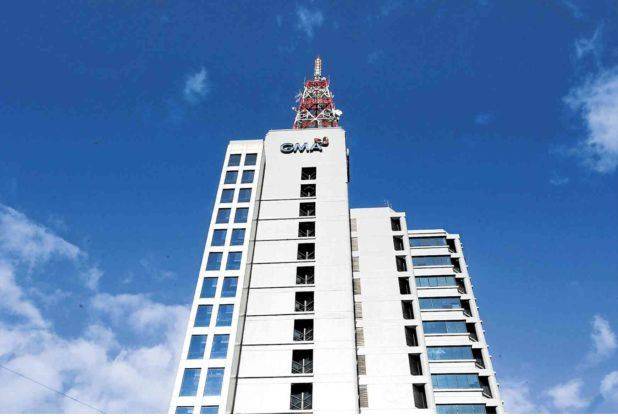
The Supreme Court has affirmed that nearly 100 talents of broadcast giant GMA Network, most of whom worked for the news section, are regular employees entitled to monetary benefits; about half of them have been unlawfully terminated.
The ruling marks a victory for 94 members of the Talents Association of GMA (TAG) over two labor cases that have dragged on for almost 12 years.
In a resolution dated July 16, 2025, but made public only over the weekend, the Court’s Third Division denied for lack of merit the petition filed by GMA and its chair Felipe Gozon against the 2019 ruling of the Court of Appeals (CA) that regularized the talents involved in the case.
The case stemmed from the opposition of employees, who were hired between 2003 and 2013, over a directive to provide official receipts to the company upon getting their talent fees, in compliance with a Bureau of Internal Revenue (BIR) policy for “independent contractors.”
Most of the workers affected held various positions, among others, segment and executive producer, researcher, cameraman, head writer, production assistant and graphic artist.
But the Supreme Court, in declaring that they were regular employees, and not independent contractors, pointed out that a key element in independent job contracting is “freedom from control from the principal over the means and method of their work.”
It cited GMA’s own provisions in the Talent Agreement it signed with the workers, which stipulated they were bound by the company’s rules and direction.
“Indubitably, (a provision on responsibilities) belies GMA’s assertion that talents work flexible hours and (have) the liberty to work online,” read part of the 33-page ruling. “Instead, GMA is empowered to set the schedules of production and to require the talent’s presence.”
Indispensability
The high court pointed to the case of Orozco v. Court of Appeals, wherein the court declared a columnist for the lifestyle section of the Inquirer an independent contractor because the newspaper had no power over her writing style and topics for her articles.
To this, the Supreme Court noted that such was not the case for the GMA talents.
The Court also affirmed the issue on employer-employee relationship, which the media firm refused to recognize.
GMA asserted in its plea the absence of such relationship given the “higher” talent fees that are not fixed, lack of control in their output and their “unique skills and expertise” that prompted it to hire them.
But the high court rejected GMA’s arguments on all points, citing again the general terms of the agreement with the workers: “Plain as day, there exists an employer-employee relationship between GMA and respondents.”
Quite telling as well, the Supreme Court said, was Gozon’s statement in his notice of appeal, where he acknowledged “the indispensability of the skills of respondents, for without them, there would be no program to air.”
“From this admission, it can be reasonably inferred that respondents perform activities usually necessary … in the usual business or trade of the network,” it noted.
Terminated employees
The Supreme Court, in the same resolution, also acted on another petition filed by GMA against the illegal dismissal case that favored some 50 talents before the CA in 2020.
In partially granting the motion, the high court said the respondents, whose contracts were either terminated or not renewed while awaiting resolution of the regularization case, are entitled to reinstatement “without loss of seniority rights and other privileges.”
This includes full back wages, inclusive of allowances and other benefits with computation “from the time their compensation was withheld from them up to the time of their actual reinstatement.”

But should reinstatement no longer be an option, it ruled, the respondents shall be granted separation pay equivalent to one month pay for every year of their service to the company, as well as back wages from the time of their termination until the issuance of the resolution.
Computation of monetary awards, which shall be entitled to a legal interest of 6-percent per annum until the amount has been fully paid, was ordered remanded to the labor arbiter.
Talent system
Media organizations welcomed the ruling, calling it a victory for industry talents.
Buhay Media, in a statement on Facebook on Saturday, said the Supreme Court’s decision zoomed in on the struggles of media practitioners and the longtime industry practice of contractualization in the guise of a talent system.
“This is 11 years in the making, during which our members have emotionally and mentally suffered from having to take to court what we considered our home network,” it said.
“We saw our friends leave one by one, their sudden departures heavily impacting livelihoods and careers, when all we ever wanted was to tell stories for the Filipino people … This should not have taken 11 years. This should not have happened at all,” it added.
The National Union of Journalists of the Philippines (NUJP) called the court decision a “vindication for the countless talents, contractors and providers that big media relies on but do not recognize as employees entitled to even basic protections and benefits under our labor laws.”
It called on GMA to heed the court orders and “fulfill its obligations” to its employees, instead of filing an appeal.
“Our colleagues deserve what they are owed for their ‘serbisyong totoo,’” NUJP said, referencing the motto of the network’s news and public affairs department.