




‘Selective’ Marcos veto seen sparing big graft-prone items

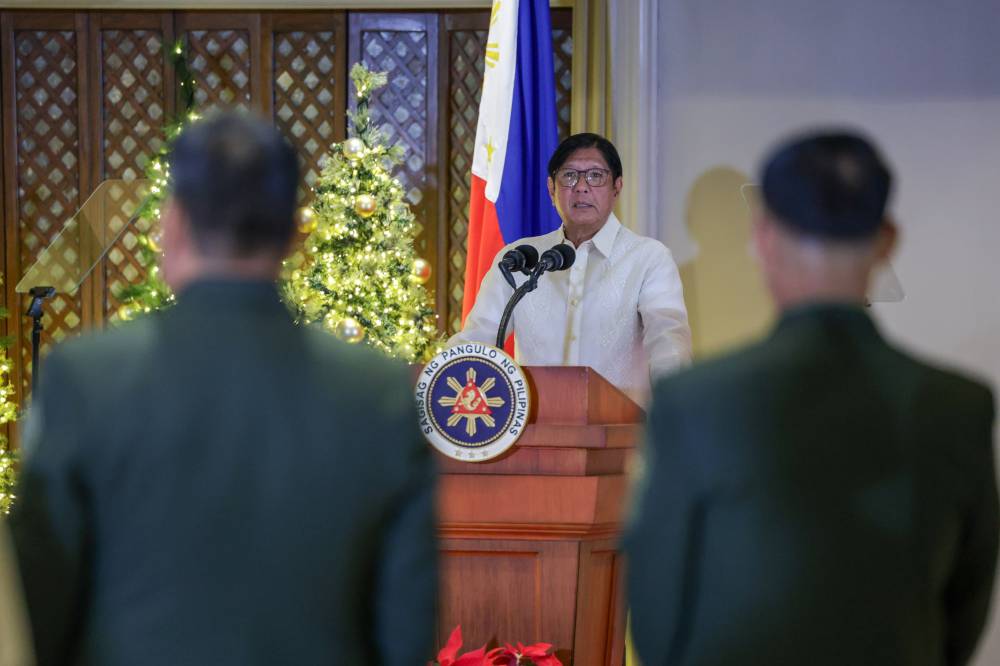
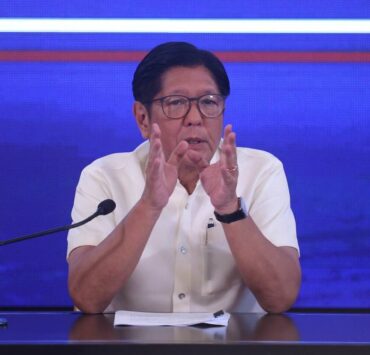
The Marcos administration is sending mixed signals about its commitment to restore public trust by vetoing only select unprogrammed appropriations (UAs) in the P6.793-trillion national budget for 2026 while leaving long-known, corruption-prone items intact.
This was the view of budget reform advocate Adolfo Jose Montesa, who said President Marcos’ selective veto “showed inconsistencies.”
On one hand, Montesa said, UAs are justified as being necessary for contingencies, but on the other hand they were struck down when Mr. Marcos signed the 2026 General Appropriations Act (GAA) on Monday.
“The administration is trying to show that they are addressing the pressure to address corruption issues, but they haven’t really done the big things that needed to be done,” said Montesa, who is also coconvener of budget watchdog People’s Budget Coalition (PBC).
“They justified these items in the UAs because they said (these programs) needed funding, but why didn’t they put them in the programmed budget in the first place?” he added.
Besides, the line items vetoed by the President “were those not necessarily prone to corruption,” Montesa said of the UAs, which serve as standby funds that can only be released once revenue conditions are met.
The vetoed items totaling P92.5 billion were:
- Budgetary Support for Government -Owned and -Controlled Corporations: P6.895 billion
- Prior Years’ Local Government Unit Shares: P14.623 million
- Payment of Personnel Services Requirements: P43.245 billion
- CARS Program (Automotive Industry Support): P4.32 billion
- RACE Program (Automotive Industry Competitiveness): P250 million
- Insurance of Government Assets and Interests: P2 billion
- Government Counterpart for Certain Foreign-Assisted Projects: P35.77 billion
This trimmed down the UAs from P243 billion to P150.9 billion, the lowest such appropriations since 2019. Since the flood control scandal erupted last year, the UAs have been flagged as a backdoor entry for anomalous public works projects.
But even with this gesture, Montesa said, the veto did little to address public concern over corruption since UA projects are not automatically funded and depend entirely on executive discretion for release.
On mandatory obligations
Montesa said the veto also raised questions on how the government intend to cover mandatory obligations such as salaries, pensions and benefits after Mr. Marcos struck down personnel-related funds that appeared to have been transferred to UAs.
He was referring to how the bicameral conference committee transferred P10.77 billion for salary upgrades and P32.47 billion for retirement and terminal leave benefits from guaranteed, programmed funds into a new unprogrammed budget item labeled “Payment of Personnel Services Requirements,” which totaled P43 billion.
Last week, ACT Teachers Rep. Antonio Tinio said this move could delay pay increases and retirement benefits for teachers, civil servants and uniformed personnel.
It’s a concern echoed by Montesa, who also questioned whether the bicameral committee was even allowed to create an entirely new budget item in the UAs.
‘Backdoors’ for corruption
More critically, Montesa said, the President did not touch spending items widely regarded by civil society groups as major “backdoors” for corruption, including large-scale social assistance and employment programs repeatedly linked to political patronage.
These include so-called “soft pork” programs, such as the Department of Social Welfare and Development’s Assistance to Individuals in Crisis Situations (AICS), the Department of Labor and Employment’s Tulong Panghanapbuhay sa Ating Disadvantaged/Displaced Workers (Tupad), and the Department of Health’s Medical Assistance to Indigents and Financially Incapacitated Patients (Maifip).
Their budgets more than doubled in the signed GAA from the National Expenditure Program prepared by the Palace, despite public clamor to scrap them totally.
Lawmakers earlier were able to justify their retention by inserting a provision in the 2026 GAA barring politicians and elected officials from participating in the funds’ distribution and program implementation.
“That’s all well and good, but the problem is how do you apply it? There are no clear mechanisms on how it’s going to be enforced. If someone violates it, where do you report it? What is the penalty?” Montesa said. (See related story on this page.)
“We were really hoping that the President could have given that assurance (that there would be a concrete plan for this). But he still seems naive on the fact that these programs are really backdoors for corruption,” he added.
House lawmakers also expressed dissatisfaction with the veto of the UAs, saying a lot of UAs were still retained.
“Vetoing a considerably significant amount—or any amount—in unprogrammed appropriations is NOT the point. It is still “shadow pork,” said Mamamayang Liberal party list Rep. Leila de Lima.
De Lima said that it would be illogical to place programs under UAs when the government does not expect excess revenue to be collected.

“Another thing: ES (Executive Secretary) and former Finance Secretary Ralph Recto himself admitted that we have almost zero excess revenues to be collected. So, isn’t it illogical to have UAs in the first place? If we do not expect excess revenues, what money will be used to spend for UAs?” she said.
Tax incentives to carmakers
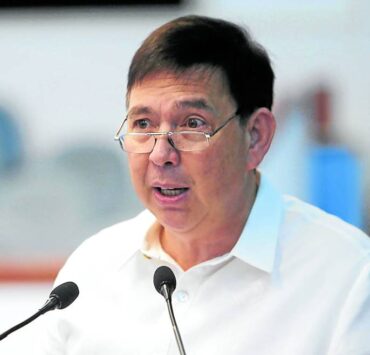
With the veto of CARS and RACE programs, Sen. Sherwin Gatchalian said the government may not be able to grant tax incentives to carmakers Mitsubishi and Toyota amounting to P4.2 billion.
“They came here to invest, and we told them, ‘We will give you tax incentives.’ For the last four or five years, we have not been able to provide those tax incentives. Toyota and Mitsubishi are already complaining,” he said.
During budget deliberations, the Philippine Board of Investments asked the Senate for funds to finally pay Toyota and Mitsubishi, he said.
Gatchalian, chair of the Senate finance committee, also expressed concern over the veto of the Government Counterpart for Certain Foreign-Assisted Projects.
“We have many incoming foreign-assisted projects that require a counterpart, and all of these are expected to come in around the second or third quarter. My concern is that if we do not have the counterpart, the loan counterpart will also not be released. So that’s my concern. But now that these items have been vetoed, how could these be solved?” he said.
Montesa said the PBC welcomed possible legal challenges to have the UAs declared as unconstitutional, a call now being led by Caloocan Rep. Edgar Erice.
He noted that previous Supreme Court rulings already questioned the UAs particularly in cases related to the now-defunct Priority Development Assistance Fund (PDAF), although the court did not rule on the issue at the time because it was not directly before it.
Among the biggest questions, Montesa anticipated, was how exactly the UAs were being triggered because “there were years when the government falls below its target (revenue), or right in the middle of the year when we have not yet hit the target, suddenly the UA funds are being issued.”
Another is the fact that the UAs—which are technically not computed as part of the national budget—were being used to sidestep the constitutional mandate barring Congress from passing a budget higher than what the President submitted, Montesa added.
“It’s really high time for us to start discussing these things,” Montesa said. “I believe there are grounds to have it struck down as unconstitutional and we’re also exploring whether we can join cases.” —WITH REPORTS FROM CHARIE ABARCA AND GABRIEL PABICO LALU