










Soil engineering allows agriculture to flourish in Agusan del Sur

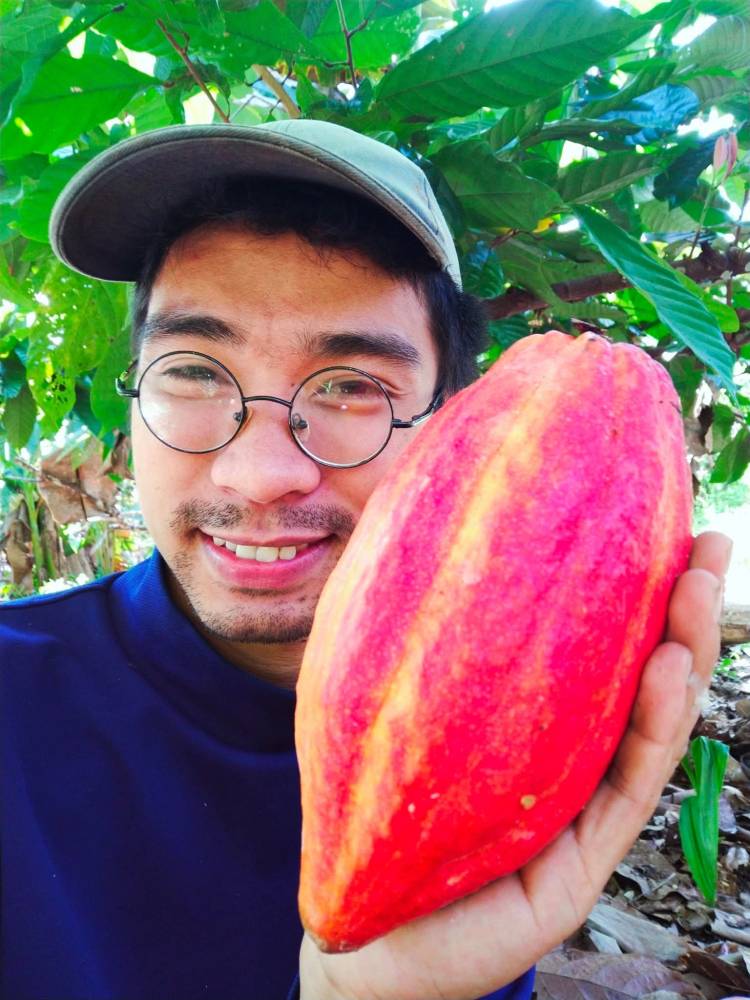
PROSPERIDAD, AGUSAN DEL SUR—Young farmer-entrepreneur Japhet Gupit Tabale, owner of Cacao Prince products, is proving that agriculture and technology can thrive together as he uses artificial intelligence (AI) to market and expand his cacao business across the country.
A graduate of business administration and computer science, the Bayugan City native integrated e-commerce and AI into their family’s third-generation cacao enterprise that was started in the 1970s by his grandmother.
The 2.5-hectare farm in the mountain village of Magkiangkang now focuses on hybrid cacao varieties that produce bigger beans hence a higher yield, and has stronger resistance to pests.
The COVID-19 pandemic pushed Tabale to employ technology aggressively to reach target customers among cafés, “sikwate” (native chocolate) shops and individuals who are fond of chocolates, as businesses struggled with the lockdowns.
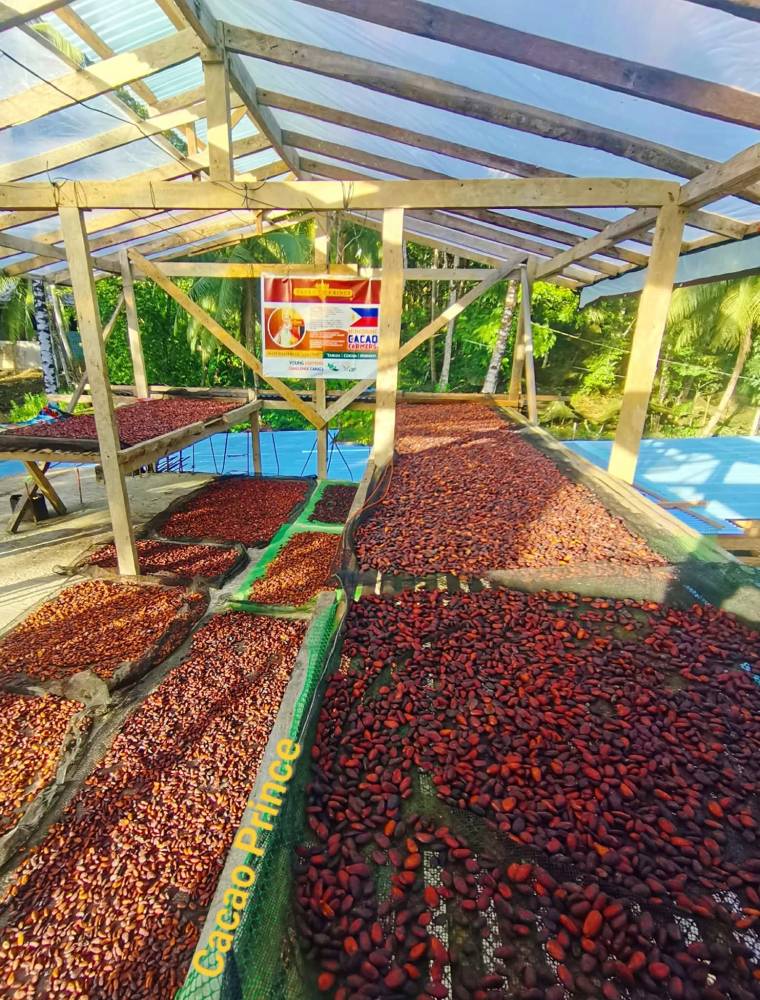
Before the pandemic, Tabale was selling around 30 kilos of “tablea” every month. Today, demand has climbed to 300 kilos monthly and, by next year, could reach 500 kilos. Hence, he is seeking to expand his supply of cacao beans by setting up a buying center in Bayugan, offering farmers a stable business relationship and fair pricing.
Tabale’s innovative business approach earned him the National Young Farmers Challenge Upscale Award in 2023, securing nearly P1 million to further develop his farm. He is also one of the Rural Agro-Enterprise and Productivity Innovation Development Youth Champions of the Department of Trade and Industry in Agusan del Sur.
To help expand his production, Tabale joined the Upland Sustainable Agri-Forestry Development (USAD) program of the provincial government, availing of aid to develop an additional hectare of cacao.
Generational transition
Agusan del Sur Gov. Santiago Cane Jr. always cites the role of young innovators like Tabale in strengthening the province’s agriculture for which it has vast potential, given a land area of close to a million hectares.
“To keep up with the demands of the times, we need to tailor-fit our agricultural system to the latest technologies and innovations,” Cane points out.
He emphasizes the need for generational transition as the bulk of farmers in the province are already way past 50 years old.
Here, leaders in the province hinge their hopes on the youth, confident that with the right motivation, they will take up the challenge of reimagining farming to achieve, among others, food security amid disruptions wrought by climate change.
“We must groom a new breed of farmers who understand both the science of agriculture and the urgency of climate adaptation,” says Rep. Adolph Edward Plaza, who has been pushing for innovation-driven farming. “The future of agriculture depends on the youth who will sustain and lead it forward,” he adds.
Plaza notes that only 1,256 students enrolled in Agriculture, Forestry and Fisheries courses in Agusan del Sur State College of Agriculture and Technology for academic year 2023 to 2024. He lamented that the number is a small fraction of the province’s 17,315 college enrollees during that period.
“That gap,” Plaza says, “is what we need to bridge.”
Like Japan, Vietnam
To address this, the provincial government offers full scholarship for students taking up agriculture courses—from undergraduate to doctoral level—as part of a drive to attract young minds into the sector.
In a town hall session last October, Cane and Plaza interacted with a youth audience to discuss the fate of farming and its implications for people’s lives and livelihoods in the province.
“We want our young experts to help farmers achieve yields comparable to Japan or Vietnam,” says Cane.
The exhortation is beginning to bear fruit.
Matt Huan Emmanuel Maybuena of Agusan del Sur National Science High School, says he now understands how the province’s sustainability programs truly work. He vows to take up chemical engineering to help enhance soil management technology.
“The province values farmers and never takes them for granted. That’s why I’m considering studying agriculture,” says Charles Julian Bacud of Loreto National High School.
Roana Raz of Agusan del Sur State College of Agriculture and Technology, speaks with quiet conviction: “Agriculture is the foundation of our province. We should seize this opportunity to build something meaningful for our communities.”

Among the current crop of agriculturists, the provincial government has set up a scholarship program for a master’s degree in soil science and crop protection, with the first batch of graduates expected in 2026.
In addition, the provincial government has established the Sustainable Provincial Agro-Industry Resource Center in Bayugan City to serve as an innovation hub and market support facility for farmers and agri-enterprises, to make farming an economically rewarding pursuit.
Soil health
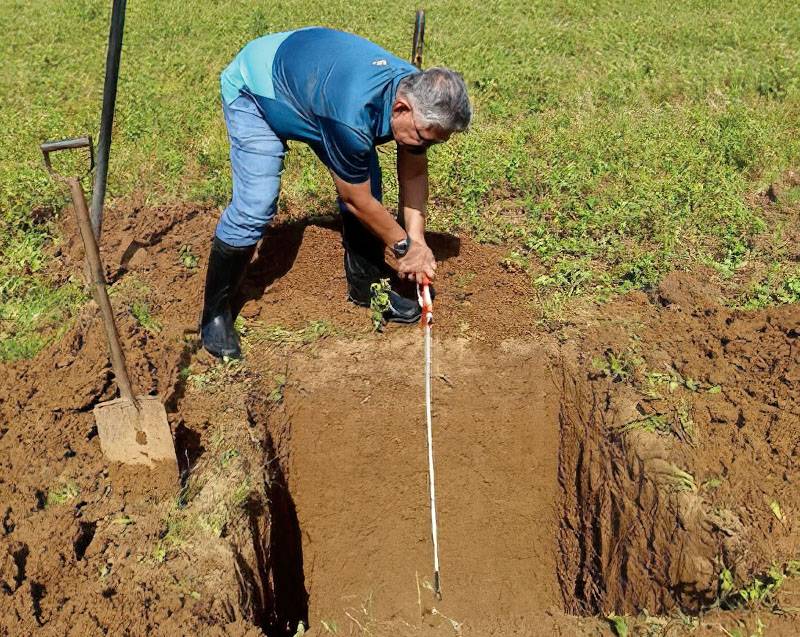
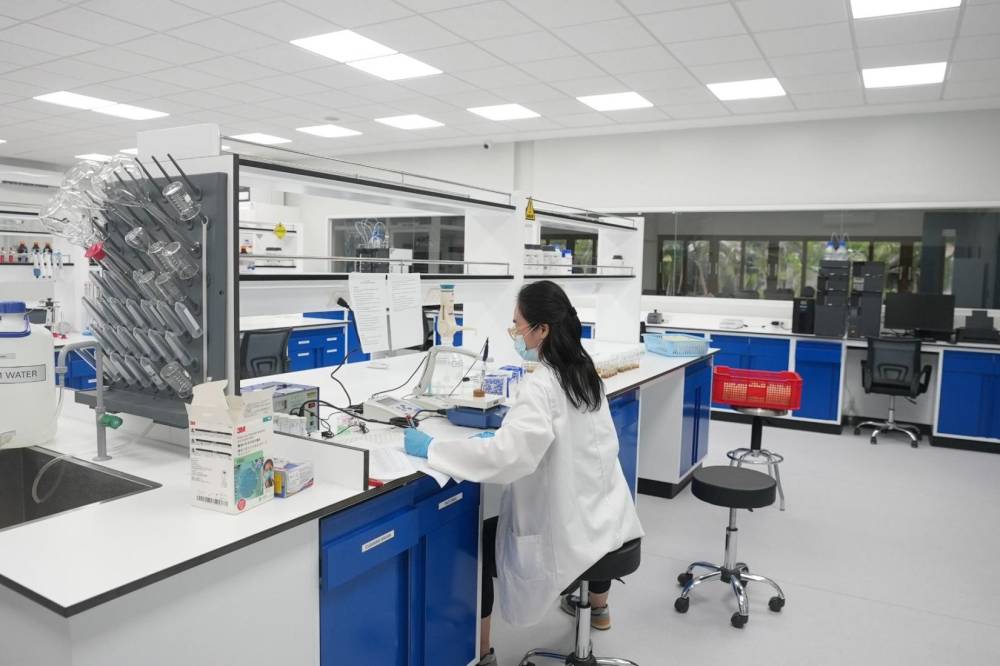
At the production side, there is the state-of-the-art soils laboratory managed by the Provincial Research Development and Innovation Office (PRDIO), located inside the capitol complex here, with support from international partners like Griffith University in Queensland and the Australian Centre for International Agricultural Research.
Inaugurated last June 24, the soils laboratory can assess up to 100 samples per day, enabling precise fertilizer recommendations and crop suitability planning—a crucial step away from guesswork that often leads to overuse of farm inputs.
Unlike conventional ones, PRDIO’s lab doesn’t just test soil fertility, it also analyzes nutrients, water properties, trace minerals, and even carbon credits, positioning Agusan del Sur as a hub for climate-smart, data-driven farming by strengthening science and technology adoption across farms and communities.
“This lab is future-proofing our farms,” says Tricia Goloran, PRDIO head. “We are not limited to soil fertility alone. This lab positions Agusan del Sur to become a leader in environmental analytics, supporting agriculture, water resource management and geoscience.”
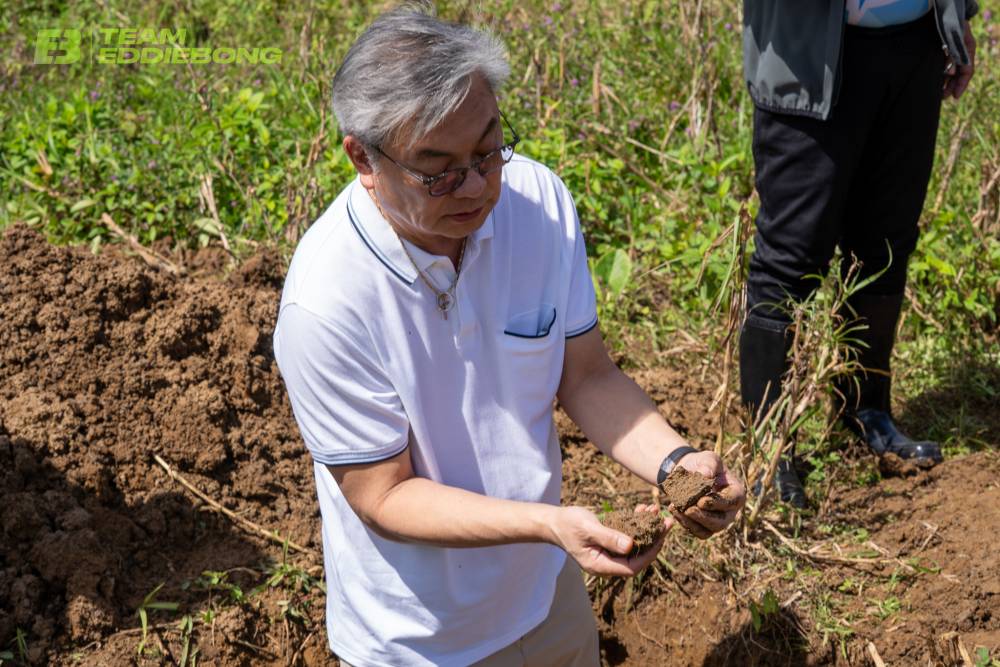
Plaza says science-based soil management has already delivered a 263-percent increase in net income for farmers in five model rice fields in the province, by doubling yields to 6.6 tons per hectare while cutting fertilization costs by 45 percent.
The Agusan experience, according to Plaza, can be instructive for the rest of the country in achieving for farmers “better yields, lower production costs, healthier soils and renewed pride in the land (they) cultivate.
“More than scientific evolution, this must lead to agricultural transformation,” he says.