











Sugarcane pest attacks other crops in Negros


BACOLOD CITY—Negros Occidental Gov. Eugenio Jose Lacson has agreed to create a province-wide task force to prevent the spread of highly destructive red-striped soft-scale insects (RSSI), which have now spread from sugarcane to other crops.
According to former Negros Occidental Governor Rafael Coscolluela, the new provincial body, once created, will “involve more than just the sugar industry because RSSI can and has affected other crops such as corn and vegetables.”
That is the major difference between the planned provincial task force and another one created by the Sugar Regulatory Administration (SRA) last year, he said.
Coscolluela, who currently advises the Confederation of Sugar Producers Associations Inc., along with Gina Martin, director general of the Philippine Sugar Research Institute Foundation Inc. (Philsurin), and other industry stakeholders, met with Lacson on Wednesday.
Both Coscolluela and Martin used to head the SRA.
“The sad thing is RSSI is here to stay, so we need to have a permanent structure and mechanism in place to control the pest,” Coscolluela said.
“RSSI attacks anything with leaves,” the former governor noted. “The focus now is not just on sugarcane, but on the pest itself, which needs control.”
The insects attach themselves to leaves and drain a plant’s vital nutrients and sap, causing the leaves to turn yellow, wilt and dry up.
Mapping
The provincial task force will manage the RSSI crisis involving an expanded group of program implementers, including local governments that were not part of the SRA’s original task force, Coscolluela said.
“It’s very critical that we go down to the level of barangays for surveillance and mapping,” he stressed.
“What we are facing now is that while we know the problem is here, we don’t know the exact numbers to date. We do not have real-time data,” he said.
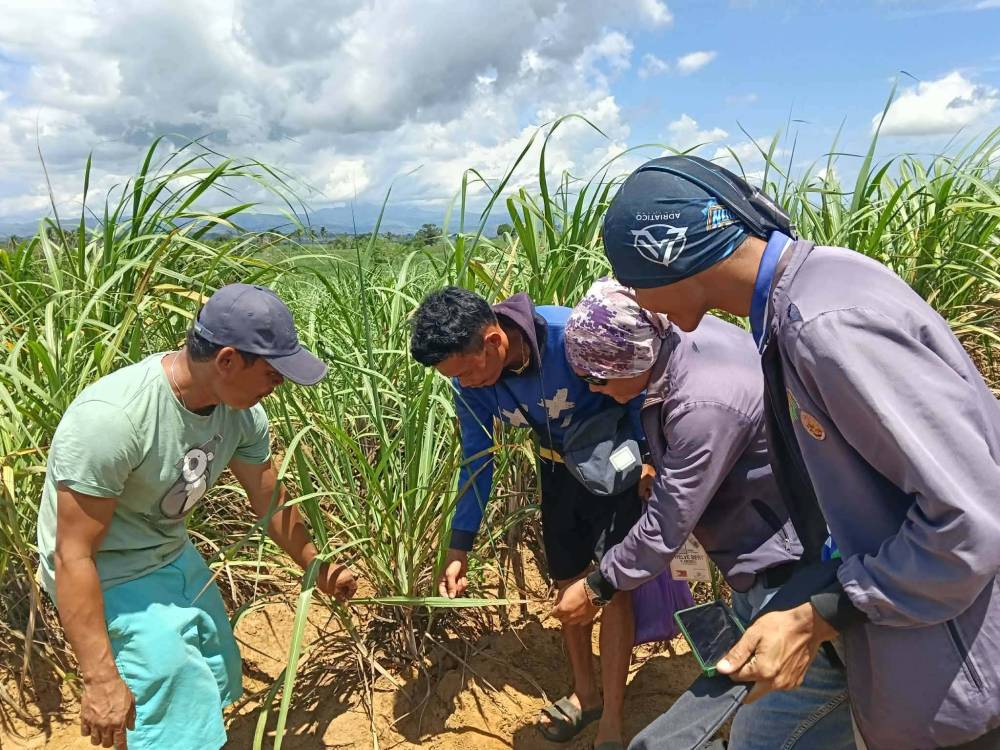
Coscolluela pointed out that a critical job for the task force commanders will be ensuring an effective surveillance and mapping program is established to determine exactly where RSSI is located and the severity of the infestation.
He also highlighted the urgent need to produce adequate biocontrol agents to fight the pest. The task force will assess current production capacities to determine the supply gap that needs to be filled.
Biocontrol agents can be produced in the laboratories of the SRA, Philsurin, the Office of the Provincial Agriculturist, and the First Farmers Association, he said.

However, stakeholders are also suggesting that sugar mills set up their own laboratories to ensure an adequate supply.
Potential loss
Effective control measures will have to be put in place to prevent the spread of RSSI, which will include working with the provincial government of nearby Negros Oriental, Coscolluela said.
He noted that the declaration of a state of calamity in Negros Occidental is a good basis to carry out further action against the pest which had so far ravaged about a third of Negros Island’s sugarcane fields that spans over 230,000 hectares.
In Negros Occidental, which produces at least 60 percent of the country’s sugar, over 60,000 ha have reportedly been hit by RSSI.
SRA Administrator Pablo Luis Azcona earlier worried that given the current situation, the province’s sugar output in the next harvest season could drop by 30 percent, or some P17.5 billion in lost sales.
Last year, RSSI infestation caused an estimated 10-percent to 12-percent drop in sugar production in Negros Occidental.


