










Takaichi poised to expand power in Sunday’s vote

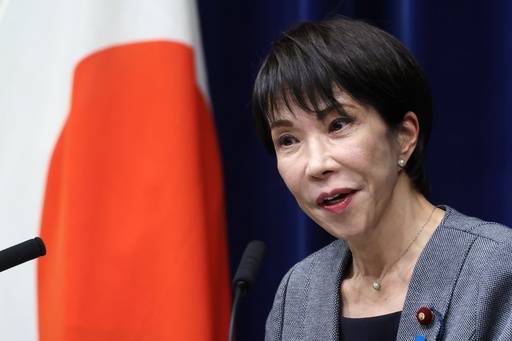
TOKYO—Japan’s prime minister is a heavy-metal music fan. She loves motorcycles and playing the drums, including with visiting dignitaries. She thrilled a nation that often fetishizes company loyalty by declaring that her secret for success as a leader would be “work, work, work, work, work.”
This charismatic combination, along with an image that is both tough and playful, has made Sanae Takaichi very popular, something exceedingly unusual for recent prime ministers in Japan, where her political party, which has led Japan for most of the last seven decades, has struggled mightily.
In stark contrast to the long line of often elderly men who’ve run Japan over the decades, Takaichi’s popularity is rooted in her support by younger people. They affectionately use her nickname, “Sana,” closely follow her fashion, her choice of stationery and her favorite food—steamed pork buns. Polls show her Liberal Democratic Party, despite deep-rooted problems, is now poised to make big gains in Sunday’s vote in the lower house of Parliament, thanks to Takaichi.
This would allow her to take the country in the direction of her hawkish, deeply conservative mentor, the late Prime Minister Shinzo Abe and beyond.
Prewar moral values
Born in Nara, Japan’s ancient capital, Takaichi was raised by conservative parents who taught her prewar moral values. Her mother was a police officer and her father worked at a machinery maker.
As a child, she enjoyed listening to her parents recite an 1890 imperial document that praises paternalistic family values and loyalty to the government, Takaichi said in 2012.
Though she was admitted to prestigious Tokyo schools, her parents made her attend Kobe University while living at home, something that was normal then for unmarried daughters of conservative families.
Denver intern, author, critic
She was briefly an intern for a US Democratic lawmaker in Denver in the late 1980s and after returning to Japan, worked as a television personality, an author and a critic.

Takaichi is unique because she both speaks her mind and is seen as easygoing, said Izuru Makihara, a University of Tokyo politics expert.
“Takaichi is highly regarded, especially by women and younger generations who strongly feel stuck and hopeless,” he said.
She was elected prime minister by Parliament in October and her first weeks were marked by a hawkish comment on a possible Chinese military action against Taiwan, the self-governing island that Beijing claims as its own territory, which angered China by deviating from past strategic ambiguity.