







The vote on the US bases: Journo reports, citizen rejoices

Colonialism. Imperialism. Independence. Patriotism. Nationalism.
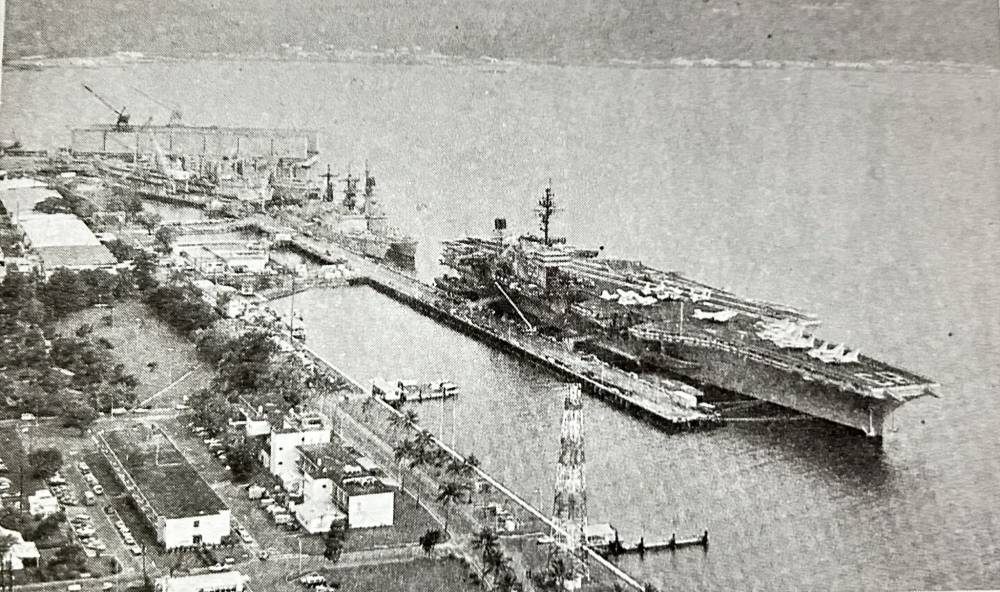
It was difficult to grasp the relevance of those words in daily life as a Filipino in 1991, the year the Philippine Senate did what had been unthinkable for many decades: oust US military bases from Philippine soil.
To make sense of these ideas as a reporter covering the Senate debates on the bases treaty that year was tougher. You knew they were integral to an unfolding chapter of history you were tasked with narrating, but how?
The Senate vote on extending a treaty between the Philippines and the United States that allowed the US military to operate fixed installations on Philippine territory appeared very close—12 against and 11 in favor.
But the number of votes to reject was actually more than what was needed to sever the umbilical cord that connected the Philippines to the United States in what has been described as a one-sided relationship in the Americans’ favor and, according to the Left, a vestige of American colonial rule.
Treaty ratification, which would extend the US bases’ stay for another 50 years, needed 16 votes. A vote of just nine to reject it would doom its fate.
The anticipation for the vote was like turning into a blind corner not knowing what lurked in the darkness.
While the position of some senators was a given, there was no telling what the final vote would be.
Battle lines drawn
Where Jovito Salonga, Wigberto Tañada, Rene Saguisag, Joseph Estrada, Teofisto Guingona Jr., and Aquilino Pimentel Jr. stood had been known long before the treaty was sent to the Senate for deliberations and voting.
On the other side, there was no mistaking the position of John Henry Osmeña, Neptali Gonzales, Edgardo Angara, Ernesto Herrera, Vicente Paterno, Leticia Ramos Shahani, among others.
The Senate session hall became a forum for what could be the most intense, yet intelligent, debates in Philippine legislative history.
On the Senate floor, several battles went on simultaneously—for the support of either pro- or anti-bases camps for the ratification or rejection of the bases treaty, for the best quotes of the day, for new information to feed a hungry pack of journalists and for new arguments to present in favor of or against treaty ratification.
The popularity of either position on the bases was tilted in favor of ratification. Polling then showed public support swinging to the side of keeping US bases on Philippine soil though in violation of the 1987 Constitution that was unequivocal about keeping Philippine territory free from any permanent foreign military presence.
Erap picks a side
What worked in favor of treaty rejection, though, was also an icon of popularity—actor Joseph Estrada with whom the supposed “masa” could identify.
His understanding of the bases issue might have been shallow but he was consistent in his stand which made journalists list him as a sure vote for rejection.
In explaining his anti-bases stance, Erap, as Estrada was popularly known, cited imperialism, colonialism, nationalism—words that sounded like lines in a movie script coming from his mouth.
To affirm his commitment to treaty rejection, Erap would cite a movie he did with Nikki Coseteng, “Sa Kuko ng Agila (In The Grip of an Eagle)” with the eagle obviously referring to the United States.
Asked if he had read the treaty, Erap just burst in laughter.
Rene Saguisag exuded confidence in his intellectual capacity and humored contempt at the arrogance of weak minds.
Trove of quotes
But he was a treasure trove of so-called quotable quotes which made him a magnet for journalists.
One of his most memorable invented lines was to define media as “the plural of mediocre.” Funny but often true.
Saguisag embodied the phrase, “Ask a stupid question and you get a stupid answer.”
He applied this contemptuous but not abrasive attitude toward loopholes, stupidity, ineptitude and contrived intelligence on his view of the treaty.
The document awaiting decision by the Senate, to Saguisag, was simply a waterskin punctured with holes. It’s not about nationalism or colonialism but simply about logical thinking and conclusions.
Stiff position
There was a cruel joke among reporters then about the wounds suffered by Jovito Salonga from the Plaza Miranda bombing which President Ferdinand Marcos Sr. cited as among the justifications for the declaration of martial law in 1972.
As a result of one particular bomb injury, he could no longer untwist or move a finger. It became the butt of jokes among journalists and Salonga’s naughty colleagues.
But it also became the symbol of his stiff positions on key issues, particularly on the bases treaty.
That he was highly respected was unquestionable to both his admirers and his critics, who would often utter derogatory remarks or jokes off the record about the leader some would refer to as “Tanda” (‘Old Man’).
His firmness in treaty rejection was the navigating tool that guided to shore the end of nearly a century of American military presence on Philippine soil.
Can’t eat nationalism
John Henry Osmeña was a colorful character who used his flair for the English language as a blunt weapon to demolish opposing views.
To push treaty ratification, he used his skills in numbers, rattling off the economic benefits of keeping US military bases, its direct and indirect impact on jobs, local and national government incomes and investment climate.
He was also skillful at scare tactics: hundreds of jobs gone, millions of dollars in foreign investments disappearing into thin air, millions more in defense aid going pfft, communism rising.
Amboy, short for American boy, became both a derogatory and commendatory term to describe officials kowtowing to US interests.
John O, as Osmeña was fondly called at the Senate then, couldn’t care less. He believed that nationalism, one of the principles driving opposition to US military bases, cannot fill an empty stomach.
Unpredictable Maceda
Ernesto Maceda was a study in unpredictability, especially on the bases vote. He enjoyed making journalists guess. He would not even drop the answer when you shout “sirit.” He just laughed and kept you guessing.
He kept his cards up his sleeve, as the saying goes, like the expert poker player that he was. In the end, however, he voted “No” to ratification, surprising everyone and giving credence to speculation that his most compelling motive was to have his name etched for eternity as part of what would later be called the “Magnificent 12.”
Orlando Mercado had a radio-perfect voice that was easily recognizable. He had defied typecasting on the bases issue. Like Maceda, he refused to drop cookie crumbs as clues to how he would vote on the treaty.
There was no doubting his intellectual capacity and his eagerness to learn. He doesn’t fit the mold of a celebrity, like Erap, who simply carved a popular image for adoring fans to behold but didn’t bother to support the popularity with foundations of knowledge.
Mercado studied and put his heart into it. He voted “No” to treaty ratification.
Polarizing issue
Just being there in the middle of history being made was overwhelming.
To chronicle it for the Philippine Daily Inquirer was icing on the cake.
The bases issue was one of the most polarizing that a journalist could handle. The line was clear between the pros and the antis. But one wishing to stay in the middle would realize that the strip was so thin that one would have already stepped on either side of the fence still believing that he or she was avoiding both.
The battle for information took place mainly on the Senate floor. Ambush interviews were the main weapons used by journalists covering the ratification process.
When word got out that Cory Aquino would drop by the Senate, still housed then in a musty, old book smelling building, as her way of pushing for ratification, everyone scrambled.
In September 1991, Cory went to the Senate with a huge crowd to lobby for ratification and met with both sides of the aisle, those supporting and rejecting bases treaty extension.
She wagered her popularity on bases extension, repeating the same warnings of economic doom that John O had been preaching about.
Some senators said she was just paying back debts of gratitude to the United States—for helping oust the late strongman Marcos Sr. in 1986 and for protecting her fledgling administration in a coup attempt in 1989.
Magic gone?
As Cory descended on the Senate, the frenzied jockeying for the best spot to take photographs, throw questions in an ambush or simply eavesdrop on the conversation turned the Senate halls into a chaotic beehive of activity.
Yet the best way to score a scoop wasn’t in the middle of all the buzz. It lay in the forlorn faces of probases senators who already knew by then that the Cory magic didn’t work. The fate of the bases treaty was sealed in its coffin.
John O was feverishly shaking his head, looking up to the ceiling and his demeanor shifting from quiet anger to outrage. He was particularly flabbergasted that “Tanda” succeeded in steering bases rejection in the most dignified of manners sans the slogans or shouts of imperialism from figures that Osmeña openly called communists.
There was particular attention on Agapito “Butz” Aquino, Cory’s brother-in-law. His vote to reject the treaty was both expected and perplexing. Expected because he had been vocal about it days before viva voce took place and perplexing because it completely ignored the plea of his brother’s widow, throwing shade at the belief that blood runs thicker than water.
It was difficult to capture the mixed emotions that churned inside Saguisag. He would lay down his life for Cory but his logic and intellect dictated a vote to reject. He would later attempt to make it up to the woman he spurned by proposing a phaseout period for the bases, for which he took brickbats from the Left and which was eventually defeated on the floor.
There’s no way of telling whether Saguisag did want to give the bases a phaseout period or simply wanted to offer this as a bouquet of flowers with a sorry card to Cory.
Nature as game-changer
But nature had other things in mind.
Months before the Senate vote to reject the treaty, Mt. Pinatubo came to life after centuries of slumber, disgorging millions of tons of ash and volcanic debris, turning large swaths of Central Luzon, including the biggest US military installations outside the American mainland, into a wasteland.
That was Saguisag’s off ramp in proposing phaseout. It would take hundreds of millions of dollars to repair Clark Air Base and Subic Naval Base for these to be usable again. Saguisag proposed the phaseout as a bouquet of flowers to Cory with all sincerity but he knew these would not be placed in a vase.
It was easy to drown in the events that unfolded on that September day in 1991, when the Senate shut the doors to US bases. Staying afloat was made more difficult by personal positions on the issue.
You clapped, shouted in glee, joined the chorus of celebration in the gallery that echoed beyond the Senate floor. But deadline beckoned and you had to take a deep breath to return to your desk at the press office to write a piece of history that you knew was fleeting.
Shouts of joy
As the words slowly and painfully appeared on the monochrome computer screen, you heard shouts of joy continuing to filter out of the Senate session hall. You struggled to resist the urge of being at the center of the celebration. But there was news to write, deadline to beat and a byline to eagerly see the next day.
It was easy to get carried away and whoever said that journalists should shun biases and embrace objectivity was both correct and detached from reality on that particular day.
Then Inquirer editors Jun Bandayrel, Joey Nolasco, Nilo Paurom and Jun Engracia valued one particular rule in the bases treaty coverage—don’t get scooped. It also meant being ahead and first to report developments in the treaty ratification process.
But sometimes to achieve these goals, you just have to watch, do so closely and try to paint in words what cameras had been designed to capture—emotions.
You saw Wigberto Tañada exchanging handshakes and high fives and teary eyed. You saw Maceda strutting about like a peacock who just flaunted his shiny feathers. You saw Saguisag smile not knowing whether the tears welling in his eyes were of joy or anxiety. And Erap? For the Left on that day, he became a real hero deserving of tight hugs and kisses and adulation which he basked in. That the Left figured prominently in his downfall as president years later is for another story.
The Salonga vote
The wait for the last vote shone like a spotlight on Salonga’s seat as Senate president. His flair for the dramatic was unmistakable. While everyone had a foretelling of how he would vote, some journalists were on the ready to break what could have been the bigger news if he voted differently.
When Salonga announced his “No” vote, the silence of anticipation was replaced by jubilant cries. With a vote or 12 against and 11 in favor, Salonga announced that the extension of the US bases treaty was dead.
You see Salonga walking calmly with other senators who voted against the treaty, a figure of steady commitment to what he believed in without the shrill cries of many protest rallies preceding the bases vote. He was deposed as Senate president months later. Some said it was the price he paid for his firm rejection of the bases treaty.
The Senate floor and gallery overflowed with antibases groups and personalities who made clear that there was no room for the probases camp.
Osmeña and the other probases senators knew it was not the place for them and quietly left though surely seeing and hearing the celebration on their way out.
You finished writing the story of Sept. 16, 1991. You sent it by fax machine alternately dictating parts of it to beat the deadline.
Then you took a long pause to absorb all that happened, plan another story from the history that you just personally witnessed unfold. But there was no other story to write anymore, at least not one more unforgettable than this.
It was time to become just a citizen.