








Tinio: Poverty being concealed from Asean Summit


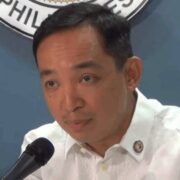
ACT Teachers party list Rep. Antonio Tinio on Monday accused the Marcos administration of concealing poverty in Metro Manila by displacing street vendors, small businesses and homeless people ahead of the 49th Association of Southeast Asian Nations (Asean) Summit.
Tinio, also a House deputy minority leader, likened the government’s clearing operations along major summit routes to the beautification campaign of President Marcos’ mother, former first lady Imelda Marcos, who was accused of hiding Manila’s slum communities during major international events under his parents’ conjugal dictatorship.
“Five decades after Imelda Marcos whitewashed Manila’s slums for the Miss Universe pageant, the IMF-World Bank meeting, and the papal visit, her son is staging the exact same production,” Tinio said in a statement.
“From the ‘City of Man’ to today’s art-wrapped barriers along J.W. Diokno Boulevard, the script has not changed: hide the poor, polish the pavement, and deceive the world,” he added.
Small businesses closed
Tinio cited the displacement of vendors near Baclaran Church and beneath the Light Rail Transit Line 1 in Pasay City, as well as the closure of small businesses, including Diwata Pares, whose workers reportedly earn P500 a day.
Reports said authorities had barred owners from conducting their businesses around the Philippine International Convention Center, the main venue of the Asean Summit, since Oct. 29, and would only allow them to resume operations after Nov. 18.
The lawmaker also raised reports that street dwellers near the Manila Film Center had been driven away as the government prepares to welcome more than 10,000 foreign delegates to the summit.
The lawmaker criticized the use of artworks, including those of Filipino National Artists, on barriers along summit routes, saying these were being used to conceal poverty rather than highlight the country’s social realities.
“It is the height of irony that the works of Filipino artists—including our national artists—are being weaponized to hide hunger and homelessness from visiting dignitaries,” Tinio said.
“Art is meant to expose the truth of the human condition, not to serve as wallpaper over the misery of the urban poor,” he added.
Compensate vendors
Tinio questioned the government’s spending on beautification projects, saying affected workers and vendors had yet to receive financial assistance or assurances they could return to their sources of livelihood after the summit.

He said the same stretch of road was littered with garbage when President Marcos inspected it in August following the series of floodings in Metro Manila.
“Poverty is not an eyesore to be fenced off from view. It is the direct result of decades of antipeople policies—from the Marcos dictatorship’s plunder to today’s failure to deliver on affordable housing and livable wages. Hoisting tarpaulins and displaying artwork will not feed a single displaced vendor’s family,” Tinio said.
Instead of temporary cosmetic makeovers, Tinio urged the administration to pursue on-site housing for informal settlers, protect the livelihoods of street vendors and micro-entrepreneurs, and provide basic services to underserved communities.
He also called on the Asean National Organizing Council and the local governments of Pasay and Parañaque to compensate affected vendors and workers and guarantee their unconditional return to their places of livelihood after the summit.
“If the Marcoses truly want to impress the world, they should not hide the poor—they should lift them up,” Tinio said.


