











TNVS fare rates revised ahead of surge cap

In order to balance the impact of the surge pricing cap that will be implemented on Dec. 20, the Land Transportation Franchising and Regulatory Board (LTFRB) has allowed ride-hailing services to charge passengers once a booking is accepted instead of from their pickup point.
According to LTFRB Memorandum Circular No. 2025-058 dated Dec. 17, the distance between the driver’s booking acceptance location and the pickup location of a passenger will now be included as a “chargeable distance” of the per-kilometer rate and travel time rate.
This chargeable distance will be limited to a radius of five kilometers, and charges will also differ depending on the type of vehicle.
The new circular is a supplement to Memorandum Circular No. 2025-056 that was earlier issued by the LTFRB, which imposes a surge pricing cap on transport network vehicle services (TNVS) or vehicles booked through ride-hailing apps.
The previous circular stated that the surge pricing of TNVS vehicles shall not be more than the sum of the per-kilometer rate and per-minute travel time.
Both circulars will be in effect only from Dec. 20 this year to Jan. 4, 2026.
Equitable compensation
LTFRB Chair Vigor Mendoza II said the updated pickup fare system was “aimed at aligning fare computation with actual service costs, promote equitable compensation for TNVS drivers and ensure availability of rides across all areas.”
With regards to the surge pricing cap, he said that “we understand the concerns raised by the TNVS drivers and the arguments they raised are backed by studies on travel time, especially in Metro Manila.”
“That is why we are implementing this measure as an acceptable and justified solution to balance the impact of the price surging reduction by 50 percent to the TNVS community,” he said in a statement on Thursday.
Studies have also shown that TNVS drivers often have to spend significant travel time and fuel just to get to their passengers’ pickup locations, noted Mendoza.

Average vehicle speed
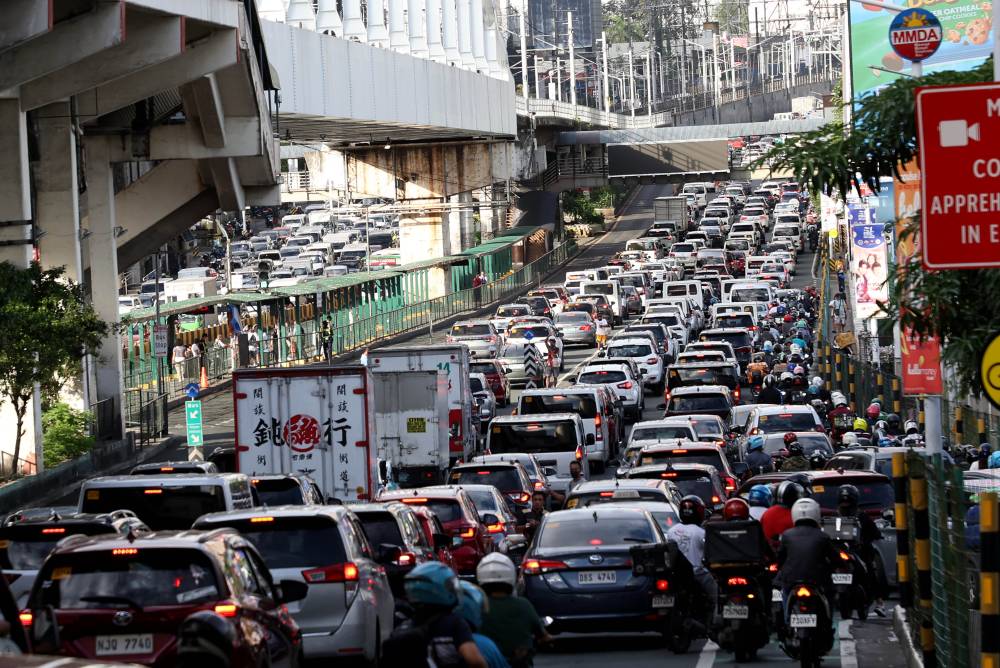
The LTFRB likewise cited a report by the Metropolitan Manila Development Authority, which said that the average vehicle speed on Edsa in the first two weeks of December dropped to just 11 km per hour (kph) from the usual 17 kph to 20 kph.
The average travel time in Metro Manila was also found to be 25 minutes and 30 seconds per 10 kilometers. But it further worsened to 28 minutes during the morning rush hour and 34 minutes in the evening rush hour, based on a 2024 study by the Congressional Policy and Budget Research Department of the House of Representatives.
Mendoza signed Memorandum Circular No. 2025-056 on Dec. 12, which imposed a surge pricing cap on TNVS amid complaints from commuters about high fares being charged during rush hour or when the weather is bad, especially amid the holiday rush.
Those who “willfully or repeatedly” charge fares exceeding the temporary surge pricing cap, or try to bypass the cap through indirect fees or similar charges, face penalties.