





TNVS sector makes rare participation in transport strike


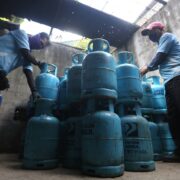
The transport strike triggered by rising oil prices and growing discontent over the government response saw the rare participation of a relatively young sector: TNVS or transport network vehicle service drivers.
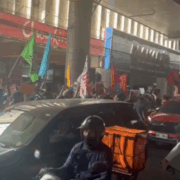
Around 150 TNVS vehicles formed a convoy and made their presence felt by honking their horns in solidarity with their counterparts in the jeepney, bus, and UV Express sectors.
The parade was part of the two-day nationwide strike that began on Thursday, organized by a coalition of 20 transport groups.
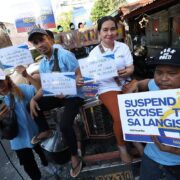
In a briefing, Christopher Maglalang of the TNVS Community of the Philippines said TNVS drivers would be supporting the demands of the coalition, such as the suspension of value-added and excise tax on fuel and the rollback of prices to P55 per liter.
The coalition is also seeking the repeal of the oil deregulation law, the implementation of a fare increase across all modes of transport, and an increase in the minimum wage, among others.
“For our ranks in the TNVS sector, it has been very difficult because of the continuous increase in the price of petroleum,” he said. “We are disappointed because despite this reality, our government seems to remain blind to the current situation.”
“Please have mercy on us, especially for us in transportation. If we don’t move, the economy won’t move; transportation is the backbone of the economy,” Maglalang added.
Shrunken earnings
According to Gary Galamgam, also from the TNVS Community, the recent increase in diesel prices to up to P115 per liter had forced many drivers to extend their working hours—from 12 to 16 or even 18—just to hit their usual income.
“For others, if they don’t have money to bring home, it takes 24 hours,” he said.
Glenford Philip Artuz, another TNVS driver, said their earnings had shrunk by as much as 70 percent.
“The government is forcing us to believe that we have enough supply, but why does the price remain high?” he asked.
A TNVS driver for almost nine years, Artuz said he had managed to cope with price adjustments in the past, but the recent ones were the “worst” because they happened every week.

So for the first time, he decided to join a transport strike, he added.
Left with mouth open
“First, what angered our sector is when [President Marcos] took back what was supposed to be our tiny bit of hope,” he said, referring to the President’s decision last week to suspend the fare increases already announced by the Land Transportation Franchising and Regulatory Board.
“That fare increase was our wish, but before it could be implemented it was taken back. It was just frustrating; it’s like you’re about to be given some food and then suddenly it’s withdrawn and you’re just left with your mouth open,” Artuz said.
Prior to the price hikes on fuel, Artuz said a TNVS driver could earn an average of P1,000 a day after working for 12 to 16 hours.
Now, he said, a net income of P500 is already “a lot” after 18 hours on the road.