




Top UN court to rule on right to strike

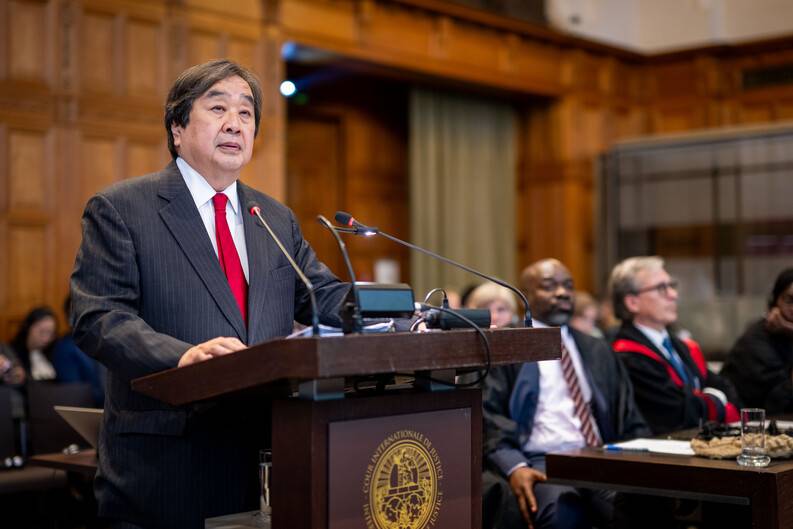
The top United Nations court will on Thursday issue a ruling on the right to strike that both unions and employers say could have profound implications for global labor relations.
The International Court of Justice (ICJ) has been asked to deliver a so-called advisory opinion on whether a treaty drawn up in 1948 by the International Labour Organization (ILO) implicitly enshrines the right to strike.
The treaty, known as Convention 87, is an agreement between unions and employers including the right “in full freedom, to organize their administration and activities.”
Unions at the ILO say this by extension enshrines the right to industrial action, but employers disagree.
So the 15-judge panel at the ICJ in The Hague will hand down its ruling, which is not binding, but in practice will clarify the right to strike in international law.
Heated battle
The ICJ has been asked the question: “Is the right to strike of workers and their organizations protected under the Freedom of Association and Protection of the Right to Organize Convention, 1948 (No. 87)?”
Behind the dry legal interpretation of a decades-old treaty lies a heated battle between unions and employer groups at the ILO that played out in hearings in October 2025.
“This case is about more than legal abstractions,” Harold Koh, representing the International Trade Union Confederation, told the judges.
“It will affect the real rights of tens of millions of working people around the world,” he added.
Koh warned that if the ICJ ruled the right to strike was not inherent in the Convention, companies and governments could start to unpick labor deals around the world.
“National employer groups would contest the right to strike country by country, focusing first on nations with compliant courts, weak civil societies, and ineffective media,” said Koh.
‘Inflammatory, alarmist’
On the other side of the argument, Roberto Suarez Santos, from the International Organisation of Employers, said the 1948 convention “neither explicitly nor implicitly covers the right to strike.”
Santos noted that the rules surrounding industrial action varied widely from country to country—whether emergency services were excluded, for example.
Rita Yip, also representing the employers’ groups, dismissed the union arguments as “inflammatory and alarmist.”
The right to strike is still protected in national laws, argued Yip, and does not need to be enshrined in “boilerplate norms, imposed at the highest level.”