









Tourism, land costs linked to Baguio expensive fuel

BAGUIO CITY—Heavy tourist traffic and high property values may explain the unusually exorbitant gasoline prices in this city over the past decade, according to the Department of Energy (DOE).
Local officials have raised concerns about fuel price disparities since 2016, as gasoline in Baguio was frequently P10 to P15 more expensive than in neighboring towns like San Fernando City, La Union, or in capital centers like Quezon City.
“Baguio prices for gasoline and diesel have been substantially high despite the fact that its closest oil depot is just an hour’s drive from La Union ports for oil tankers and should not require too much freight expenses,” several councilors argued during the city council session on Monday.
From Jan. 27 to Feb. 2, the DOE recorded elevated gasoline prices from independent and major oil players Shell, Caltex, and Petron, ranging from P63.75 to P75.17 per liter in Baguio, compared to P53.60 to P63.50 per liter in San Fernando.
In 2019, gasoline stations briefly reduced Baguio fuel prices by at least P3 following intense public backlash that prompted a congressional inquiry led by former Baguio Rep. Marquez Go. Prices soon returned to their original levels in the tourist city.
Logistical issues
A recent DOE study concluded that logistical issues, such as distributor rents and high demand from visiting motorists, could explain the price differences in northern Luzon, said Aida Parena, supervising science researcher of the Oil Industry Competition and Monitoring Division at the DOE’s Oil Industry Management Bureau (OIMB).
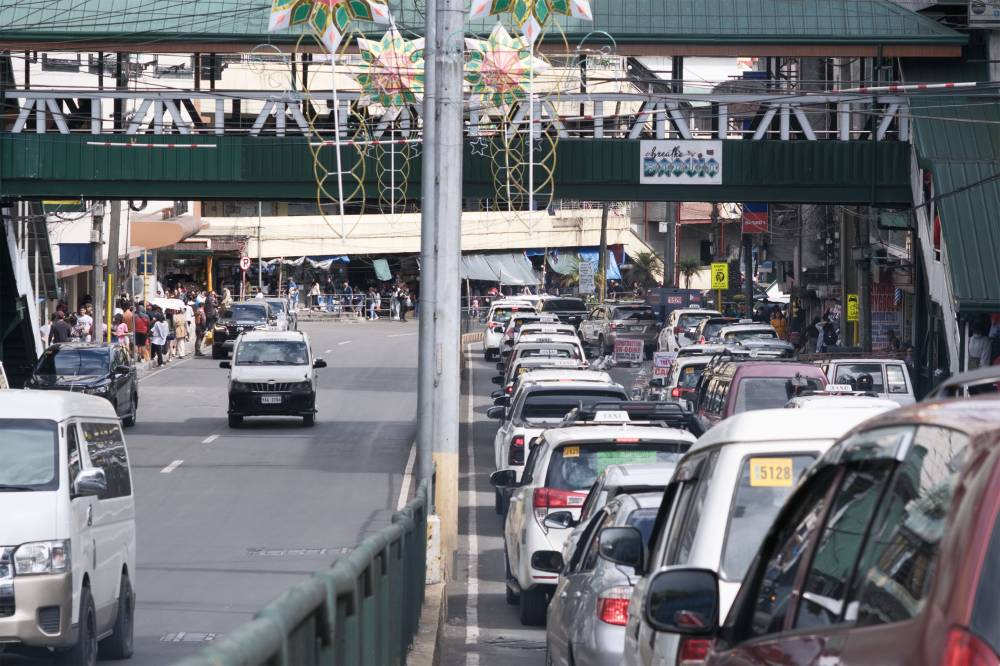
Mayor Benjamin Magalong had earlier said: “As many as 28,000 vehicles driven by out-of-town businessmen and tourists add to the 59,000 registered Baguio vehicles rolling through city streets at any given hour.”
Because oil commodities are deregulated under Republic Act No. 8479 (the 1988 oil deregulation law), the DOE does not receive reports on the operational expenses of oil companies, Parena said during the council session, where she participated virtually alongside other OIMB officials.
“Our North Luzon office monitors Luzon fuel prices each week,” she added.
Price disparities occur in other parts of the country, including Metro Manila, the DOE officials noted.
“The price differences are dictated by how each oil company processes imported gasoline, the locations of their gas stations, and the prevailing business environment in these localities,” the DOE study stated.
The DOE highlighted Baguio’s highest commercial land values, ranging from P101,300 to P208,600 per square meter, compared to P34,028 per sq m in City of San Fernando, La Union, and P24,500 per sq m in La Trinidad, one of Baguio’s closest neighbors.

In December 2025, the city assessor’s office presented new market values for Baguio real estate, marking downtown Session Road at P300,000 per sq m.
The agency also noted that fuel prices are sensitive to economic disruptions, such as the dollar exchange rate. Imported gasoline was affected when the peso weakened to P58 to P59 against the dollar toward the end of December, the DOE said.
In 2018, Congress deliberated on an amended oil deregulation law that would require oil firms to “unbundle” fuel rates and allow government measures against potential price adjustments, but the measure did not pass.
On Dec. 4 last year, Baguio Rep. Mauricio Domogan proposed classifying gasoline, diesel, and other petroleum products as price-regulated commodities in a draft amendment to the Price Act (Republic Act No. 10623).
Parena said the DOE study suggested adding more gasoline distributors to widen competition and help bring down prices. “Baguio is served by 18 retail stations, of which 11 are owned by major oil firms,” she noted.
But Vice Mayor Faustino Olowan said the city is more inclined “to put up its own gasoline storage facility instead and would operate its own retail stations at a subsidized price to lower gas prices.”