








Travel tax abolition among 21 Marcos priority bills

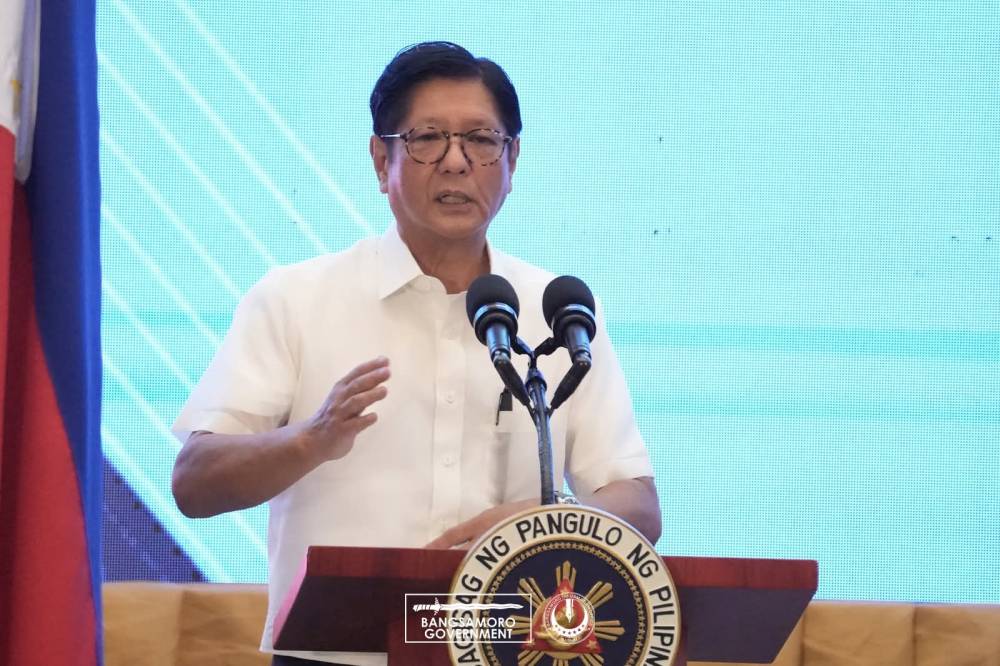
President Marcos has approved 21 proposed bills, including the abolition of the travel tax, as part of the priority measures of the Legislative-Executive Development Advisory Council (Ledac), Palace press officer Claire Castro said on Tuesday.
Castro said the President expects Congress to pass these bills by June, a month ahead of his second to the last State of the Nation Address.
Asked what prompted the President to approve the inclusion of the bill eliminating the travel tax, Castro said Mr. Marcos saw that the proposed legislation would ease the costs for Filipino travelers and boost tourism activity.
“The President is also aware that Filipinos who travel do so not only for leisure, but also for work and, in some cases, for emergencies,” she added.
The development came less than a week after the President’s eldest, House Majority Leader Ferdinand Alexander “Sandro” Marcos, filed House Bill No. 7443 seeking the abolition of the travel tax, which currently amounts to P2,700 for first-class passengers and P1,620 for economy travelers.
The young Marcos welcomed its inclusion in the priority list, emphasizing that the travel tax has become an unnecessary burden for Filipino travelers.
Half of the proceeds from the tax, imposed on outbound Filipino travelers under Presidential Decree No. 1183 issued in 1977 and related provisions of the Tourism Act of 2009, goes to the Tourism Infrastructure and Enterprise Zone Authority, 40 percent to the Commission on Higher Education for tourism-related educational programs, and 10 percent to the National Commission for Culture and Arts.
Castro noted, however, that abolishing the travel tax would not mean withdrawing government support for sectors that currently receive funding from the impost as these could be subsidized under the national budget.
Political dynasty ban
Congress deliberations on bills to ban political dynasties are also expected to be expedited by the renewed push made by Mr. Marcos during the meeting of the Ledac, a consultative and advisory body to the President on programs and policies that require Congress’ actions.
“The President also prioritized getting an update on the proposed antipolitical dynasty measure as this is something both the President and the public want enacted as soon as possible,” Castro noted.
Citing Sen. Risa Hontiveros, who was among those who attended the Ledac meeting, Castro said the Senate has started public consultations on the matter in Pasig City and is set to hold consultations in Luzon, the Visayas, and Mindanao.
The proposed antipolitical dynasty law and a bill on party list system reforms, which were already included by the President in the priority list during the Ledac meeting in December last year, would strengthen the country’s democratic processes by creating fairer, more inclusive political representation through safeguards that prevent abuse of public office, according to the Department of Economy, Planning, and Development (DepDev).
Included in the latest priority list are the bills on the resetting of the Bangsamoro Autonomous Region in Muslim Mindanao (BARMM) parliamentary elections; anti-online sexual abuse or exploitation of children to strengthen the capacity of law enforcement and cover emerging technologies, antifake news and digital disinformation to penalize malicious and deliberate dissemination of false information that threatens public order or national security.

Anticorruption drive
The Right to Information Act and the bill on reforming the bank deposits secrecy law have been added to the priority list along with the proposed law creating an Independent People’s Commission to empower the current Independent Commission for Infrastructure and the Citizen Access and Disclosure of Expenditures for National Accountability (Cadena) Act that were carried over from the December 2025 Ledac meeting.
These measures seek to institutionalize transparency and accountability in governance by ensuring reliable public access to government financial data and information.
“By establishing stronger oversight mechanisms over infrastructure spending and advancing real-time transparency in the budget process, the administration continues to drive reforms to make sure every peso spent works for the benefit of the Filipino people,” DepDev Secretary Arsenio Balisacan said in a statement.
Other priorities
The other priority legislative measures for 2026 are the amendments to the coconut farmers and industry trust fund law; amendments to the Pantawid Pamilyang Pilipino Program (4Ps); amendments to the Masustansyang Pagkain Para Sa Batang Pilipino Act; amendments to the government assistance to students and teachers in private education; the classroom-building acceleration program; the National Center for Geriatric Health; the waste-to-energy bill; amendments to the Electric Power Industry Reform Act; amendments to the rice tariffication law; creation of a Department of Water Resources, and an estate tax amnesty. —WITH A REPORT FROM KRIXIA SUBINGSUBING
******
Get real-time news updates: inqnews.net/inqviber