







UN: Demand for tech minerals could triple by 2030


Demand for critical minerals that power technology from smartphones to missiles could triple by 2030 and quadruple by 2040, the United Nations political chief told the UN Security Council on Thursday.
“A decade ago, minerals such as lithium, cobalt, and nickel had limited strategic importance,” Undersecretary General Rosemary DiCarlo said. “Today, they underpin the technologies powering the digital economy and the energy transition.”
She spoke at a signature event chosen by the United States, which holds the Security Council presidency this month, entitled “Energy, Critical Minerals and Security.”
Calling critical minerals one of the main drivers of the 21st-century economy, DiCarlo said that in 2023, trade in raw and semiprocessed minerals reached approximately $2.5 trillion.
“This represents more than 10 percent of global trade,” she said. “Demand could triple by 2030 and quadruple by 2040.”
Her office said the figures and projection were from UN reports in 2025.
Security interest
US Energy Secretary Chris Wright, who chaired the meeting, said it is in the security interest of the United States and its allies not to be overly dependent on any single country “for materials critical to our economies and national security.”
The Trump administration is making bold moves to shore up supplies of critical minerals needed for electric vehicles, fighter jets, and other high-tech products. China, which has had a stranglehold on rare earth minerals, choked off their flow in response to President Donald Trump’s sweeping tariffs last year.
While the two global powers reached a truce to pull back on the high import taxes and stepped-up rare earth restrictions, China’s limits remain tighter than they were before Trump took office. Last month, his administration announced that it wants to create a critical minerals trading bloc with its allies and partners to counter China’s dominance.
‘Green mining’
China’s UN Ambassador Fu Cong told the council that imbalances in supply and demand are becoming increasingly pronounced “as the world enters a new period of turbulence and transformation.”
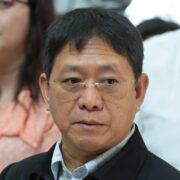
Fu also urged all countries to participate in an initiative to promote the transformation of the mining sector to “green mining,” unveiled by China at the G20 summit in South Africa last November.
As part of the US effort to diversify critical mineral supplies, which also includes Australia and Ukraine, the administration is stepping up cooperation with Venezuela and Congo.
Earlier Thursday, US Secretary of the Interior Doug Burgum said Venezuela’s government will give security assurances to mining companies that invest in mineral-rich areas long-controlled by guerrilla members, gangs, and other illegal groups.
Last month, Congo’s President Felix Tshisekedi offered US companies access to eastern Congo’s rich minerals—mostly untapped because of decades of violence and estimated to be worth $24 trillion—as a bargaining chip for US support to help fight off rebels and build critical infrastructure in the region.