









UP officials, 2 firms face raps over mall, food hub


Displaced vendors, students, workers, transport groups and residents of the University of the Philippines (UP) have filed criminal and administrative complaints against UP president Angelo Jimenez and other university officials, as well as private entities involved in the development of two commercial buildings on the Diliman campus: the “DiliMall” shopping center and GyudFood, a food hub.
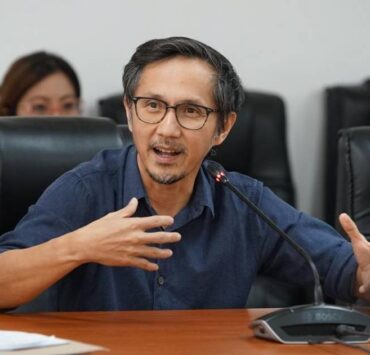
Despite numerous dialogues with the UP administration, Kristian Mendoza, representing the University Student Council as one of the complainants, said on Monday that the discussions did not lead to an “amicable resolution,” prompting them to file a legal complaint before the Office of the Ombudsman.
Aside from Jimenez, also named as respondents in the case were former UP president Danilo Concepcion; Daniel Peckley, UP vice president for development; Raquel Florendo, former UP vice chancellor for planning and development; property management and consultancy firm CBMS Property Company OPC (also known as CBMS Consultancy); and JoseBizCo Inc.
The private companies were granted leasing authority for the two commercial centers: CBMS Consultancy for DiliMall, which replaced the old UP Shopping Center after it burned down in 2018, and JoseBizCo Inc. for GyudFood, a food hub on C.P. Garcia Avenue.
The respondents were cited for alleged violations of the Anti-Graft and Corrupt Practices Act, specifically manifest partiality, evident bad faith and gross inexcusable negligence, as well as administrative liabilities, including grave misconduct, gross neglect of duty, grave abuse of authority and conduct prejudicial to the best interest of the service.
‘Ghost entity’
According to the complainants, the respondent UP officials acted with profound lack of prudence and due diligence when they entered into a master leasing agreement (MLA) with a “ghost entity.”
Citing records from the Securities and Exchange Commission, they said CBMS Property Company OPC was only formally registered on Feb. 10, 2023, or more than a month after the deal was signed on Jan. 6 of that year.
CBMS Research and Management Consultancy Services, the entity named in the MLA, was registered as a sole proprietorship with the Department of Trade and Industry only six months after the contract was executed.
“This demonstrates that Respondent UP officials entered into a major contract with an entity that, for all legal intents and purposes, did not yet formally exist or possess the requisite legal personality at the time of signing. This gross oversight is compounded by the fact that the registered business address of both CBMS entities is not a commercial office but a private residence,” the complainants said.
The Inquirer called up the company, but they deferred comment on the matter.
As for Jimenez, he said in a statement that UP has not yet received a copy of the complaint, adding that, “We welcome and acknowledge the filing of the complaint and regard it as an opportunity to present the University’s perspective.”
“UP remains strongly committed to continuously enhancing the university experience and advancing its mission as the national university, with careful consideration for those affected and a clear commitment to ongoing improvement,” Jimenez said.
No BOR approval
The complainants also questioned the commercial agreements, which were executed in 2022 and 2023 without the approval of the UP Board of Regents (BOR) for the overall project framework, allegedly in violation of the UP Charter or Republic Act No. 9500.
Another issue raised was the one-year rent-free period granted both to CBMS Consultancy and JoseBizCo Inc., during which UP received zero rental income from DiliMall and GyudFood Hub.
“This arrangement effectively allowed Private Respondents to exclusively monetize a significant public asset for its own principal benefit, without any immediate remittance to the University. This constitutes a direct and substantial financial loss to UP, as potential and significant revenue from a major commercial development was entirely forfeited during this period,” they said.
The old UP Diliman Shopping Center was built in 1976 at the corner of Laurel and Apacible Streets.

Its tenants ranged from hardware stores, a barber shop, beauty parlor, food stalls, tailoring shops, a bookstore, drugstore, sari-sari store, optical shops and various printing, photocopying and bookbinding centers. However, it was hit by a fire in 2018, and the vendors were given temporary stalls at the old UP Tennis Court, only to be evicted in April 2024.
Not prioritized
The complainants said that longstanding tenants of the old shopping center were not given priority for stalls at the new DiliMall, and if they were considered at all, “they were unjustly subjected to exorbitant higher rental rates” in addition to a 7-percent gross sales base rates imposed by CBMS Consultancy.
Herminigildo Laroa, vice president of the UP Shopping Center Stallholders Association Inc., began running a copy center in 1999 that provided photocopying, bookbinding and typing services to the UP community.
After the March 2018 fire that consumed everything they owned, amounting to P1.5 million, he lamented that the administration “failed to provide assistance” regarding their temporary relocation site.
Instead of honoring a 2004 agreement between the university and their organization, Laroa said the original vendors were “deliberately excluded from direct lease negotiations for DiliMall, which was subsequently taken over by CBMS Property Company OPC.”
In asking the Office of the Ombudsman to initiate the administrative and criminal proceedings against the respondents, the complainants also sought the preventive suspension of the public officials involved.
“We are not concluding guilt. That is the Ombudsman’s role. What we are presenting are contracts, testimonies and documentary evidence that point to a pattern that requires urgent investigation,” Mendoza said.