








US returns to Subic to recover POW remains

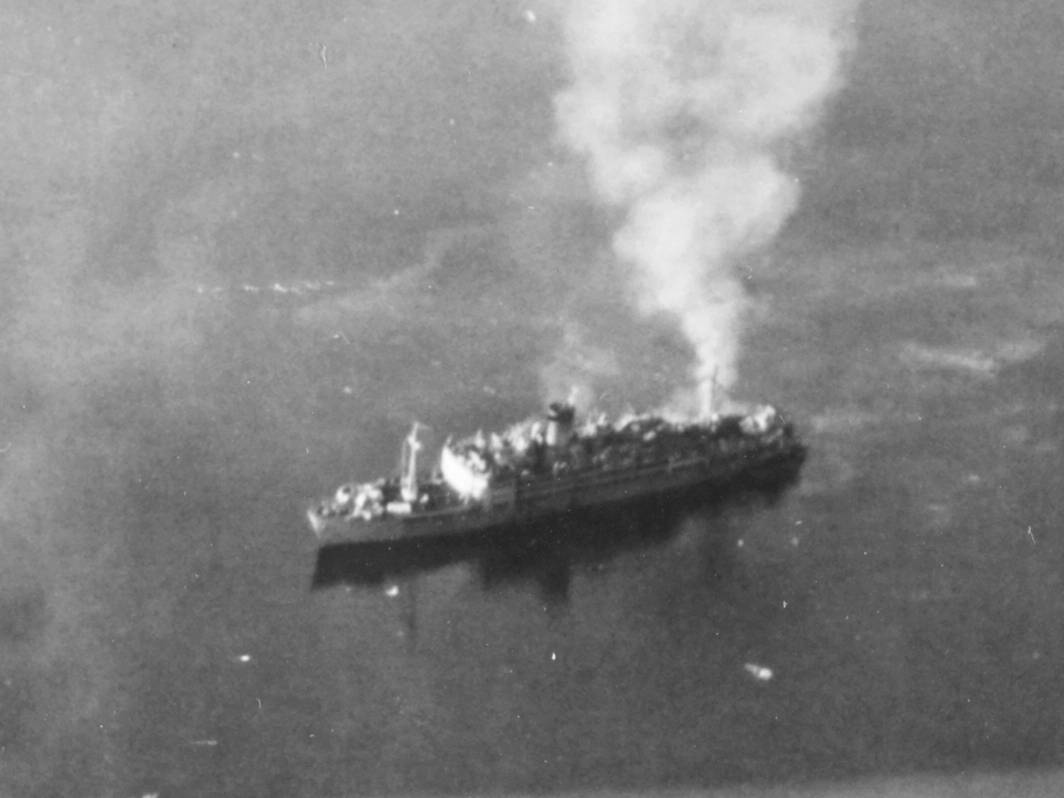
The United States has launched one of its largest and most complex efforts to recover the remains of US prisoners of war (POWs), who died in a Japanese transport ship sunk in Subic Bay, during World War II.
The operation to retrieve Japanese vessel Oryoku Maru, which was destroyed in December 1944 while transporting American and other POWs, is led by the Defense POW/MIA (missing in action) Accounting Agency (DPAA) of the US Department of Defense, together with the US Navy and the Philippine government.
In a statement on Feb. 24, DPAA said the underwater operation underscores the enduring alliance between the United States and the Philippines and their shared commitment to account for their missing service members even decades after past conflicts.
“This mission represents our solemn commitment to provide the fullest possible accounting to families and the nation,” Capt. Barrett Breland, DPAA team leader for the Oryoku Maru operation, said in the statement also reposted by the US Embassy in Manila.
“We carry this responsibility with compassion and integrity, and our success depends on strong partnerships and unwavering respect for the fallen,” Breland said.
‘Hell ships’
Records from the US National Archives and Records Administration (Nara) identify the Oryoku Maru as one of several Japanese “hell ships” used to transport their prisoners.
Japanese guards loaded 1,619 POWs into the crowded, unventilated ship as it left Manila Harbor for Japan on Dec. 13, 1944.
But in the next two days, US Navy aircraft attacked the Oryoku Maru, unaware it carried prisoners, and sank the vessel near the US naval base—then called Olongapo Naval Station under Japanese rule—in Subic Bay.
Japan launched an invasion of the Philippines on Dec. 8, 1941, prompting the country’s surrender by Dec. 26 that year, when it declared its capital Manila, an “open city.”
According to the Nara, 286 of the POWs were reported dead or missing after the attack in Subic that December of 1944. By then, the US was retaking the country two months after Gen. Douglas MacArthur’s landing in Leyte.

Forensic identification
The DPAA said the recovery faces significant challenges, requiring “advanced diving, mapping and recovery” as well as forensic identification techniques to ensure human remains and artifacts are retrieved “with utmost care and dignity.”
The recovered remains are then sent to US laboratories, where forensic anthropologists and DNA experts work to identify individuals and notify families.
The DPAA made some progress last year in identifying a number of the soldiers—among them, US Army Cpl. Floyd Dunning, 32, of Waverly, Virginia; Army Lt. Col. Louis Roemer, 43, of Wilmington, Delaware; Army Capt. Paul Pearson, 38, of Manhattan, Kansas; and Army 2nd Lt. Charles Arnao, 30, of Philadelphia.
Some of these fatalities died in other hell ships such as the Enoura Maru and Brazil Maru.
Rosettes will be placed next to their names at the Manila American Cemetery, while Pearson, in particular, is due to be buried at Arlington National Cemetery in the US state of Virginia.