





US seen as emboldening Russia, China to rewrite rules

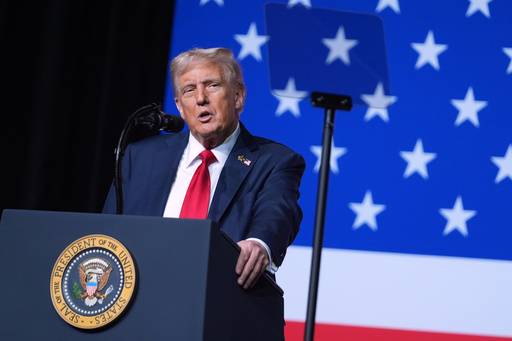
The United States has signaled that it has “no interest in defending the rules-based international order” after it bombed Venezuela and captured its leader, which places the Philippines in a “much weaker” position amid its own conflict with China, a political analyst said on Sunday.
Political science professor Aries Arugay of the University of the Philippines (UP) said the large-scale military operation conducted by the United States early Saturday “is a grave violation of international law and the [United Nations] Charter.”
“Unfortunately, it’s coming from the United States. [Other countries] that want to uphold this rules-based international order… [they] thought the US would defend [it],” he told the Inquirer. “That’s why when Russia invaded Ukraine, there was condemnation on the part of the United States, although it was under the Biden administration.”
“If the US itself, who is supposed to uphold the international order, committed this, then we should arrive at the conclusion that this rules-based international order has been severely undermined by [US President Donald] Trump’s actions,” Arugay added.
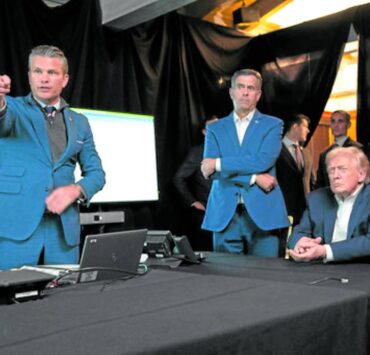
Trump announced on Saturday that the United States had carried out a “large-scale strike” against Venezuela,” and that President Nicolas Maduro and his wife Cilia Flores had been captured and flown out of the country to stand trial on “narco-terrorism” conspiracy charges in New York.
According to Arugay, the US operation in Venezuela has “no legality in terms of international law and the UN Charter.” Whether the move was “domestically legal” under US law, “that will unfold in the coming days,” he added.
For the UP professor, who visited Caracas in 2013 to conduct fieldwork research for his Ph.D. dissertation, it “seems clear” that the interest of the United States lies in Venezuela’s oil reserves, with the goal of achieving “hemispheric superiority” or control over the entire Western hemisphere.
China ‘very emboldened’
“Under Trump, his foreign policy and strategy is really [based on the] Monroe doctrine, meaning that when it comes to the Western hemisphere, no other power should dominate except the United States,” he said.
Asked if such actions would have an impact on China’s encroachment on the West Philippine Sea, Arugay said, “I think regardless if this happened or not, China is very emboldened. It will do what it wants, particularly in its own sphere of influence, and unfortunately that’s Asia.”
However, countries such as China or Russia, which seek to rewrite the rules of the international order, “will now have more ammunition, more basis” to defend their actions following the military operation in Venezuela, he noted.
“China will now have ammunition every time the US will try to moderate China and criticize China for any action that the US will interpret as aggressive or bullying behavior,” Arugay explained.
He said China and Russia can “even say that, in fact, no one really is defending this international order anymore, because the latest actions of the United States seem to point that it has no interest in the international rules of the game. Because before, there still seemed to be some pushback.”
“In other words, we’re really living in a world that is volatile, and with what happened in Venezuela, it’s like we’ve thrown everything away, even the UN Charter,” he added.
For countries like the Philippines, which rely on the “predictability” of the rules-based international order because they do not have much military and economic capabilities, “this really puts us in a much weaker position because we cannot rely on the international rules anymore,” said Arugay.
“In this part of the world, I think what we can do is we really have to stand up together and uphold this rules-based order. Unfortunately, the US action in Venezuela has signaled that the US has no interest in defending this rules-based international order at the moment under Trump,” he said.
Call out US
Lawyer Sonny Matula, chair of the Nagkaisa Labor Coalition, warned that the United States’ attack on Venezuela could send a wrong message to other global superpowers.
“If we allow the US government to throw its weight in Venezuela, which is within its region, what would prevent other superpowers from invading other sovereign nations within their region?” he said in a statement.
Matula said this should also prod the Philippines to call out its ally, the United States, in the same manner that it has denounced China’s aggression in the waters within the country’s exclusive economic zone.
“We cannot credibly oppose China’s bullying and coercion in the West Philippine Sea while excusing or normalizing violations of international law by the US or other superpowers elsewhere,” he said.
‘Reality check’
Some lawmakers on Sunday also condemned the US attack. In a statement, Akbayan Rep. Perci Cendaña agreed that the “illegal invasion… only bolsters similar illegal aggressive acts of Russia in Ukraine and China in the West Philippine Sea.”

“When the three major powers openly endorse a doctrine of might equals right then the world must vigorously oppose it,” he said.
Mamamayang Liberal Rep. Leila de Lima said the United States has “once again regressed into an aggressor state” undermining the rules-based international order.
She also believes that the Philippines, “as a US ally [is now left] with a compromised moral ascendancy in protesting, condemning, opposing, and fighting China’s aggression in the West Philippine Sea.”
De Lima said the invasion in Venezuela should serve as a “reality check” on the Philippines’ reliance on the United States for “moral leadership in the world stage and as an ally for regional security and a rules-based international order.”
ACT Teachers Rep. Antonio Tinio expressed the Makabayan bloc’s condemnation of US “military aggression” in Venezuela.
“Venezuela’s crime in the eyes of Washington is its assertion of national sovereignty and its refusal to allow foreign corporations unfettered access to its natural wealth,” he said.
Filipinos in Venezuela
Meanwhile, Department of Foreign Affairs spokesperson Angelica Escalona said the government is closely monitoring the “evolving situation in Venezuela.”
The Philippine Embassy in Bogota, Colombia, which serves as nonresident mission for Venezuela, has issued a travel and safety advisory to at least 74 Filipinos in the South American country.
Escalona said the embassy “stands ready to provide assistance to them, as necessary and appropriate, to keep them out of harm’s way.” —WITH REPORTS FROM DEXTER CABALZA AND ZACARIAN SARAO