





US to ‘run’ Venezuela, tap oil reserves

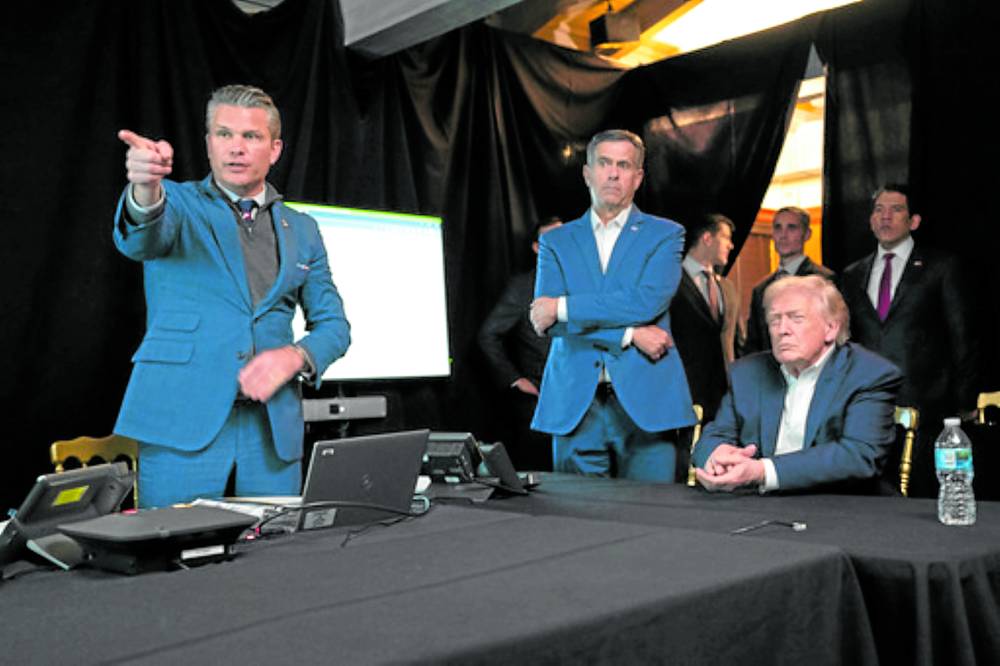
CARACAS, Venezuela—Hours after an audacious military operation that plucked leader Nicolás Maduro from power and removed him from the country, US President Donald Trump said on Saturday the United States would run Venezuela at least temporarily and tap its vast oil reserves to sell to other nations.
The dramatic action capped an intensive Trump administration pressure campaign on the South American nation and its autocratic leader and months of secret planning resulting in the most assertive American action to achieve regime change since the 2003 invasion of Iraq.
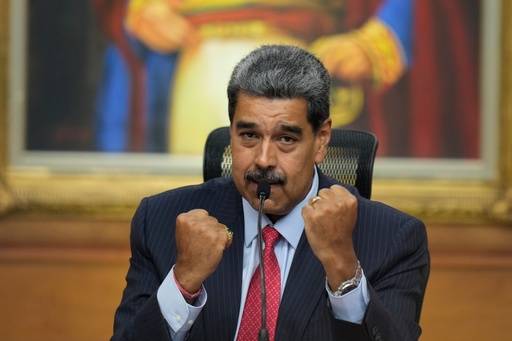
Venezuela’s Vice President Delcy Rodríguez, whom the high court has ordered to assume the role of interim president, demanded in a speech that the United States free Maduro and called him the country’s rightful leader.
Maduro and his wife, seized overnight from their home on a military base, were first taken aboard a US warship on their way to face prosecution for a Justice Department indictment accusing them of participating in a narco-terrorism conspiracy.
Trump himself posted a photo on social media showing Maduro wearing a sweatsuit and a blindfold on board the USS Iwo Jima.
A plane carrying the deposed leader landed around 4:30 p.m. on Saturday at an airport in New York City’s northern suburbs. Maduro was escorted off the jet, gingerly making his way down a stairway before being led across the tarmac surrounded by federal agents, several of whom filmed him on their phones as he walked.
He was then flown by helicopter to Manhattan, where a convoy of law enforcement vehicles, including an armored car, was waiting to whisk him to a nearby US Drug Enforcement Administration office.
Maduro and other Venezuelan officials were indicted in 2020 on “narco-terrorism” conspiracy charges, but the Justice Department released a new indictment on Saturday of Maduro and his wife, Cilia Flores, that painted the regime as a “corrupt, illegitimate government” fueled by a drug trafficking operation that flooded the United States with cocaine.
Maduro’s veep
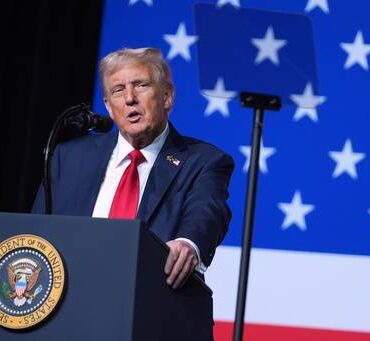
At a Mar-a-Lago news conference following the US operation, Trump said the US government would help run the country and was already doing so, even if there were no immediate signs of it.
Venezuelan state TV continued to air pro-Maduro propaganda, broadcasting live images of supporters taking to the streets in Caracas in protest.
He said about Rodriguez: “She’s essentially willing to do what we think is necessary to make Venezuela great again.”
He also claimed she had a long conversation with Secretary of State Marco Rubio in which she said, as Trump quoted her, “We’ll do whatever you need.”
“I think she was quite gracious,” Trump said. “We can’t take a chance that somebody else takes over Venezuela that doesn’t have the good of the Venezuelan people in mind.”
Trump said opposition leader Maria Corina Machado, who was awarded last year’s Nobel Peace Prize, didn’t have the support to run the country.
But Rodríguez, who faced US sanctions during Trump’s first administration, maintained that Maduro was still Venezuela’s legitimate leader.
“What is being done to Venezuela is an atrocity that violates international law,” she said in her televised address. “History and justice will make the extremists who promoted this armed aggression pay.”
‘They stole our oil’
Trump also disclosed plans to “fix” the country’s oil infrastructure and sell “large amounts” of oil to other countries.
“You know, they stole our oil. We built that whole industry there. And they just took it over like we were nothing,” he said.
“We’re gonna rebuild the oil infrastructure, which will cost billions of dollars. It’ll be paid for by the oil companies directly. They will be reimbursed for what they’re doing. But that’s gonna be paid.”
US companies began drilling for oil in Venezuela in the early 1900s, followed by other foreign companies. Decades later, the country became a key global supplier, especially for the United States—even becoming a founding member of the Organization of the Petroleum Exporting Countries (Opec).
But amid the oil boom in 1976, Venezuela nationalized its oil industry under then President Carlos Andres Perez, who established the state-owned Petroleos de Venezuela (PDVSA) to control all oil resources.
Venezuela was considered one of the world’s top five oil exporters, pumping around 3.5 million barrels a day, by the time Hugo Chavez was elected in 1998. He further nationalized all oil assets and restructured the state company, but prioritization of political goals led to the start of the Venezuelan oil industry’s production decline, which critics also blamed on corruption and mismanagement.
Empty streets
In 2005, Washington imposed sanctions on Venezuelan oil in response to the country’s nationalization program. Trump introduced more sanctions during his first term, and last December imposed a blockade on oil tankers transiting Venezuela.
At a protest in the Venezuelan capital following the US strike, Caracas Mayor Carmen Meléndez joined a crowd demanding Maduro’s return.
Armed people and uniformed members of a civilian militia also took to the streets of a Caracas neighborhood long considered a stronghold of the ruling party.
Small rallies broke out in parts of Caracas with some progovernment supporters burning an American flag, but most streets remained empty.
Some areas remained without power, but vehicles moved freely. Later in the day, long lines wound through supermarkets and outside gas stations as Venezuelans long used to crises stocked up once again.
“How do I feel? Scared, like everyone,” said Caracas resident Noris Prada, who sat on an empty avenue looking down at his phone. “Venezuelans woke up scared, many families couldn’t sleep.”
In Florida, home to the largest Venezuelan community in the United States, people wrapped themselves in Venezuelan flags, ate fried snacks and cheered as music played. At one point, the crowd chanted “Liberty! Liberty!”
Venezuelans in other parts of the Spanish speaking world, from Spain to Colombia to Guatemala to Chile to Argentina, also flocked to the streets to celebrate Maduro’s ouster.
Questions of legality
But some legal experts raised concerns about the operation’s legality without congressional approval.
Connecticut Rep. Jim Himes, the top Democrat on the House Intelligence Committee, said he had seen no evidence that would justify Trump striking Venezuela without approval from Congress and demanded an immediate briefing by the administration on “its plan to ensure stability in the region and its legal justification for this decision.”
The United Nations Security Council, acting on an emergency request from Colombia, planned to hold a meeting on US operations in Venezuela on Monday morning.
Venezuela’s ruling party has held power since 1999, when Maduro’s predecessor, Chavez, took office. Maduro took over when Chavez died in 2013.
Sources: Inquirer archives, Aljazeera, Reuters, opec.org, treaties.un.org