











VAWC case can proceed even with victim’s death

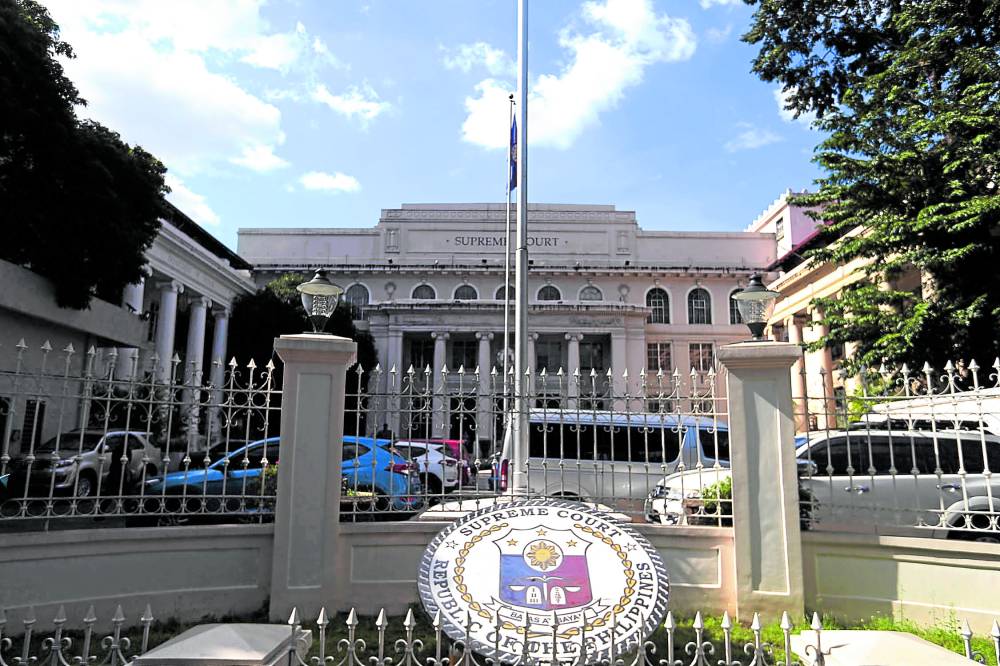
The Supreme Court has ruled that a case of violence against women and children (VAWC) can continue to be prosecuted despite the death of the complainant if there are other witnesses or evidence to prove the criminal liability of the accused.
In a 16-page decision, the high tribunal’s Second Division upheld the conviction of a married man for psychological violence under Section 5(i) of Republic Act No. 9262 after he abandoned his family and had an affair with another woman who bore him a child.
The petitioner was sentenced to imprisonment of six months up to eight years. He was also ordered to pay a fine of P100,000, and P25,000 in moral damages to the heirs of his wife who was shot and killed while the case was still in court.
The ruling in G.R. No. 268392 penned by retired Associate Justice Mario Lopez held that the testimonies of those who witnessed the man’s abusive acts and the mental anguish suffered by his wife were enough “not only to initiate the criminal case but also to constitute the very building blocks sufficient to convict the accused for violation of Republic Act No. 9262.”
“Despite her death, [the victim’s] mental and emotional anguish may still be established by the documentary evidence offered by the prosecution and testimonies of the other witnesses,” the high court said in its May 19 decision made public only recently.
It further noted that being a public offense, a case under RA 9262 may be initiated by anyone who has personal knowledge of the circumstances involving the crime’s commission.
Emotional violence
The couple were wed in 2006 in Cotabato and had two children. The wife filed the criminal complaint against her husband in 2015, alleging she suffered mental torture because he abandoned them and had an affair which resulted in a child.
She added that she suffered further mental anguish after he publicly posted prenuptial photos with his mistress and flaunted their relationship. The wife also accused him of inflicting emotional violence on their children, saying that in addition to being traumatized, they were bullied in school because of his affair.
But she was shot and killed in 2017 before she could testify in court so the prosecution instead presented three witnesses: her friend, sister-in-law, and son.
Son’s testimony
The son testified that his father abandoned them for another woman when he was still in Grade 3. He also narrated two instances in which he saw his father abuse his mother.
In 2020, a trial court convicted the husband and his mistress for violation of Section 5(i) of RA 9262, which criminalizes mental or emotional anguish, public ridicule, or humiliation to the woman or her child, including acts like denial of financial support or access to children, and repeated verbal and emotional abuse.

The lower court ruling was affirmed by the Court of Appeals (CA) although it cleared the other woman on the grounds that only those with a sexual or dating relationship with the victim may be held liable under RA 9262.
In appealing the CA ruling, the husband argued that the courts erred in ruling that prosecution witnesses were able to establish his wife’s mental anguish.
He added that he should be acquitted because she died before she could testify about the mental or emotional anguish she went through.
But the high tribunal disagreed, saying her untimely death “will not preclude [the] petitioner’s conviction.”
“In this case, the wife’s complaint-affidavit before the Office of the Prosecutor sufficiently established her emotional anguish. Unfortunately, however, [she] was gunned to death before she was able to reaffirm the contents of her affidavit in court,” it said.