











With PH-US joint patrols, Subic fishers’ safety concerns eased

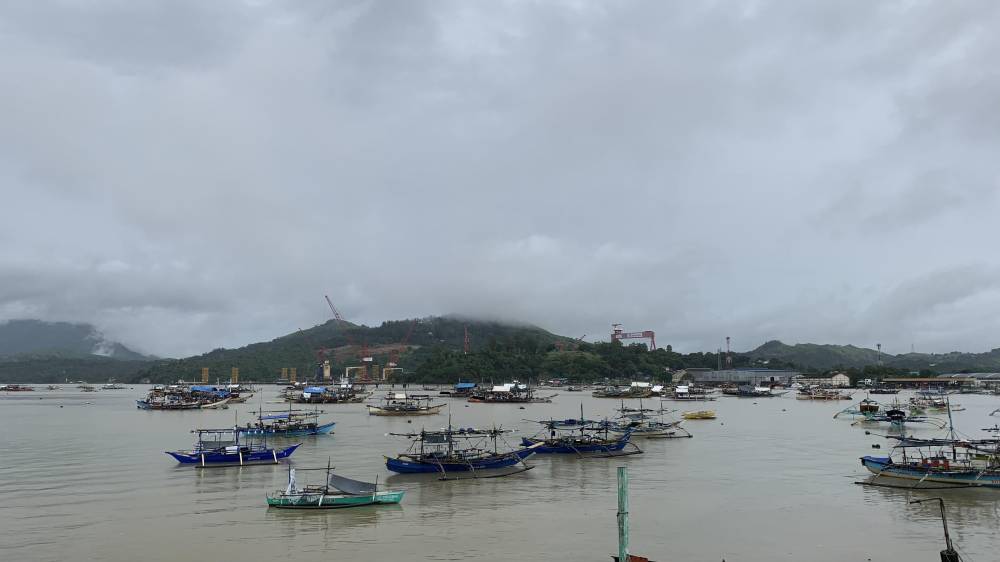
SAN ANTONIO, ZAMBALES—Fishermen in Subic town, Zambales, who continue to face harassment from the China Coast Guard (CCG) as they fish near Panatag (Scarborough) Shoal in the West Philippine Sea are hopeful the country’s first joint patrol with the United States will reduce such incidents.
Regino Renato Romero, chair of the Subic Hook and Line Fishermen’s Association, told the Inquirer on Wednesday that patrolling with allied countries has made significant difference in deterring CCG harassment.
“That is a big help in gradually driving away the Chinese and reducing their harassment,” said Romero, speaking in Filipino.
The shoal is the site of the country’s 11th bilateral maritime exercise with the United States. The joint operations resumed in 2023 under President Marcos after being suspended by the previous administration, which had pivoted the country’s relations closer to China.
Emergency response
Aside from maritime exercises, Romero said that the United States helped them improve communication equipment that have begun to change conditions at sea for local fishermen, helping deter harassment and speeding up emergency response.
Each boat operating in the area is now linked through a shared communication system, allowing vessels to directly contact one another and immediately respond when a call is made.
While individual boats still maintain their own communication equipment, the newly provided transmitters come with larger units and antennas, significantly improving range and reliability.
Before the installation of the transmitter radios, communication delays were common, as fishermen often had to wait for assistance through the Philippine Coast Guard.
The effectiveness of the new equipment was underscored by a recent emergency at sea when a crew member aboard one fishing boat suffered a heart attack while fishing in the West Philippine Sea.
Fellow fishermen in Subic were alerted immediately through a transmitter radio, allowing them to track the situation as the vessel returned to shore.
The radios provided by the United States are connected not only among fishing boats but also to the National Maritime Center, as well as communication centers in the provinces of Palawan and Cebu, according to Romero, adding that assistance efforts are expected to continue, with commitments made to provide a fish harvester in the future.

The shoal, also known as Bajo de Masinloc or Kalburo to locals, is a rich fishing ground in the West Philippine Sea, covering the country’s 370-kilometer (200-nautical mile) exclusive economic zone in the South China Sea.
However, many fishermen who venture there became victims of harassment and intimidation since 2012 by CCG ships that block their entry to the shoal as part of its assertion to a historic claim of the South China Sea.
Such a claim, however, was junked in a 2016 arbitral ruling.
According to the Permanent Court of Arbitration in The Hague, the arbitration instituted by the Philippine government in 2013 concerned the role of historic rights and the source of maritime entitlements in the South China Sea, the status of certain maritime features in the South China Sea, and the lawfulness of certain actions by China in the South China Sea that the Philippines alleged to be in violation of the United Nations Convention on the Law of the Sea.
China had adopted a position of nonacceptance and nonparticipation in the proceedings and had ignored the ruling.