








Young Africans find hope in farming as urban life becomes too expensive

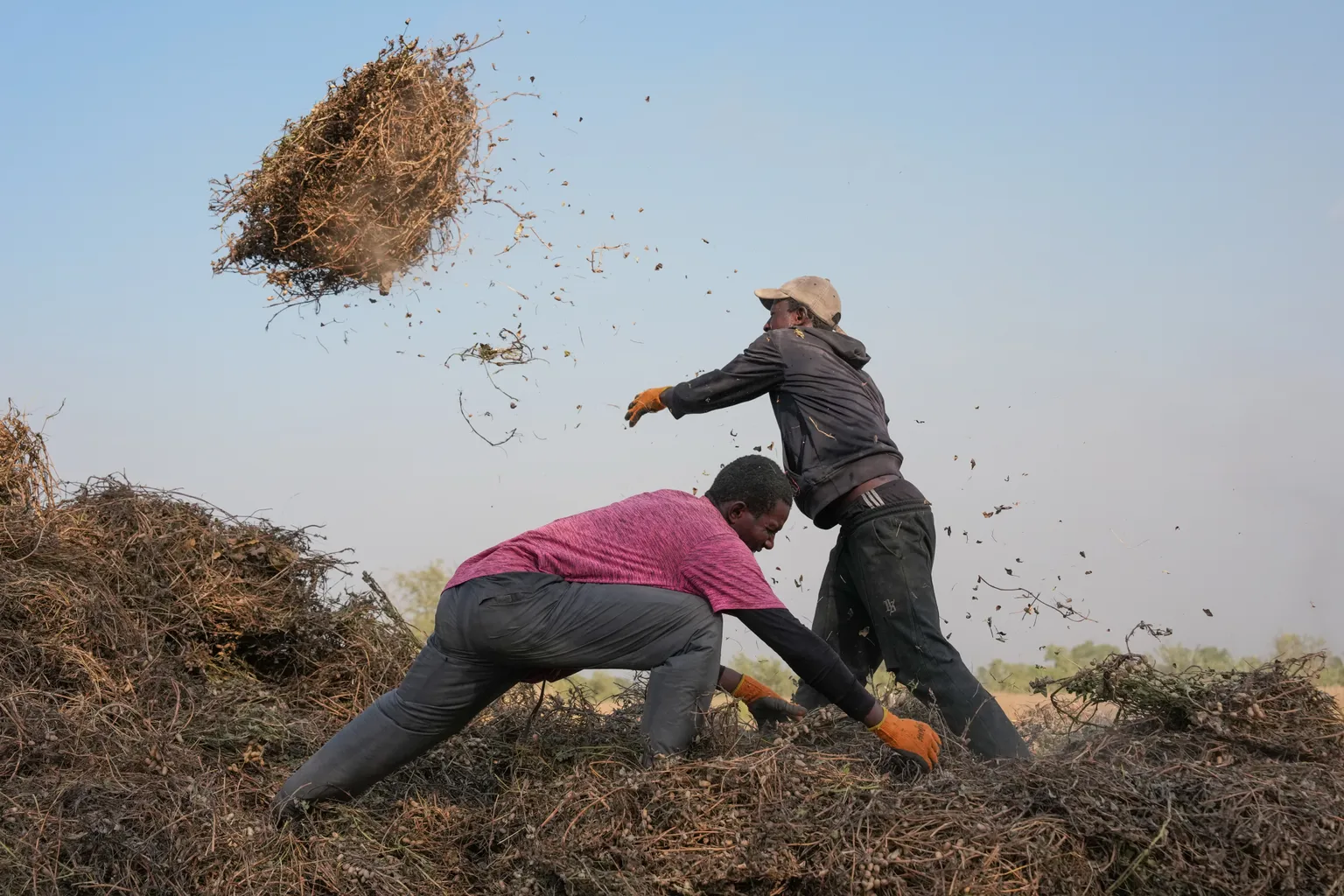
TAMBACOUNDA, SENEGAL—On a blazing afternoon in Senegal, 33-year-old farmer Filly Mangassa heaved peanut plants onto a horse-drawn cart, sending clouds of dust swirling.
Ten years ago, he left his village for the capital, Dakar, dreaming of becoming a professor. But the high cost of living and lack of jobs put that dream out of reach.
“Particularly after COVID-19, companies weren’t hiring and prices were rising,” said Mangassa, who has a master’s degree in criminology. “I thought: My father and my grandfather were farmers, so why not use that experience and go back to my hometown and try to make a living in agriculture.”
Across much of Africa, farming has long been seen as low-status work, pushing young people to cities in search of office jobs.
“For my father and some people in my family, they sort of saw me returning to the countryside as a step back,” Mangassa said.
Changing perceptions
But that perception is changing. Rising food prices, investments in irrigation and access to new technologies are making agriculture more profitable. Governments and nonprofits now fund programs that teach advanced farming skills and support farmers with equipment, fertilizers, pesticides and seeds.
“When my father saw that I had a clear, thorough business plan, he encouraged me and helped me with the administrative process to acquire land,” Mangassa said.
He is part of a trend of young Africans leaving cities to try their luck at farming. Mangassa says he makes a profit of around 2 million CFA franc ($3,500 a year), far above Senegal’s average yearly income of about $2,500.
Africa is the world’s fastest-urbanizing region, with cities growing at an average rate of 3.5 percent per year. As city populations increase, so does the cost of living.
Median rents and grocery prices in places like Dakar or Kenya’s capital of Nairobi are approaching those of major European cities, despite median salaries being significantly lower, according to the World Bank.
Meanwhile, between 10 and 12 million young Africans enter the job market each year while only about 3 million formal jobs are created, according to the African Development Bank.
“A lot of my friends who graduated at the same time as me now work as motorcycle taxi drivers and barely make a living,” Mangassa said.
Acquiring land
Mangassa now owns a 12.9-hectare farm where he grows peanuts, corn, vegetables and fruit. He received some funding to buy land from a World Food Programme (WFP) initiative helping young Africans start careers in agriculture.
Launched in 2023 and set to run through early 2027, it has supported around 380,000 people in launching agricultural businesses.
It works with local governments to allow young farmers to acquire land—often a challenge because of complex ownership systems and young people’s difficulty in obtaining loans because they are seen as high risk.
In Senegal, the program has supported over 61,000 people, with more than 80 percent launching farms, according to WFP. It also operates in Ghana, Nigeria, Mozambique, Uganda, Rwanda, Kenya and Tanzania.

“Our surveys show three main barriers for young people entering agriculture: limited access to land, financing and inputs; a lack of practical skills; and tough market conditions —knowing when to sell, how to add value and how to market their products,” said WFP’s country director for Senegal, Pierre Lucas.
Senegal, like many African countries, is plagued by food insecurity that has been exacerbated by donors’ funding cuts and worsening climate conditions.
The region also is recovering from the colonial era, said Ibrahima Hathie, an agricultural economist at the Senegal-based Prospective Agricultural and Rural Initiative think tank.
“In Senegal for example, farmers were pressured to grow groundnuts to be sold in France instead of food crops,” Hathie said.
Scarce arable land and soil degradation further constrain food production.
But now, many young farmers are shifting to high-value crops and have better technology, so production is increasing, Hathie said, predicting that as more locally produced food enters markets, staple prices could fall.
Alternative to migration
Senegal is a main departure point for migrants attempting to reach Europe via the deadly Atlantic route. Authorities see agriculture as one way to create jobs to keep young people at home, launching campaigns in rural areas most affected by migration.
“I’m convinced that the only sector that can create the hundreds of thousands of jobs young people in Africa need is agriculture and livestock,” Senegal’s agriculture minister, Mabouba Diagne, told reporters in October.