





A corruption-free 2026 budget?


Anytime now, President Marcos is expected to sign into law the national budget for 2026, labeled a make-or-break year that will determine whether the Philippines will rise above the significant setbacks that capped the Philippines’ growth in 2025 or remain caught in the vicious cycle of large-scale corruption.
Mr. Marcos is a few days behind schedule–he was originally supposed to sign it by the end of 2025–as he was “scrutinizing all allocations and provisions” to ensure the integrity of the ratified General Appropriations Act and that it responds “to the needs of the Filipino people”, according to Executive Secretary Ralph Recto.
Filipinos who have been awakened and absolutely livid due to the horrid details about how they lost their money to pervasive corruption certainly expect no less from Mr. Marcos, who has a lot riding on passing an acceptable budget as he continues to lose valuable political capital.
Concerns over questionable insertions in the 2026 budget, the widening investigation into anomalous flood control and other infrastructure projects, and the perceived failure to hold the guilty immediately accountable have caused Mr. Marcos’ net trust rating to plunge into negative territory in November last year.
Novel provisions
This, despite repeated assurances from the Palace that the proposed P6.793-trillion national budget that prioritizes education, health, and agriculture will be cured of the ills that plagued the “most corrupt” 2025 budget and that it was resolute in its desire to throw the personalities involved in corruption-ridden, billion-peso deals behind bars.
The executive and legislative branches should be given credit, however, for departing from long-held procedure by taking significant steps to be more transparent about the budget process, not least of which was the opening of the bicameral conference committee to public scrutiny and inviting more stakeholders including civil society into the budget deliberations.
The bicameral conference committee led by Senate finance committee chair Sherwin Gatchalian and House appropriations panel chair Mikaela Suansing also introduced novel provisions in the 2026 general appropriations bill (GAB) that are supposed to serve as guardrails against corruption.
Section 19 of the GAB, for instance, provides that all cash assistance and other forms of financial aid distribution will be “conducted exclusively by authorized government officers and personnel or accredit partners”, so that these programs will be released from the clutches of political patronage that cast doubt on the intent of these projects designed to help the poor.
Grave concerns
It explicitly bars the presence or participation of politicians in the distribution of the cash aid.
Legislators likewise included express provisions to promote transparency, such as support for the Citizens Participatory Audit, a formal mechanism through which civil society groups can help keep track of programs and projects approved for funding under the 2026 budget.
Also key is a section that requires all agencies to post all infrastructure-related documents on their websites and make sure that they can be easily searched and accessed by budget watchdogs and the general public who are rightly demanding transparency and accountability on the use of public funds.
But even with these welcome provisions, grave concerns remain that the 2026 budget is still full of pork.
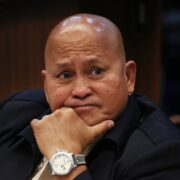
Budget watchdog Social Watch Philippines indeed slammed the bicameral conference committee for alleged “last-minute insertions and lump-sum appropriations” and called on Mr. Marcos to veto several “highly questionable” budget items worth a combined P319.04 billion.
Veto power
The Roundtable for Inclusive Development, a multisectoral group of concerned citizens from church, business, academe and civil society; and the People’s Budget Coalition, composed of civil society organizations advocating for a transparent and accountable budget process, for instance, flagged an even higher P633 billion worth of projects in the 2026 budget deemed “highly vulnerable to corruption and political patronage.”
This includes some P243 billion in “shadow pork” in the form of unprogrammed appropriations that it said had been used to divert funds from government corporations such as the Philippine Health Insurance Corp. and the Philippine Deposit Insurance Corp. “into risky infrastructure projects like flood control.”
After scrutinizing the budget over the Christmas holidays, the President should have been able to determine if billions retained by the two houses of Congress are unmistakably pork and prone to corruption, and if there are red flags in billions more set aside for huge infrastructure projects. He can always exercise his veto power.
The buck stops with him. With a lot at stake for his presidency, the President must ensure that this is a budget he can defend to the Filipino people. The nation will be watching.