









A lifeline for PUV drivers

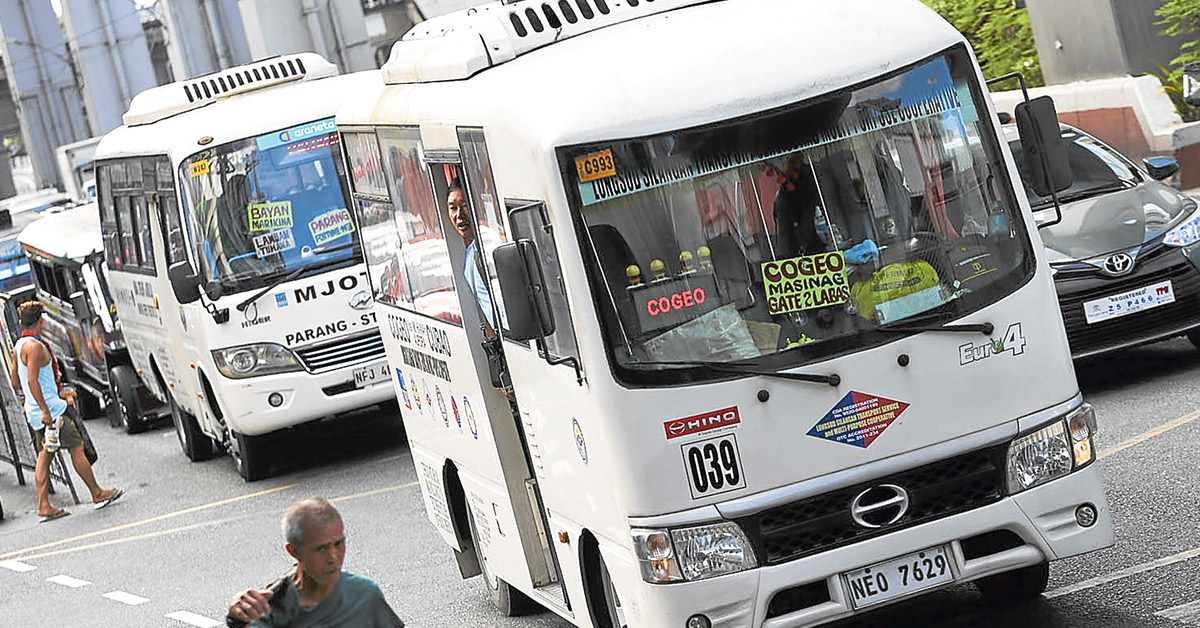
With the continuing escalation of the Middle East crisis, there’s no escaping the dire effects of the world’s oil supply being held hostage in the conflict. The Philippines being among the most vulnerable casualties in this unexpected war, the government has moved to cushion the impact of skyrocketing gas prices on drivers of public utility vehicles (PUVs), including tricycles, jeepneys, taxis, buses, and transport network vehicle service, with a cash aid through its Assistance to Individuals in Crisis Situation (AICS) program.
Farmers and fisherfolk will also be included in the program that provides immediate relief to Filipinos facing unexpected life events or crises, President Marcos said.
On Tuesday this week, the Department of Social Welfare and Development (DSWD) started distributing the P5,000 cash aid, initially to tricycle drivers in the National Capital Region (NCR) with the coverage to be expanded over the next few days to other PUV drivers in the provinces and nationwide.
The agency said it has set aside P30 billion—or half the P60-billion budget for its AICS program under the General Appropriations Act—for cash relief assistance to qualified PUV drivers. The cash aid for some 139,000 tricycle drivers in Metro Manila—prioritized because local governments in the metro already have validated lists—will cost around P700 million, DSWD Secretary Rex Gatchalian said.
Timely intervention
A total of 30 payout sites will be set up across 17 local government units (LGUs), with driver-beneficiaries required to show the original and photo copy of their driver’s license to get the assistance.
This move should be commended for being a timely intervention and well-intentioned safety net for distressed sectors. But while most appreciated at this time of crisis, more can be done to ensure a more transparent and effective mechanism to address some issues that perennially crop up at every government aid distribution event.
Reports of spurious listings of beneficiaries’ names have again surfaced, with some drivers wondering why their names have suddenly disappeared from LGU lists that had previously included them. In previous cash distribution events, interviews were conducted to validate the beneficiaries’ identity, a step done away with this time to expedite the process. While physical presence instead of merely depositing the cash in e-wallets has helped weed out deceased and unqualified recipients, the DSWD must revisit its guidelines to avoid local officials using personal discretion to determine who gets the cash aid. Can a disinterested third party validate the listing from hereon especially outside the NCR before submission to the DSWD?
A necessary caveat
As it is, the DSWD said in its Facebook page that its social workers and authorized personnel are responsible for validating the AICS list of beneficiaries, ensuring they meet the eligibility criteria through assessment.
It added that as of mid-2025, payout lists are usually announced through LGUs’ social welfare offices or regional DSWD social media pages. Individuals whose names may have been inadvertently delisted can visit the nearest barangay hall, DSWD field offices, or the Social Welfare and Development offices, the agency said. This is important information that the DSWD must reinforce to restore trust in government, especially at the barangay level. The agency also assured that the aid distribution process will be “insulated from politics,” a necessary caveat at this time when local officials are already positioning themselves for the 2028 elections.
Admittedly, the cash aid is a panacea, a temporary salve to the festering problem of coping with runaway fuel prices, and a “more long-lasting solution” should be in place, Land Transportation Franchising and Regulatory Board chair Vigor Mendoza II himself admitted. The agency and the Department of Transportation have rightfully said that it would chip in with fuel subsidy for PUV drivers to avoid another fare hike for commuters.
Relief for middle-income motorists
On top of the cash aid and fuel subsidy, the government should seriously consider scrapping, or at least suspending, the excise tax and value-added tax (VAT) on fuel products until the Middle East crisis is resolved and oil prices stabilize. This step also ensures equitable relief for middle-income motorists and consumers who are hit just as hard by the surge in energy costs and its inflationary result.
The Department of Energy should meanwhile look at how to further source natural gas to complement imported and prohibitively priced petroleum products. As well, lawmakers should study how budget insertions could be channeled instead to stock up on fuel supply as the Iran-United States war drags on.
A most welcome development at this point is Congress’ overwhelming approval of the President’s emergency power to suspend the excise tax and VAT on fuel, a significant step that the administration should follow through if only to help Filipinos cope with, and survive, these trying times.
******
Get real-time news updates: inqnews.net/inqviber


The race against AI-driven job disruption