







Addressing bottlenecks to investment


The Philippines faces structural constraints limiting its ability to attract and retain investments. Some key bottlenecks include:
1. Slow implementation of electronic business one-stop shops (eBOSS). The eBOSS, mandated under the Ease of Doing Business Act of 2018, allows businesses to apply for and renew permits through a single digital platform integrating local government unit (LGU) approvals. Implemented by the Anti-Red Tape Authority, it reduces paperwork, processing time, and face-to-face interactions that often cause delays and corruption.
However, implementation is uneven: of 1,637 LGUs, only 112 were considered fully compliant by the end of 2024. Low LGU compliance stems from limited digital infrastructure, inadequate technical capacity of personnel, budget constraints, and resistance to administrative change.
2. Port congestion. Port congestion is a major logistics challenge. In February 2026, yard utilization at the Port of Manila reached 78 percent and 88.6 percent at the Manila International Container Terminal, exceeding the optimal 70-percent threshold and slowing cargo clearance. The recent surge in congestion was largely driven by the accumulation of empty containers that took up valuable yard space and slowed the movement of incoming and outgoing cargo.
The fundamental cause of port congestion is the still subpar efficiency in port operations causing slow movement of containers. The Bureau of Customs (BOC) is currently enforcing the 90‑day dwell time limit for empty containers. If not taken out within that period, containers may be treated as imported cargo, requiring payment of applicable duties and taxes as well as administrative penalties ranging from P100,000 to P300,000.
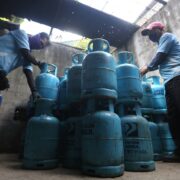
3. Delays in energy projects and high cost of energy. Energy infrastructure remains one of the most critical determinants of investment decisions, particularly for energy-intensive industries such as semiconductors and data centers. Delays in energy projects and high energy costs limit the country’s ability to attract large-scale investments.
In 2024, Filipino households paid an average of P12.60–P13.00 per kilowatt-hour (kWh) for electricity, second only to Singapore at P13.70–P14.00 per kWh. Despite the wide disparity in per capita income, Filipino households pay almost the same rate as Singaporeans.
Rates in the Philippines were nearly double those of its neighbors like Thailand (P8.00), Indonesia (P5.70), and Malaysia (P1.70). Additionally, these countries have higher per capita income than the Philippines but pay much less for power.
The Philippines already struggles with high electricity costs which could be worsened by the Iran–United States–Israel conflict driving up crude oil and natural gas prices.
To streamline approvals, the government established the Energy Virtual One-Stop Shop (EVOSS) platform to integrate permits, licenses, and clearances for energy projects, but as of September 2024, only 56 of 103 processes were included. A 2025 study by the World Bank Group noted that developers are still required to secure numerous permits and licenses from LGUs, various agencies, and bureaus, often revisiting the same offices multiple times at different stages.
Transmission projects also face major delays, largely due to right-of-way (ROW) acquisition issues. About 75 percent of the projects of the National Grid Corp. of the Philippines (NGCP) are delayed due to ROW. Such delays raise project costs and uncertainty.
Conclusion and recommendations. Unlocking the Philippines’ investment potential requires urgent reforms across key sectors. Key recommendations include:
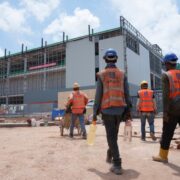
1. Incentivize LGUs to adopt eBOSS and EVOSS. The government should provide financial and technical support for LGUs with lower development and digitization capacity. These include providing information technology infrastructure and digitalization capacity-building for staff.

2. Enhance port efficiency. In the short term, the BOC can reduce the maximum dwell time to 60 days from 90 as well as further increase penalties to up to P500,000.
Key solutions include scheduling trucks with precise time slots to avoid queues, using digital tracking for trucks and cargo, and ensuring smooth processing of customs paperwork.
3. Speed up grid expansion by allowing private investments. In October 2025, the Department of Energy released a draft department circular (DC) allowing generation companies to finance and build transmission facilities to connect new power plants, with costs later reimbursed by NGCP. As of end February 2026, the DC is still under review. The DC should be finalized and issued as soon as possible to accelerate the construction of transmission infrastructure and other energy projects.
By strengthening regulatory efficiency, accelerating digitalization, and enhancing infrastructure, the country can attract more investors, especially those who are considering relocating their businesses from the Gulf states due to the ongoing Middle East conflict. The Philippines must position itself as a competitive investment destination in the Association of Southeast Asian Nations region.
—————-
Gary B. Teves is a Filipino politician and public servant who served as secretary of the Department of Finance.


Asean must hold the line on Myanmar’s junta