









American wars


Most people, including Filipinos, have probably never heard of the Mock Battle of Manila, which was staged on Aug. 13, 1898, in Manila Bay around Cavite.
Staged but not theatrically. It did involve gunfire, and it won a war!
I took my required Philippine History 1 class at the University of the Philippines under a very nationalistic and capable teacher, but she never used the term “mock.” Ironically, it was in an American History class at an American university, where a professor did use the term, in the context of the Spanish-American War.
This war broke out and was particularly serious, originally involving hostilities between Cuba and Spain, with Cuba being a colony of Spain at the time and fighting for independence. In February 1898, an American ship, the USS Maine, exploded while docked in Havana’s harbor. There were 266 American casualties. The United States stepped in, accusing Spain of the explosion. To retaliate, the US sent a fleet of four cruisers and two gunboats to Manila. The American public supported the move.
The battle in Manila was called “mock” because historians say it was staged by the Spaniards and Americans to facilitate a quick turnover of Manila from the Spaniards to the Americans! This was to save face for the Spaniards, i.e., the battle would not be bloody, and to keep Filipino revolutionaries at bay.
Confused? Well, the Americans had negotiated with the Filipino revolutionaries (Katipuneros) to cooperate, but then betrayed the Filipinos. Apparently, the Americans preferred to see the Filipinos defeated—one interpretation is that this was racially motivated.
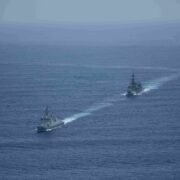
And why all the theatrics? The Americans had entered a new age of imperialism (just as they are doing now in 2026), and the mock battle was meant to display naval power (just as they are doing now, again).
The Americans did succeed in all their new adventures, culminating in the Treaty of Paris, which allowed the Americans to take over Guam, Puerto Rico, and the Philippines. Spain also relinquished all claims to Cuba.
Fast forward to the present, with a familiar script and cast of characters. Under US President Donald Trump, we have seen the return of blatant American imperialism: quick wars with tremendous firepower against Trump’s identified enemies. Early moves were more threats, as in the attempts to annex Greenland, but have since moved to actual invasions. We saw Venezuela and now Iran, and the first moves against Cuba.
The similarities between these little wars and the Philippine-American War at the turn of the 19th century are too familiar: arrogance, but also arbitrariness and incompetence within the Trump team. Trump boasted he would end the Iran war quickly, but Operation Epic Fury is approaching three weeks, a bloody war that is spilling over into a global conflict, as he draws other countries to take sides with the US.
It is a war without a strategy. Most striking was the bombing of a girls’ school in Iran, killing more than 150. The US Air Force was using old target maps! (The school was built on land overlapping with an old military base.)
The Philippines suffered, too, from the incompetence of the American war. The Filipino-American War started with shots fired by Americans during a night patrol. The Americans probably thought it would be over before the night was over. Instead, it started a Filipino-American War that lasted formally for over three years. Estimates of Filipino deaths have run as high as a million, including casualties from hunger and disease.
“The First Vietnam: The US Philippine War of 1899” by Luzviminda Francisco, published as a journal article in 1973, describes the similarities between the Filipino-American War and the Vietnam War (which the Vietnamese call the American War) fought in the 1960s and 1970s, including antiguerrilla tactics, such as strategic hamletting, where villagers suspected of having Vietcong sympathies were forced to live in camps for easier surveillance.
Torture methods used on Filipino insurgents in the Filipino-American War were also described in “The First Vietnam,” methods that became more brutal when exported to Vietnam (and reexported to the Philippines in counterinsurgency campaigns of the Filipino military). Another book, also titled “The First Vietnam” by Deo Reyes, was published in 1964.
American wars all too often become forever wars.
—————-
michael.tan@inquirer.net


Learning from successes in Manolo Fortich