








Backdoors to corruption


By vetoing P92.5 billion in unprogrammed funds and preserving the P150.9 billion remainder, President Marcos appears to be meeting his critics halfway. But halfway measures tend to produce half-baked results, and Mr. Marcos’ compromise falls squarely in that category. While his veto does reduce the problem, it leaves the problem intact.
To understand why, it helps to define the nature of unprogrammed appropriations (UAs). Unlike programmed allocations that are fully funded, itemized, and approved by Congress for immediate spending, UAs are standby allocations released only under certain conditions; e.g. when government revenues exceed targets or when new financing becomes available.
In theory, these funds are intended to give the government flexibility, but in reality, they defer crucial spending decisions until after the budget is passed, placing them largely in the hands of the executive branch.
Such discretion allowed the Marcos administration, for instance, to release P214 billion in UAs in 2023 and 2024 for priority infrastructure projects of the Department of Public Works and Highways. A little over half went to flood control, the Philippine Center for Investigative Journalism reported in November.
Not blank checks
At first glance, the President’s action, heeding the advice of his economic team, seems like a step in the right direction–and it is–except, it’s a baby step.
UAs fell from P363.2 billion in 2025 to P150.9 billion in the 2026 General Appropriations Act, the lowest since 2019. Malacañang has pointed to this decline as evidence of fiscal reforms amid heightening outrage over corruption in public works.
But the same numbers tell another story: The continued presence of UAs, regardless of size, means Congress still gives up part of its power of the purse, while the Executive retains wide discretion over when and how funds are released.
“Let me be clear: The unprogrammed appropriations are not blank checks,” Mr. Marcos said after signing the P6.793-trillion budget into law on Jan. 5, framing the partial veto as a safeguard against misuse.
Adolfo Jose Montesa, a coconvenor of the People’s Budget Coalition, said the move was a show of the administration’s effort to curb corruption without actually performing the “big things that needed to be done.”
Montesa raised another point: The line items vetoed by the President, such as budgetary support for government-run corporations, payment of personnel services, and insurance of public assets and interests, “were those not necessarily prone to corruption.”
‘Bad economics’
Former budget secretary Florencio “Butch” Abad warned that UAs amount to a “grave constitutional distortion,” because, in essence, they are a way to circumvent Article VI, Section 29 of the 1987 Constitution, which states that “No money shall be paid out of the Treasury except in pursuance of an appropriation made by law.”
Budget advocates have documented how the bicameral conference committee defunded priority programs and transferred them into UAs, creating large lump sum funds that are vulnerable to political influence.
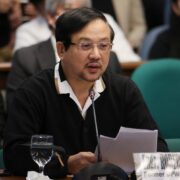
The President’s veto this year did not confront that practice directly, a move Sen. Erwin Tulfo described succinctly as “bad economics.”
He said: “My point is very simple. Why will you have unprogrammed appropriations projects? You don‘t even have money. Why will you spend so much when your income is too little but you have too many expenses?”

The administration has highlighted increased funding for education, health, agriculture, and social services, and certainly, these allocations deserve praise and acknowledgement. But strong social spending does not excuse a budget process that continues to test accountability measures and constitutional limits.
Guardrails against corruption
The people’s disappointment was only deepened by promises that this year would be different. The Senate and the House of Representatives had touted a more transparent budgeting process, including the participation of civil society watchers that turned out to be token at best.
Then the chambers advertised the 2026 spending law as having guardrails against corruption, while maintaining the same budgetary mechanisms that pave the way for corruption.
To rebuild confidence in the budget, the executive and legislative branches must go beyond trimming UAs or any other discretionary fund. They must work toward removing all traces of them from the budget preparation stage to its implementation.
Decreasing UAs may ease public anger for a time, but Filipinos understand that a government’s past actions are a good predictor of its future behavior. That is why unprogrammed funds must be abolished or confined to the narrowest and most defensible uses, and why other practices that allow discretionary spending must finally be put to an end.
Until then, those so-called backdoors in public finance will remain open to corruption and closed to good governance.