






Between the door and the room


I grew up in the middle—not in poverty, but not in luxury either. Middle class, they say. I had just enough to see how the wealthy lived, but not enough to live like them. I could travel every now and then, but I’d still think twice before ordering anything beyond water in a restaurant. I got into my dream university, but only got to attend because of a merit scholarship. Even then, I was told I had “too much” to qualify for financial aid—yet not enough to pay full tuition without sacrificing something else.
That’s how it often felt—like I was always at the door. I could peek inside the room where comfort and wealth came naturally to others, but I couldn’t walk in, couldn’t sit down, couldn’t stay. While others carried MacBooks and Longchamp bags (and not to mention seeing the nepo babies’ lifestyle on the news and online), I quietly dreamed of buying them one day—my future “big girl purchases,” for when I earned my own money.
But this isn’t a story about self-pity or resentment. It’s a story about becoming.
I come from General Santos City—GenSan—a small and laidback city in the southern Philippines. Since I was young, I dreamed of getting out. The city fascinated me—the towering buildings, the fast-paced life, the way people dressed and spoke like they were heading somewhere important. Manila, to me, wasn’t just a place—it was the future. I imagined it as the space where I could finally become the person I was meant to be.
So when people in Manila ask about my house, I usually joke, “It doesn’t have a floor plan. We’ve got a mini gym, a mini classroom, chickens in our even smaller backyard (yes, emphasis on the ‘mini’), and a decades-old poso.” It makes them laugh, and it gives them a glimpse of my home. But the truth is, sometimes I hesitate to tell the full story.
Because while I had a good childhood and parents who provided the best they could, it’s hard to explain that I don’t come from wealth when it seems like everyone else does. I’ve always worried—will they think less of me if they knew? Will they think I’m pretending to be someone I’m not?
Both of my parents are engineers. They’re intelligent, hardworking, and self-made. But even with degrees and strong work ethics, they had to build everything from the ground up. We didn’t have family money to fall back on. My dad had to work abroad for most of my childhood to give our family stability. We had a sari-sari store that stood faithfully through my elementary and high school years. My grandfather was a jeepney driver. My parents gave me stability—but nothing came easily. Nothing was handed to us.
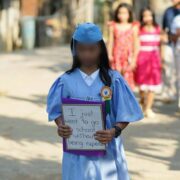
I wasn’t an iPad kid. In fact, I was a 7-year-old who drew an iPad on pantyhose cardboard and pretended it was real.
When I finally moved to Manila for college, I brought with me that small-town dreamer mindset. But somewhere along the way, I also began to lose touch with the humility I once held close. I curated a version of myself online that looked like I had more than I did. I cared too much about appearances. I pressured others—and myself—to keep up.
During graduation preparations, my mom said something that hit deep: “‘Yan ang natutunan mo sa Manila—mga kasosyalan na wala sa lugar?”
She wasn’t wrong. And it made me stop and ask: What happened to me? To the simplicity I valued? To the girl who once dreamed of a future not built on appearances, but on purpose?
But here’s the hopeful part: I haven’t lost that girl. I just lost sight of her for a while.
Maybe I had to go through this—to chase the city dream, to try and fail at fitting in—to understand what truly matters. Because now I see clearly: I may not come from privilege, but I come from love. From grit. From a city that raised me gently, and parents who built a life from the ground up—no shortcuts, no handouts.

So yes, I stood at the door. I looked in. And I learned.
But I’m no longer waiting for someone to let me into that room.
I’m building my own—one that’s grounded in honesty, in quiet strength, and in deep pride for where I came from. One where people like me—who grew up with dreams etched in cardboards and homemade ambition—can feel seen, and feel enough.
And maybe, just maybe, that’s the most powerful room of all.
—————-
Mariela Anya A. Soriño, 22, is a speech-language pathology graduate from the University of Santo Tomas. Born and raised in General Santos City, she’s a public speaker and a future speech therapist who believes in the power of stories, voices, and finding one’s own.


‘When it rains, it pours’