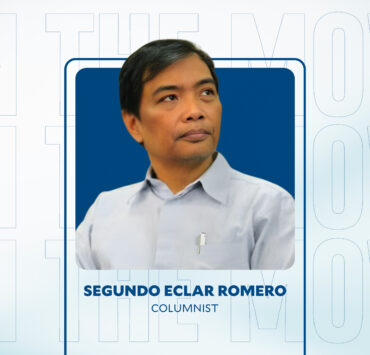


Building back better… (1)


General Santos City—June 8, 2026 will forever be etched in our memories. At 7:37 a.m., just as I was about to finish cooking our breakfast, I suddenly felt strong shaking beneath my feet and realized it was an earthquake—a massive one, with a magnitude of 7.8, we were told later.
What happened during that agonizing one minute of my life and the lives of more than a million residents of this city and several thousands more in nearby locations has made us realize many things—among them, that life on this planet is fragile and vulnerable, especially when nature jolts us with its violent responses, like a massive shake-up of tectonic plates beneath us.
Then the next thing we knew, the whole city was plunged into darkness with electric power down, and following it, our water supply. This lasted for almost two days. We were not truly prepared for a calamity this huge, so we had to scramble for many emergency lamps we had bought so many months earlier, but forgot to charge during days when electric power was on. We had a limited supply of water for washing dishes but not for bathing and personal hygiene. It was a good thing a few extended family members put water into empty gallons of distilled water and into some of our huge water containers before they left.
But what we saw through our mobile phones was truly devastating. The videos of how huge fast-food establishments fell to the ground in seconds were like watching a disaster movie—only this time, it was real. All of this sun-kissed tuna capital city’s huge shopping malls—a testament to the growing metropolitan orientation of city residents that used to stand proudly with their respective logos—are now reduced to huge piles of rubble. Officials of the city disaster risk reduction office estimate the level of damage of three huge malls at 75 percent, prompting their respective managements to declare closure of the malls for an indefinite period.
Three days later, I was able to go around the city to see some of the huge structures, including the newly built College of Medicine of my former place of work, Mindanao State University General Santos City, and what the massive quake had done to it. It is now unusable, with huge pieces of glass walls and its concrete structure largely torn apart, figuratively in shreds, like they were pieces of fragile glass and cartons cut unevenly in various directions.
I was also told that roads going to Glan and Malapatan towns of Sarangani province are now rendered impassable, as huge chunks of cemented road became pieces piled on top of another. Friends who have extended some relief assistance to many of the communities there told me that traversing these jagged pieces of concrete was a huge challenge: it required one to do a fancy hopscotch, but would require one to be highly nimble enough to do this to reach their destination.
Several thoughts came to mind as I went through the city streets, now pockmarked with rubble on both sides of the road.
I truly wondered how our local government units (both GenSan and the province of Sarangani) have been managing concerns about disaster risk reduction, mitigation, and prevention of adverse consequences of disasters like earthquakes and extreme weather events.
Throughout my years as a city resident since more than three decades ago, I have not truly witnessed anticipatory thinking as part of the overall framework for dealing with disasters here and in the neighboring province of Sarangani.
For almost five years, through my intermittent stay in Japan as a visiting research fellow in different Japanese universities, I have seen how this kind of thinking—preparing for calamities and other possible adverse consequences of natural extreme weather events, including earthquakes—even before they happen, operates in the Japanese way of life and their overall governance.
Japan sits on a very precarious part of the so-called Pacific “Ring of Fire.” It is located atop the most volatile and vulnerable sections of this ring, with the entire Japanese group of islands sitting directly atop a complex intersection where four major tectonic plates meet. These are the Pacific, Philippine Sea, Eurasian, and North American plates.

Consequently, Japan experiences more than 1,500 earthquakes in a year, or around two to three tectonic events in a day.
Yet throughout the many huge earthquake-related challenges Japan has faced so far, the Japanese government has shown high levels of resilience, recovering faster than many of its poorer East Asian and Southeast Asian neighbors that experienced the same levels of devastation.
(To be continued next week.)
—————-
Comments to [email protected]