





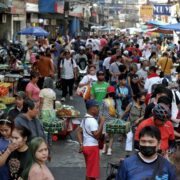

Comedy in a society that keeps changing


When does a joke stop being a joke?
In today’s Philippine media landscape, a joke made on television can travel far beyond the studio where it was first told. A remark intended to entertain may quickly become a topic of discussion on social media, provoke criticism, and lead to an apology. Such incidents are not new. What has changed is the speed and scale with which audiences can respond.
This raises a difficult question: Has comedy changed, or has society changed in the way it understands what is acceptable to laugh at? Perhaps the answer is both.
Comedy has never been stagnant. It reflects the values, anxieties, contradictions, and aspirations of the society that produces it. It is not merely a vehicle for laughter. It can deliver a message, question authority, confront uncomfortable realities, and invite audiences to see everyday life differently.
Filipino comedy has traveled through several transformations. During the American colonial period, bodabil introduced a theatrical form combining music, dance, spectacle, and humor. As technology developed, comedy moved into radio, where stories of family life, mothers, neighbors, and ordinary household situations became sources of entertainment and relief.
Cinema introduced another vocabulary of humor. Slapstick, music, dance, exaggerated characters, and physical comedy became familiar elements of Filipino popular culture. Actors such as Dolphy became central figures in this tradition. Filipino films also developed socially conscious humor: stories about poverty, struggling families, crowded communities, and inefficient institutions could be presented through comedy.
Television then brought comedy into the everyday household. Sitcoms and variety shows established familiar characters and recurring jokes. Yet humor once considered ordinary including jokes that objectified women, mocked physical appearance, or relied on stereotypes is increasingly questioned today.
By the 1990s, stand-up comedy and comedy bars offered another kind of experience. Humor became more immediate and spontaneous. Unlike film and television, stand-up placed the comedian directly before an audience. But the audience has changed as well.
In the age of social media, audiences are no longer simply spectators. They are participants in the comedic process. They can laugh, comment, criticize, defend, contextualize, and challenge a joke within seconds. The performance no longer ends when the punchline ends.
This has created a new expectation: comedy should be conscious of rights, representation, sensitivity, and social responsibility.
Some may see this as a restriction. If comedians must constantly think about whether someone might be offended, does comedy lose its freedom? Does fear of criticism limit creativity?
But perhaps the question should be framed differently: Does freedom in comedy mean freedom from criticism?
Comedy, like any form of expression, does not exist outside society. A comedian can tell a joke, but an audience also has the freedom to decide whether that joke is funny, harmful, outdated, insightful, or unacceptable.
The challenge is not to make comedy incapable of offending anyone. That would be impossible. Comedy has always disrupted comfort, mocked authority, exposed hypocrisy, and challenged social conventions. The challenge is to understand what the joke is doing and whom it is asking us to laugh at.
There is a difference between comedy that challenges power and comedy that makes vulnerable people the object of ridicule.
Powerful comedy can challenge those in power, comfort people during crises, and unite communities experiencing hardship. In the Filipino experience, jokes about political scandals, memes during elections, humor during typhoons, and jokes about everyday difficulties have repeatedly made laughter a coping mechanism.
We do not always laugh because things are funny.
Sometimes, we laugh because things are difficult. Sometimes, laughter allows us to endure what we cannot immediately change.
And sometimes, laughter allows us to see what we have become.
This is why the question should not simply be whether comedy is still safe. Perhaps the more important question is whether comedy can remain meaningful while society continues to change.
The boundaries of laughter will inevitably move. What one generation considers harmless, another may question. Voices previously absent from the audience now have the opportunity to speak back.
But that does not necessarily mean comedy is losing its freedom. It may mean comedy is being asked to listen. Comedy survives because it evolves from bodabil to radio, cinema to television, comedy bars to social media.
Perhaps the future of comedy does not depend on a world where no one is offended. It depends on creating a space where we can still laugh, question, disagree, and reflect together.
Because comedy, at its best, does not merely make society laugh.
It makes society look at itself.
—————-
Susana A. Dalmao-Dimatira is a Performance Studies student at the University of the Philippines Diliman


Can Manila deliver a South China Sea code of conduct?