









Comelec’s art of letting go

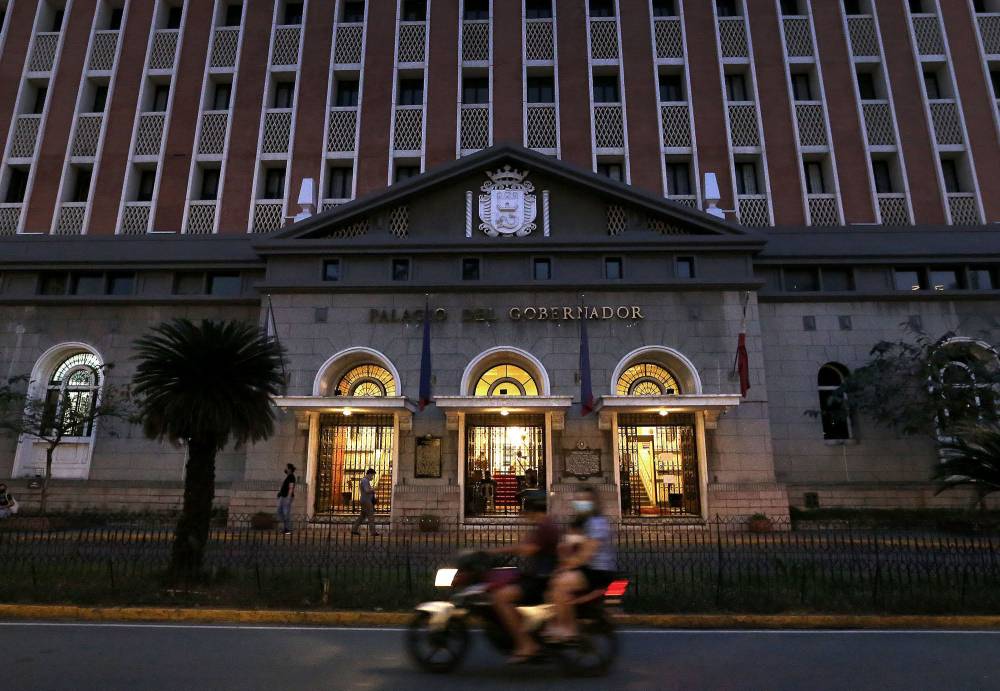
Yet again, the Commission on Elections (Comelec) has found an opportunity to disappoint the public it purportedly serves. As always, it has risen to the occasion.
Its latest decision, clearing Sen. Rodante Marcoleta of any poll offense despite flagrant gaps in his campaign finance disclosure, demonstrates Comelec’s remarkable talent for safeguarding not the integrity of the elections but those who benefit from bending its rules.
Truly, a masterclass in legal gymnastics.
In a resolution released on Wednesday, Comelec’s political finance and affairs department (PFAD) acknowledged, in no uncertain terms, that “all contributions used during the campaign period must be reported” in the statement of contributions and expenditures (Soce). The law itself, Section 109 of the Omnibus Election Code, could not be clearer on this point.
But somehow, Comelec found a way out by latching onto a technicality. As it turns out, the penalty provision for violating Section 109 has been repealed by Republic Act No. 7166, a law passed in 1991.
One imagines how PFAD’s members must have cheered upon discovering the one loophole that could save Marcoleta. Never mind that it took three decades before anyone at Comelec finally noticed it.
Comelec’s amnesia
“It means that it is already decriminalized,” said Comelec Chair George Erwin Garcia, who had inhibited himself from the case, conveniently forgetting that RA 7166 itself has not been repealed, and that it still requires every candidate to file the “full, true and itemized” Soce within 30 days of an election.
Comelec’s amnesia extends to its own Resolution No. 11109 on campaign finance guidelines for the May 2025 elections, which categorically bans “anonymous or fictitious” donors under Rule 3, Section 2.
Here are the facts: Marcoleta admitted to receiving P75 million in donations, after initially declaring zero contributions in his Soce, despite spending over P112 million on his campaign.
The neophyte senator reasoned that the donations were supposedly given before the campaign period, and thus, he claimed, exempt from disclosure. PFAD itself rejected this argument, noting that what matters is not when the money was received, but whether it was used during the campaign.
Which only highlights the absurdity of its eventual decision.
Kontra Daya convenor Danilo Arao said it “defies all logic” that the donors, Michael Defensor, Joseph Espiritu, and Aristotle Viray, now face complaints for failing to report their contributions, while the candidate who benefited from them walks free.
Most forgiving interpretation
But the blatant circumvention of the law surprised no one, for it follows a tradition of leniency. It’s the same Comelec that absolved Sen. Francis Escudero over a P30-million campaign donation from a construction executive involved in lucrative public contracts. Section 95 of the election code clearly prohibits contractors doing business with the government from making campaign contributions.
Again, Comelec found escape, this time, in corporate law. The donor, it ruled, acted in his “personal capacity,” distinct from the corporation he leads. Never mind that the distinction collapses under the weight of common sense, or that it invites precisely the kind of influence the law was intended to prevent.
In both cases, the Comelec did not merely interpret the law but stretched it into an unrecognizable shape.
Why do these loopholes exist at all? The answer lies partly in legislation that has failed to keep pace with the realities of modern campaigning. But it also lies in enforcement, or the lack of it.
By repeatedly choosing the most forgiving interpretation available, Comelec has turned poll regulation into a farce, and itself into a joke.
Diminished credibility
Yes, Comelec is bound by the laws it enforces. But it is not bound to read them in ways that defeat their purpose, nor to adhere to the letter of the law but not its spirit. The poll body, as Arao recommended, must stop being “legalistic” in the narrowest sense and start acting like the guardian of electoral integrity it is supposed to be.
Congress can, and should, revisit the gaps in RA 7166, restoring teeth to disclosure requirements now rendered toothless. The courts, too, may yet be called upon to review rulings that apply the law selectively, if not opportunistically. Even the Office of the Ombudsman, which has received a complaint for perjury against Marcoleta, must do what Comelec thinks unthinkable.
But these are, at best, corrective measures after the fact.
At stake here is Comelec’s credibility as an independent constitutional body that seems to have perfected the art of letting go–of the likes of Marcoleta, Escudero, and others as well-connected. Each ruling that allows the privileged to escape via technicality tells voters of where precisely Comelec’s loyalties lie. It speaks of a Comelec that is failing its mission and failing the electorate.
What a travesty.


Diplomacy and the scourge of war