


Dark skies loom over BARMM

COTABATO CITY—Ominous dark skies loom over the political landscape in the fledgling Bangsamoro Autonomous Region in Muslim Mindanao (BARMM) here in this city, the seat of the very first autonomous region in the entire Philippines.
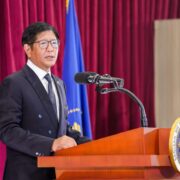
In a statement released last Tuesday, Feb. 17, 2026, Interim Chief Minister (ICM) Abdulraof Macacua issued strongly worded warnings against those who petitioned against his appointment as a replacement for then Interim Chief Minister Ahod Ebrahim (aka Kagi Murad) starting last March 2025.
Macacua went on to add stern warnings of heads rolling for those officials in the region who instigated the petition to remove him, and maligned his capacities and commitment as the new (interim) head of the region.
To recall, news of a replacement for the transition chief minister of the fledgling region sent shockwaves to many constituents, especially since at that time, the first regular parliamentary elections were expected on Oct. 13, 2025. People wondered why another interim replacement was appointed ahead of a possible regular election for the regional government. Many questioned the logic behind this presidential decision, especially for its timing, as the announcement was made barely five months before a possible regular election schedule for the only autonomous region in the country.
In his statement, Macacua cited how he had been maligned and deemed unfit to run the huge BARMM bureaucracy. He is threatening those who have conspired, funded, and instigated the petition with possible “administrative, legal, and even criminal” sanctions after conducting an investigation into this matter.
Later, in a social media post, he issued a statement, that since it is Ramadan, he will withhold the conduct of an investigation against these petitioners.
Macacua is entitled to air his grievances over this rather blunt dissent on his leadership as the replacement ICM. But at the same time, those who petitioned for his removal also have the right to present such dissent against a sitting appointed official.
The warning of “heads rolling” or the bureau jargon for removal of those holding sensitive positions in the regional government was announced the day before the official start of the Holy Month of Ramadan, or fasting, declared on Feb. 18.
A news report in the Inquirer on Tuesday, Feb. 17, presented details that strongly suggest the coming to light of earlier rumors about serious cracks among the top leaders of the Moro Islamic Liberation Front (MILF).
Such alleged cracks have surfaced after March 2025. Prior to this period, such cracks were the gist of popular rumor mills. But every time there are questions about the alleged deep schism within the MILF as an organization, there is an immediate pronouncement that such dynamics are just part of the natural processes of an organization. True enough, while an organization may be united in its overall goals and vision, there is a wide diversity of opinions among its members.
Human beings are gifted with independent thinking and free will. Thinking that the members of one organization behave in the same way and are at the same level of steadfastness in an organization’s commitment to the region’s avowed framework of ”moral governance” is an illusion. Moreover, thinking that all members of an organization have the same level of uprightness in preferring commitment to public service over power and pecuniary considerations is also delusional.
In a thriving democracy, diversity of opinions is an essential element. Freedom of speech is guaranteed as a basic right, and safeguards against the free exercise of this right are put in place, and a government is called upon to ensure this right is protected. If there are petitions over the way government officials are running the bureaucracy entrusted to them, these should be heard in an impartial space, where both the petitioners and the petitioned are engaged in a healthy debate through their legal representatives.
Being in a democracy also behooves all government officials to recognize dissent within legal parameters. Government officials, especially those who are appointed by the national authority (the president of a country), are duty bound to protect the overall welfare of the people they are entrusted with to govern. They are expected to respect diversity of opinions in the way they function as appointive officials. Instead of stifling dissent, they should just conduct a reflective session on what they have done so far, rather than threatening those who expressed dissent with removal from office.

Threatening those who petitioned or dissented from their appointments as top government officials expresses a personal, proprietary attitude toward the office they hold.
(More next week.)
—————-
Comments to rcguiam@gmail.com
******
Get real-time news updates: inqnews.net/inqviber