










DA’s move vs land conversion


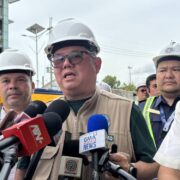
Agriculture Secretary Francisco Tiu Laurel Jr. started the new year right by doing what land reform and farmer advocates have long demanded the government to do–immediately stop the indiscriminate conversion of dwindling agricultural land that has put the country’s food security at grave risk.
Under Department Circular No. 1 dated Jan. 5, Laurel imposed a five-month moratorium on the acceptance and processing of applications for a Land Use Reclassification Certification, which is required to convert agricultural land into other uses such as for development into residential and commercial complexes.
The Department of Agriculture (DA) said the moratorium that will be in place until June 2026–unless extended through another order–was designed to give the agency “breathing room to reassess its regulatory framework and tighten oversight,” especially as the growing pressures from urban expansion, population growth and infrastructure projects “have been eating into farm areas.”
The moratorium is needed to protect agricultural lands from undue conversion, Tiu Laurel said.
“The moratorium sends a clear signal that farmland preservation is now a central pillar of national food security policy,” the DA declared.
Threat to food security
The necessary policy pivot was executed following the belated but still welcome realization by the DA to preserve the precious but shrinking land base that provides the foundation for the country’s food supply.
The suspension is indeed necessary as unchecked conversion of agricultural land has posed a direct threat to food security and the agricultural economy, given that vast tracts of agricultural lands that produce key crops that Filipinos need to survive are being transformed into subdivisions, commercial centers and industrial zones.
Sen. Francis Pangilinan, chair of the Senate agriculture committee who strongly supports the DA’s policy shift, underscored the “accelerating” conversion crisis. He cited data from the Department of Agrarian Reform (DAR) showing that some 97,592.5 hectares of agriculture land–equivalent to the size of Metro Manila and Cebu City–had been approved for conversion to nonagricultural purposes from 1988, when the Comprehensive Agrarian Reform Law took effect, to 2016.
That size has certainly expanded since then, further eating into the country’s 9.7 million hectares of agricultural land out of the total land area of 30 million needed to feed the country’s population that is expected to balloon to almost 124 million by 2035 from the roughly 113 million today.
Ecologically sound
This alarming trend of rampant, unchecked conversion prompted Pangilinan to join a list of legislators filing bills in Congress to institute much-needed controls, with his own proposed measure seeking to amend a provision in the Local Government Code that gave the local government units (LGUs) the authority to reclassify agricultural lands under certain conditions.
Under Pangilinan’s Senate Bill No. 220, LGUs have to secure express certifications from the DA, DAR, and the Department of Environment and Natural Resources before agricultural land in their areas can be reclassified or converted.
This will ensure that only land that is no longer economically feasible for agriculture can be converted for other uses, not programmed for distribution to agrarian reform beneficiaries and that the conversion is ecologically sound.

Emphasis is placed on imposing more stringent controls rather than an outright ban as there remains a legitimate need for land to provide for other needs such as housing and commercial development for job-generating investments in factories and industrial estates.
A fine balance
Attaining self-sufficiency or protecting the ability to grow the country’s staples such as rice and corn should thus be championed. Policymakers’ eyes have fortunately been opened to the reality that the Philippines cannot be overly dependent on imported products that are now flooding wet markets and groceries.
The resulting changes in the processes and the tighter rules on land conversion, however, will not be maximized unless the government likewise looks into the effectivity of its support services to the farmers.
The stewards of the valuable land resources must be provided the means and the opportunities, such as through easier credit terms, crop insurance and technology transfer, to earn a decent income from their land so that they will be encouraged to keep on producing the crops that citizens need to survive, instead of selling them to the highest bidder.
There will certainly be vested interests, however, who could not care less about food security and will proceed to find loopholes that they can exploit to get the scarce land for themselves.
But the DA has at least fired off a clear enough signal through this moratorium that it is bent on reviewing and recalibrating its rules to strike a fine balance between economic development and agricultural productivity to ensure the nation’s food security.