










Deaths, lies, and statistics

The death of one is a tragedy; the death of millions a statistic, or so goes a quote often misattributed to Joseph Stalin.
But what of 5,281 drug war deaths in the Philippines from July 2016 to February 2019, the first half of Rodrigo Duterte’s presidency? Last week, a Stalinesque adjective used by the former President’s defense team betrayed its contempt: “minimal.”
In other words, a number too small and inconsequential.
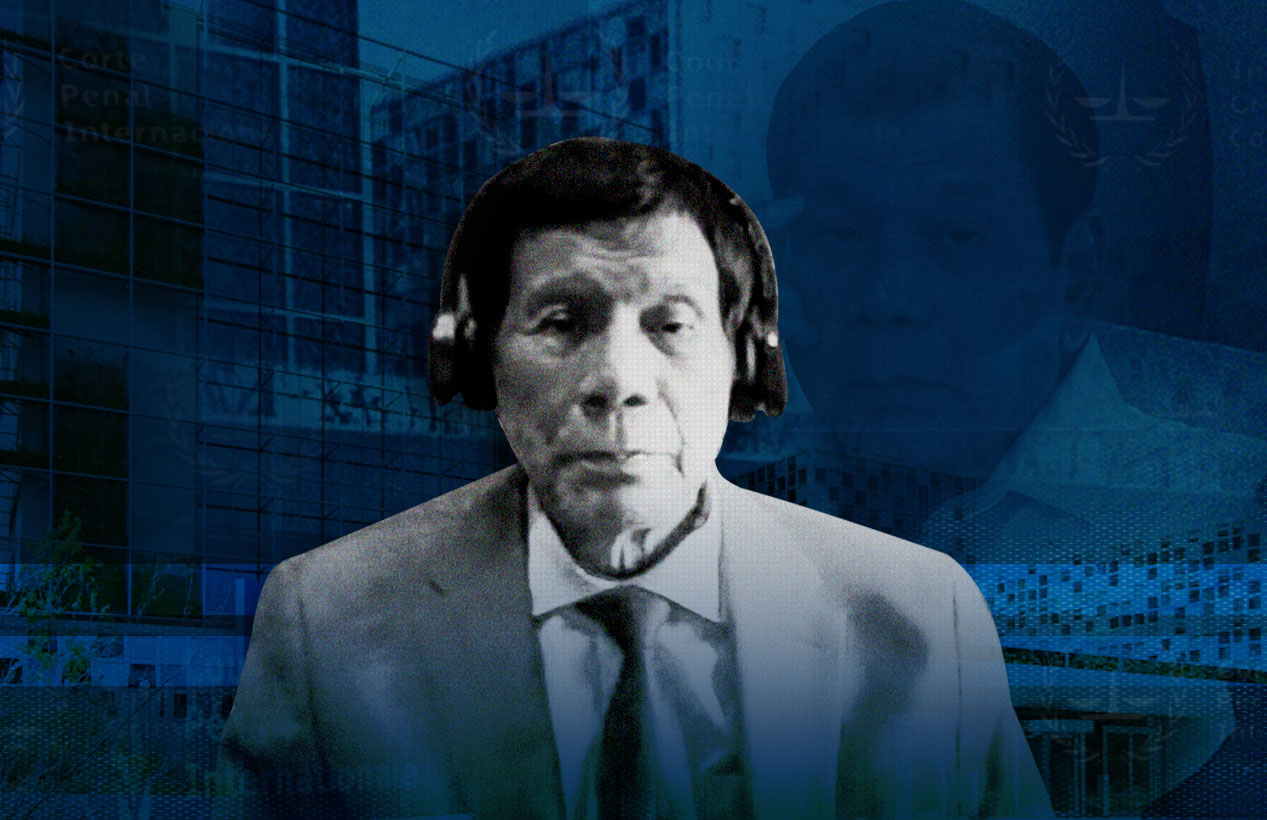
On the third of the four-day confirmation of charges hearing against Duterte at the International Criminal Court (ICC) in The Hague, Netherlands, the British-Israeli lawyer Nicholas Kaufman sought to convince the pretrial chamber that the prosecution unfairly depicted his client’s brutal campaign as a program of extrajudicial killings.
“In comparison to the number of arrests and operations conducted, the number of deaths [is] minimal,” the lawyer said in his clipped British accent, flashing a pie graph to illustrate that only 3 percent of drug operations were fatal.
The prosecution had “neglected to contextualize” its data, Kaufman said, quipping: “The only thing that is widespread here or rather spread wide is the utility of the prosecution’s statistics.”
‘No smoking gun’
By any other measure, however, there’s no denying that the figure Kaufman cited was grossly understated. The government counts at least 6,000 people killed by police during Duterte’s entire term, which ended in 2022. Human rights groups place the toll at over 30,000, owing to documented cases of underreporting and falsification of death certificates.
Kaufman dismisses this. He swears there’s no intent to disrespect the dead, yet his argument does precisely that. The defense does not deny the deaths but argues they are too few to warrant a trial.
“There is no smoking gun in this case,” Kaufman said, noting that not one of the 49 incidents cited by prosecutors could be proven by a witness testifying to a direct order from Duterte to “go out and kill someone.” Without such a causal link, he said, the prosecution was merely “papering over the cracks with human rights reports, press statements, hearsay and of course Mr. Duterte’s bluster and political hyperbole.”
That was the defense’s central logic: If no one can produce a taped or written order, then there’s no basis to hold the man at the top responsible.
Widespread and systematic
But such an argument fails because the law does not target only criminals too stupid or too careless to put their crimes in writing. The ICC examines the structures of power, patterns of conduct, and the foreseeable consequences of a state’s murderous policies.
The pretrial chamber need not, in fact, establish whether Duterte personally pulled the trigger or directly commanded his lieutenants to do so, for he is charged as an indirect perpetrator. Under Article 25 of the Rome Statute, that threshold is met when the person “orders, solicits or induces the commission of such a crime” or “aids, abets or otherwise assists in its commission or its attempted commission,” among other acts of complicity.
Before the defense’s turn, the prosecution had already dissected Duterte’s role in the drug war. Prosecutor Robynne Croft spoke of a policy rooted in what she called the Davao model of vigilante and state-sponsored murders. Paolina Massidda, principal counsel at the Office of the Public Counsel for Victims, said the evidence established reasonable grounds that murder and attempted murder were committed in the context of “a widespread and systematic attack against the civilian population,” including the very young and the very poor.
In his stirring opening statement, the victims’ Filipino legal representative Joel Butuyan characterized the case as “the last boat that the victims can board to go on a journey in search of justice for their loved ones who were brutally killed upon the orders of Mr. Duterte.”
Historic, heartbreaking
For the families of the victims, Duterte’s hand in their suffering was never in doubt.
The past week in The Hague was both historic and heartbreaking, because after years of being silenced, their stories were finally heard in a court of law, thousands of miles away from home, in wintry Europe. From the gallery, some watched in tears in a cathartic release of pent-up grief.
For all his bravado, Duterte stayed ensconced in the comfort of his cell, remaining, his lawyer said, in “good spirits,” while the people he refused to face wept openly in the courtroom.
Now the nation waits. Within 60 days, the chamber will determine whether the evidence meets the conditions for a full trial.
Behind the arguments and counterarguments lies a simple truth: Thousands were killed in the name of a war waged by the country’s leader.
No reframing will erase that lived reality, however minimal the numbers may seem to Kaufman and no matter how fervently he tries to reduce the dead to a cold statistic. Every last one of them counts. Every last one of them deserves justice.
******
Get real-time news updates: inqnews.net/inqviber

Lessons from Gbagbo’s failed ICC prosecution