

Dumping ‘basura’ culture

The Philippines’ serious littering problem became evident once more during the recent observance of Holy Week.
Some 42 sacks of garbage were collected from the foot of Mount Banahaw, considered a holy mountain or bundok dambana in Quezon visited by at least half a million pilgrims every Holy Week.
The Protected Area Management Office of the Mts. Banahaw-San Cristobal Protected Landscape expressed dismay at this trashy behavior of visitors to the sacred pilgrimage site, reminding them that: “True devotion is not only expressed through prayer, but also through caring for the Lord’s creation.”
Unsightly trash was found in many other places, including where religious rites were held—a seeming contradiction to the practice of faith that, among others, should instill consideration for nature and the environment.
The EcoWaste Coalition found plastic bottles, food containers, and leaflets scattered along streets and inside church premises during its monitoring at key pilgrimage sites, despite repeated reminders.
In Occidental Mindoro, a popular highland destination called “Little Baguio,” known for its pine-covered slopes and cool climate, was littered with plastics and leftover food left behind by campers and tourists.
Environmentalists have warned that not only does litter diminish the natural beauty of tourist spots, but it also threatens fragile ecosystems that are critical to watershed protection, biodiversity conservation, and climate regulation.
Personal responsibility
The waste problem, however, is not merely seasonal but an issue of habits and mindset. Many Filipinos simply do not have the discipline to dispose of garbage properly. They also lack the cognitive understanding of what this could lead to—bigger problems like flooding and illnesses.
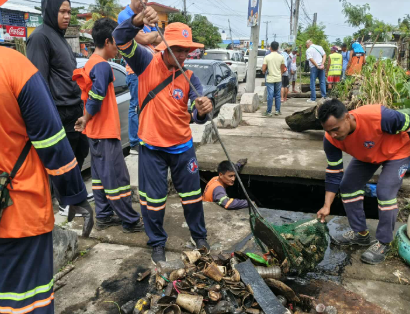
In July last year, heavy monsoon rains caused widespread flooding in Metro Manila, with authorities blaming garbage for clogging decades-old drainage systems.
“We all need to work together. The government cannot solve this alone. Everyone’s participation is necessary—especially when it comes to proper waste disposal,” Metro Manila Development Authority chair Romando Artes had appealed back then.
The irony is that Filipinos who travel to places with a strong culture of proper waste management are most likely to follow local rules. For example, Japan, a popular destination for Filipinos, very rarely has public trash cans due to a security measure put in place in the 1990s following a Tokyo subway sarin attack. Despite this, the surrounding areas remain clean and free of litter because residents have a strong sense of personal responsibility to dispose of their waste properly.
Plastic pollution in oceans
Not so in the Philippines, with many treating public areas as an extension of their personal space, where they can freely throw their waste—on the sidewalks, in street corners, abandoned lots, “esteros,” parks, canals, beaches, forests, etc. Typhoons and heavy rains would then carry the wastes downstream, eventually clogging drainage systems and causing massive floods, or filling up rivers and oceans. In 2019, the country contributed 36.38 percent of plastic pollution in oceans, even more than India, the second-largest plastic polluter, which only accounted for about 12.92 percent of the total.

That this is a discipline and implementation of laws problem is further proven in the case of Boracay, one of the country’s top tourist destinations. Just a few days after the island reopened in October 2018 following a six-month closure for rehabilitation, rubbish was already piling on the roadside.
The Philippines does not lack laws and ordinances on waste management and disposal. The MMDA has an anti-littering law enacted in 1996. Republic Act No. 9003, or the Ecological Solid Waste Management Act of 2000, prohibits littering, throwing, or dumping of waste matters in public places. Violators face a fine of between P300 and P1,000, or punishment through community service from one to 15 days. Yet, littering remains a problem and has even worsened decades after they have been enacted.
Behavioral shift
Aside from strictly implementing the law and making penalties tougher, there is a need to strengthen the concept of “Basura mo, Itapon mo” campaigns in schools and communities. A study by the Bulacan State University in June last year showed the strong correlation between visible trash bins and students’ littering behavior. Its findings suggested that “both convenience and accessibility are significant and crucial in shaping positive environmental behavior.”
The Department of Environment and Natural Resources, local governments, and other relevant agencies must also work together to educate the public about how careless waste disposal has a far-reaching impact on the environment and public health. Littering should be made socially unacceptable, shameful and viral, if that’s the only way to effect a behavioral shift.
Finally, the culture of proper waste disposal should begin at home where habits are formed and eventually spill into shared spaces.
For contributions, send to [email protected].