







Edcom’s hard truths and hard-won victories


When the Second Congressional Commission on Education (Edcom 2) released its Year One report for 2023, “Miseducation: The Failed System of Philippine Education,” we held a mirror up to the nation. The reflection was not flattering. It showed a system in crisis—one where nine out of 10 10-year-olds could not read simple text, and where the promise of education had been broken for millions of Filipino learners due to decades of accumulated gaps and poor coordination.
As we close 2025, at least three years after we started our work in Edcom 2, the image is beginning to shift. If 2024 was about diagnosis, 2025 has been about beginning the critical pivot toward action that targets the most important challenges in education. Our Year Two report, “Fixing the Foundations: A Matter of National Survival,” raised the alarm on the most important impediments in overcoming our learning crisis: early childhood education, nutrition in early years (0 to 4), and attaining literacy by Grade 3.
Our reform effort in education is a marathon, not a sprint. And so, once in a while, it is important to take a step back to celebrate collective accomplishments, in order to sustain our momentum forward. This past year, following our continued advocacy since day one, President Marcos himself enrolled nutrition and early childhood care and development (ECCD) under the Program Convergence Budgeting (PCB) initiative of the Department of Budget and Management to make sure that moving forward, the budget allocations across the Department of Health, National Nutrition Council, Department of Social Welfare and Development, and Department of Education (DepEd), are sufficient, strategic, and well-coordinated. We have not tired of repeating this: the most important investments in education need to be made in the first years of life, from age 0 to 4. It is critical that we tilt our investments and attention accordingly.
In April and May, we also celebrated successive wins: the granting of P1 billion to establish child development centers in the poorest local government units in the country, and the passage of Republic Act No. 12199 or the ECCD System Act— a milestone legislation that addresses the many gaps that have emerged since 2013 under RA 10410 or The Early Years Act—advocated for by our Edcom 2 cochairs in the 19th Congress, Sen. Sherwin Gatchalian and Rep. Roman Romulo.
Meanwhile, in DepEd, Secretary Sonny Angara has also effected landmark changes, reflecting many of the discussions in Edcom 2: the full implementation of the Expanded Career Progression which has since seen more than 16,000 teachers get promoted last year alone; the resolution of the decades-long bottleneck in textbook procurement resulting in a 289 percent improvement in just one year; and the full implementation of the Matatag decongested curriculum for Kinder to Grade 3 (which according to the latest Philippine Institute for Development Studies study released last Dec. 23, has seen dramatic gains in learning among students in key stage 1).
Among the most important wins in 2025 has been the improved run of DepEd’s remediation programs. Over the summer, DepEd focused its interventions on Grades 2 to 3 students and the results have been exceptional: 96 percent of those who participated in the Summer Literacy Remediation Program improved by at least one reading level, while those who participated in the Bawat Bata Makababasa Program pilot in Region 9 learned in just 20 days what would otherwise have taken them 1.3 years. This boosts our confidence that we know how, and that we can, win against this battle in illiteracy.
Finally, over the Christmas break, the House and Senate finalized the 2026 budget—one that could be remembered as the first real education budget in our history, breaching the 4 percent of gross domestic product benchmark long sought by education advocates for the first time. This is not coincidental, but a result of our collective resolve all these past years: first, to recognize that we are in fact facing a learning crisis, and second, to work together in overcoming these ills that we know have impeded the opportunities for millions of our youth for far too long.
The year 2026 promises to be a game-changer: a year to finally make significant strides in classroom construction and repairs (better than the 80+ completed by Department of Public Works and Highways in 2025), so that our schools will no longer have to resort to shifting schedules to make do; a year to fully staff schools with administrative officers to unload our teachers of nonteaching burdens; and a year to begin dismantling practices that have resulted in “mass promotion” of students.

As we conclude our first three-year mandate in Edcom 2 (2023 to 2025), truly, “malayo pa, pero malayo na.” As we close 2025, we should rightfully celebrate the hard-fought victories attained, while we remain steadfast in our aspirations in the new year. Truly, we are at an inflection point as we join hands, government, civil society, academe, in bravely confronting 30-year gaps in education. The climb remains steep, more work remains to be done, and so we press on until we fully realize an education system worthy of our nation and people. Padayon.
—————–
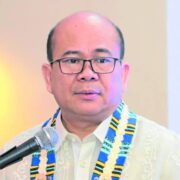
Dr. Karol Mark Yee is the executive director of the Second Congressional Commission on Education.