







Entropy isn’t what it used to be

Entropy. Randomness. Disorder. Think of it as the universe’s tendency to move from ordered to disordered forms. It is a scientific concept of something that increases over time and something that is used to explain why things (your notes, your plans, your schedules) naturally tend to become messy and why events (climate, disasters, politics) evolve from simple to complex. It is the reason why circumstances change. Nothing is ever static. Everything is ever dynamic. Everything changes—in space and in time. A friend you knew 10 years ago is not the same friend now and will not be same friend 10 years hence. A mirror, other than a clock or a calendar or a friend rubric, is a good tool to use if you are looking for a proof of concept. This same person who once lived in San Miguel, now lives in Santa Ana, and will eventually reside in San Andres. Waze and Google Earth Pro are apps that help you with this information.
The single most astounding thing about the universe—things change. Eggs break, ice cubes melt, quasars emit radiation, people choose different career paths, and we record memories of the past. And it all happens in a consistent “direction” (from the past to the future) throughout the universe. We call this the arrow of time. The arrow of time is in the direction of increasing entropy. It is solely because of this that we witness life and death, observe biological evolution, have a memory of both exhilarating and traumatic events, and experience that “flow” of time we call aging. We live in a fast-changing world. We live in an entropic universe.
Why does entropy increase with time? Why do things change from organized to disorganized? Why do systems evolve from simple to complex? The answer is simple. Events want to achieve a semblance of equilibrium—a state of balance between things. The natural directional flow of things is from where there is more of it to where there is less. The natural direction of heat flow is from hot to cold objects until they balance their temperatures (thermal equilibrium). The January 2026 heat wave spreading across South and Southern Australia comes from a very hot mass of air that has settled near the country and continent. The natural direction of wind flow is from high-pressure to low-pressure areas. This is why we experience a tropical cyclone (typhoon) when there is a low-pressure area entering the Philippine area of responsibility.
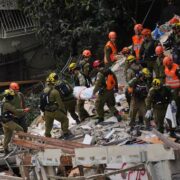
The Philippines experiences an average of about 20 typhoons per year. Systems tend to balance pressures (mechanical equilibrium). The September 2009 tropical storm “Ondoy” (International name: Ketsana) overflowed the Marikina River which inundated the entire Marikina Valley. Water flowed from the river to the valley to achieve a balance in water volumes and masses (chemical equilibrium). Perhaps the most memorable episode of entropy happened during the COVID-19 pandemic where we all experienced a new equilibrium called the new normal. The viral load spread across the entire globe. We grappled with our world’s changing from order to disorder. This was our evolved state during this precarious time of upheaval. Our states evolved from the normal to the new normal.
Thus, an important ingredient in the discussion of entropy is this concept of a state—a condition that is present in given space and time domains. Entropy allows this state to change, evolving from simplicity to complexity, from organization to disorganization, from the mundane to the relevant, and from the frivolous to the meaningful. Imagine how much and how far your states (in knowledge, skills, and attitude) have changed from your university freshman year up to your current profession. Surely, you have acquired more scope, breadth, and depth in your cognitive, psychomotor, and affective dimensions. Not only have you become more well-informed, you have also become more outspoken, and more critical (and appreciative) of things, people, and events around you.
Our states get to interact with other states. Our lives become intertwined with those that surround us. This is the gift of entropy—the entanglement of our lives and our states as we travel through space and time. In the language of quantum mechanics* there is an analogous phenomenon called quantum entanglement—where two or more particles (electrons, photons, etc.) become linked such that the state of one instantly affects the other and they become interdependent regardless of the distance between them. Similarly, as we live our lives through an entropic universe, we get to interact with other lives and get entangled in positive (joyful), negative (undesirable), insignificant (humdrum) ways. In 2026, I wish you happy entanglements!
Note: 2025 was declared by the United Nations as the International Year of Quantum Science and Technology.
—————-

Dr. Joel Tiu Maquiling may be reached at jmaquiling@ateneo.edu
—————-
“Entangled States,” a new column by Dr. Joel Tiu Maquiling will appear in the Inquirer Opinion section every Friday.