







Fighting fake news: Follow the money

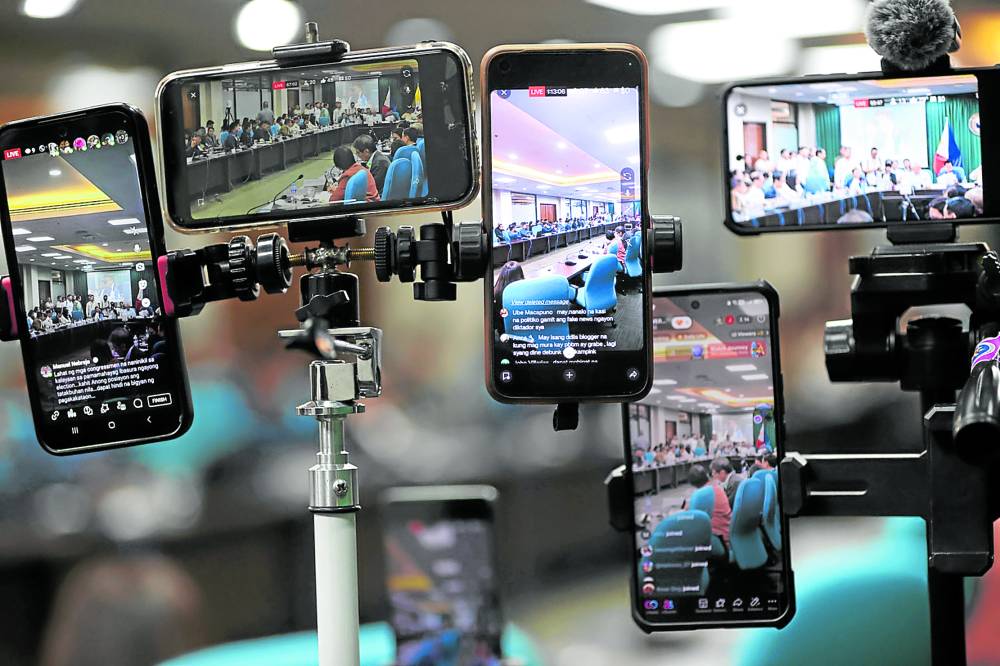
Fake news has penetrated the fabric of our society. Gone are the days when media academics enclosed the term in quotation marks and dismissed it as an oxymoron. It is no longer background noise humming in the fringes of public discourse.
Now it bellows from every platform and contaminates every conversation. It segregates people into partisan camps. It makes the gullible believe every word they read and makes the discerning distrust every post they see.
But fake news is not a scourge that materialized organically. It is the creation of clandestine networks that profit off outrage and viral engagement. Presidential Communications Office (PCO) Secretary Dave Gomez was right to call disinformation the “venom that poisons the hearts and minds of the people.”
Consider the speed and scale at which a lie now travels.
A vlogger posted a digitally altered image of mothers of drug war victims clutching luxury bags, as they attended proceedings at the International Criminal Court in The Hague, Netherlands, against former President Rodrigo Duterte.
Shared far and wide
The caption mocked the women for living the lifestyle of the rich. Yet, nothing could be further from the truth, as there were no bags in the original photo. In fact, the women had borrowed clothes and received donated funds to make the trip.
By the time fact-checkers released corrections, however, the post had already been shared far and wide, by many who didn’t know better and many more who should have known better.
Take the vlogger who was arrested for posting a fake medical certificate of President Marcos admitting he did it “to keep up with the trend.” Later, Malacañang was forced to debunk rumors that the President was afflicted with colon cancer and wore a colostomy bag at an event.
There, too, was that group of alleged former Marines who claimed they delivered suitcases of cash to politicians, including Mamamayang Liberal Rep. Leila de Lima, only for their lawyer to admit her inclusion might have been an oversight, since she had been incarcerated at the time.
Far from harmless pranks, these calculated fabrications share the same blatant disregard for the truth and feed on chaos and polarization. But the bigger damage is how they corrode trust in institutions, especially the press.
The 2025 Reuters Digital News Report found that while overall trust in news in the Philippines remained at 38 percent, trust in nearly all media brands slid over the past year “amid intensified political disinformation.”
‘Oplan Kontra Fake News’
Reuters noted that this “information disorder” is “often amplified by political influencers and partisan media,” and that some outlets critical of those in power are “actively distrusted by supporters of the politicians in question and subject to coordinated harassment.” Even the most trusted brands, among them GMA Network and the Philippine Daily Inquirer, saw declines from the previous year’s ratings.
Against this backdrop comes “Oplan Kontra Fake News,” a memorandum of understanding between the PCO and print media publishers signed last week at Malacañang. Among the signatories were the heads of top newspapers, including Inquirer Interactive Inc. president and chief executive officer Paolo Prieto.
The initiative includes media literacy campaigns and the creation of an “Anti Fake News Desk” at the PCO, where suspicious or misleading content may be reported to agencies.
This is a welcome first step that must be approached with care.

Efforts to counter disinformation must not become a pretext to police legitimate speech. The line between combating deliberate falsehoods and protecting the constitutional guarantee of a free press must remain clear.
In the war against fake news, transparency must be the primary weapon. A robust freedom of information regime, timely disclosure of public records, and proactive release of data can close the vacuum that fake news spreaders exploit.
Coordinators and financiers
Law enforcement must go beyond filing a handful of complaints against individual perpetrators. If there are “coordinated disinformation campaigns,” as the PCO itself acknowledges, then there are coordinators and financiers.
Follow the money. Who funds these operations? Are they domestic political actors or foreign interests? Which networks of pages amplify the same narratives at the same time? Cyber sleuthing should not stop at the most visible provocateur.
The press, for its part, must be more proactive in refusing to be a megaphone to habitual purveyors of falsehoods. Newsrooms must be relentless in verification and just as relentless in calling out lies, especially when uttered by public officials.
Fake news thrives because its makers understand how audiences behave online. It is visual, visceral, and engineered for virality.
If the media and the government fail to counter these tactics with equal sophistication, they will remain in a position of disadvantage–always reacting and rising to the bait while the next lie is already trending.