









Filipino diaspora: Caught in the crossfire


The daybreak attacks by the combined forces of the United States and Israel on Iran, and the latter’s retaliation, which also targeted its oil-rich neighbors, have resumed tit-for-tat strikes that have plunged the volatile Middle East into much uncertainty.
However, Iran’s retaliation included urban targets like Dubai and Abu Dhabi, putting the lives of ordinary citizens—including migrants from Asian nations—in harm’s way. Bahrain, Qatar, Saudi Arabia, Jordan, Kuwait, and Iraq also absorbed the impacts of Iranian missiles and drones.
Closer to home, one collateral casualty was Mary Ann Velasquez de Vera, 32, a Filipina caregiver from Basista, Pangasinan, who died while “selflessly assisting her patient to safety during Operation Roaring Lion on March 1, 2026,” said a statement released by the embassy of Israel in the Philippines. De Vera sustained injuries from an Iranian missile that struck her apartment in Tel Aviv, Israel, the statement added.
“Resilience, compassion, quiet strength.” The embassy mourned De Vera’s passing, saying, “Mary Ann, like so many overseas Filipino workers in Israel, exemplified resilience, compassion, and quiet strength. Israel joins in the profound sorrow of her family and the Filipino community. We mourn together and honor Mary Ann’s memory with dignity and respect.”
The tragic death of De Vera—one of the estimated 31,000 overseas Filipino workers (OFWs) serving in Israel primarily as caregivers—has inadvertently raised questions about the safety of our “modern-day heroes.”
Data from the Department of Foreign Affairs show that some 975,000 Filipinos are in the UAE, 813,000 in Saudi Arabia, 250,000 in Qatar, and 800 in Iran. (see “Caregiver first PH casualty in Mideast; gov’t all set for repatriation,” Inquirer.net, 3/2/26.)
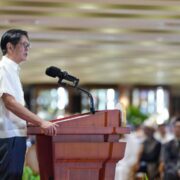
In a video message, President Marcos confirmed the fatality. The same Inquirer report confirmed that “De Vera died after being hit by shrapnel while assisting her elderly ward get into a bomb shelter.” De Vera’s patient also sustained injuries but was safely rescued from beneath the rubble.
On top of the situation. Mr. Marcos vowed to provide all necessary assistance to her family, even as he expressed concern over the widening regional conflict. “I believe this war will continue,” the President cautioned after US President Donald Trump warned that the strikes could last from four to five weeks.
The welfare of the Filipino diaspora has remained a central concern for the first family, especially regarding our migrant workers. Without fanfare, first lady Louise “Liza” Araneta-Marcos has actively—but quietly—championed OFW Serbisyo caravans, providing essential services and one-stop-shop government service hubs directly to OFWs in regions such as the Middle East, Europe, and Asia.
Mr. Marcos, for his part, swiftly set in motion contingency measures to protect Filipinos in and out of the country. He placed the military on standby in case an evacuation of affected OFWs became necessary, ordered our concerned embassies to locate and protect stranded Filipinos while airports remained closed, and initiated discussions with congressional leaders regarding possible emergency powers to reduce fuel taxes and curb rising oil prices.
If the war with Iran persists, this could result in the largest humanitarian evacuation of OFWs, which begs the question: Are we prepared to absorb a large chunk of these OFWs into our domestic workforce so that they can continue feeding their families? That’s the downside of the policy of the past seven administrations on labor exports.
But the current administration, which only inherited this policy, cannot put the genie back in the bottle. Labor migration is a near-universal phenomenon (167.7 million migrant workers globally, according to migrationdataportal.org).

Even if efforts are made to slow labor migration, leaving the country in search of better opportunities will not stop abruptly. In fact, OFWs—especially those in the medical, shipping, engineering, education, and IT sectors—remain highly valued overseas, elevating the status of Filipinos worldwide.
What we should guard against is Filipinos resorting to backdoor routes—lured by promises of lucrative jobs in Southeast Asia—only to end up in the hands of human traffickers, prostitution rings, and offshore gaming operators.
The best option at this point is to direct state universities, like the University of the Philippines, and OFW-related agencies to conduct a comprehensive study on how to gradually wind down the deployment of OFWs to war-torn or volatile areas. We should also focus on upskilling our OFWs to secure high-value jobs that adequately compensate for the social ills arising from overseas employment. Additionally, negotiating with other countries for access to more of these high-value jobs should prioritize not only their economic welfare but also their safety and security.
—————-
lim.mike04@gmail.com