










Flood control fund’s comeback

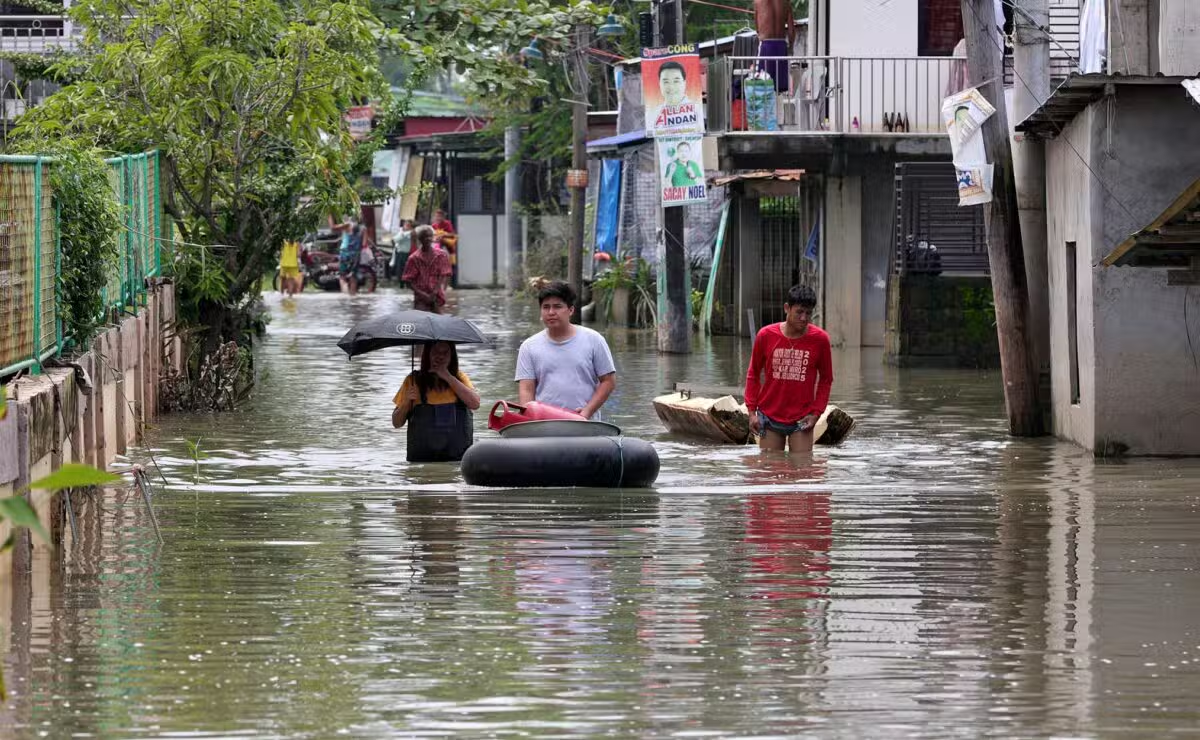
There was never any question about whether the country needs flood control projects. It was always a question of whether these projects would preserve lives and property or serve as vehicles for corruption.
The answer to the first part has come with tragic clarity.
Dozens of people have died in the latest weather disturbances, most of them in landslides in Baguio City and Benguet. More than 4 million people across the country have been affected, while damage to infrastructure and agriculture has run into billions of pesos.
There could hardly be a more compelling argument for the government to spend on projects that protect communities from floods, landslides, and other hazards in a country that suffers these year after year.
But there is an equally critical imperative to make sure that taxpayer money truly meets urgent infrastructure requirements rather than satiating the appetites of crooked officials and their private sector conspirators.
‘Business as usual’
The proposed 2027 national budget restores substantial funding for flood control after allocations for such projects were cut altogether this year in the wake of the scandal that exposed widespread irregularities in their implementation.
The Department of Public Works and Highways (DPWH) is seeking P107.4 billion for flood control, with another P3.41 billion proposed for the Metropolitan Manila Development Authority.
There is no denying the necessity, but restoring the funds comes with the danger of returning to “business as usual.” The country has spent months learning how flood control funds could be manipulated through political patronage and allegedly favored contractors. Congress does not need another scandal to understand the lesson.
Former Public Works Secretary Manuel Bonoan’s testimony in a case involving the alleged misuse of flood control funds offered a revealing glimpse into how infrastructure money could be peddled at the highest echelons of government. His account of lawmakers seeking projects from the DPWH, alongside broader disclosures about budget insertions and congressional influence over infrastructure allocations, hinted at the colossal scale of the problem.
That is precisely what Congress must guard against as it considers the 2027 outlay.
Flood control funds should come with safeguards embedded in the General Appropriations Act itself. Projects should have clear locations, technical justification, measurable objectives, and transparent cost estimates. Their implementing agencies, contractors, contracts, and progress should be readily available for public scrutiny.
No room for lump sums
More importantly, projects added or changed during the congressional budget process should be subject to the same technical and fiscal scrutiny as those proposed by the executive branch.
The budget should leave no room for vague lump-sum allocations or unexplained realignments that make it hard to determine who proposed a project and where the money went.
On Saturday, only days after the submission of the National Expenditure Program to Congress, Sen. Panfilo Lacson said his staff had spotted “questionable” lump sums in the budget, although he reserved his questions for the first budget briefing set this week.
The priority now must be to put up a high wall between lawmakers who appropriate public funds and contractors who stand to benefit from them. That wall must be built into the law itself, making any wheeling and dealing difficult to conceal and costly to attempt.
None of this diminishes the argument for flood control spending. Communities need drainage systems, slope protection, and similar projects to reduce the risks posed by extreme weather.

But the government must be able to answer a basic question about each project: Will this work as intended when the next monsoon comes?
Seal every loophole
The Senate finance committee chair, Sen. JV Ejercito, has vowed there would be zero last-minute insertions or changes during the 2027 budget’s bicameral proceedings. That is a welcome commitment, but preventing another budgeting scandal would require something broader than a promise.
Safeguards must apply throughout the budget process, from the initial project list to congressional deliberations, implementation and auditing. The responsibility falls on Ejercito, House appropriations chair Rep. Mikaela Suansing, Senate President Sherwin Gatchalian, and House Speaker Faustino Dy III to make sure the lessons of the past months are reflected in the final budget.
They have been given an unusual opportunity to demonstrate that Congress has learned from the scandal. They should seal every loophole that allowed infrastructure funds to be inserted, reshuffled, and massaged for political ends.
The victims of the latest rains and landslides have made it painfully clear that the country needs flood control. But it needs flood control that saves lives and protects property instead of fattening the fortunes of politicians and contractors.
******
Get real-time news updates: inqnews.net/inqviber