










Fortune favors the prepared


As a part of my mission here but also just because I am concerned global citizen, I follow closely discussion forums on the Indo-Pacific security. And sometimes, I read skeptical comments from similarly concerned Filipinos questioning the ability of the European Union and the European countries to really help the country and, by extension, the region, especially given the geographical distance. Except … that we already do.
In an era of global power shifting, where traditional alliances are being questioned, there are still those here who view the EU as a distant, somehow irrelevant player in the realm of defense and security. For many, Europe’s commitment to the Indo-Pacific region might seem secondary to the influence of more prominent regional powers. However, the EU’s role is far more significant—and its contributions more strategic—than many might think. “Deepening defense and security cooperation” with the Philippines is not just a diplomatic nicety for us; it is a partnership that generates tangible benefits for regional stability. And the frequency of the EU-Philippines contacts is accelerating.
The beginnings of this cooperation date back to the early 2000s under the EU’s broader “Asia Strategy,” with defense cooperation initially emerging as a secondary priority to economic ties. However, as global security challenges intensified—ranging from the rise of terrorism to regional territorial disputes, both in quantity and sophistication—both sides recognized the need for a more formalized defense and security partnership. That came in 2007, when first security cooperation framework with the Philippines was established, underlining the shared commitment to counterterrorism efforts, maritime security, and peacekeeping initiatives in the region, aiming at technical support and capacity-building of the Philippine military and law enforcement agencies.
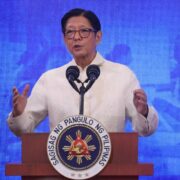
And when President Marcos last met with European Commission President Ursula von der Leyen, they discussed expanding cooperation in defense and intelligence sharing. These discussions have positioned the EU as a key partner in enhancing the Philippines’ security capabilities, particularly in response to the rising tensions in the South China Sea. And most lately, the EU Indo-Pacific Ministerial Forum held in Brussels last November focused on the challenges facing maritime security and critical maritime infrastructure, signaling intent to establish a structured initiative to better coordinate EU and Association of Southeast Asian Nations partners on protecting submarine cables and other vital assets.
With its significant naval capabilities, the EU has been instrumental in providing training, funding, and equipment to the Philippine Coast Guard, enabling it to better patrol its expansive maritime borders.
As geopolitical dynamics in the Indo-Pacific continue to evolve, the EU-Philippines defense relationship is set to play an increasingly important role. We are adapting our cooperation to address new challenges, particularly in cybersecurity and hybrid warfare. We are also committed to assisting the Philippines in modernizing its defense infrastructure under the Self-Reliant Defense Posture law, with a focus on technology, surveillance systems, and advanced equipment. European companies produce and proudly offer the most modern technologies known to the world not just on the sea but in the air and on the ground. And here, perhaps more than in business, it is good to remind our Filipino partners that a diversified portfolio is the foundation of sustainability.
The EU supports the Philippines’ efforts to maintain peace and stability in the South China Sea, (i.e. by upholding international law, particularly the United Nations Convention on the Law of the Sea), crucial in ensuring long-term peace in the region. The EU, through its diplomatic channels and strategic partnerships, is poised to play a key role in advocating for the peaceful resolution of territorial disputes and supporting the Philippines’ sovereign rights. And the Philippines stands with Europe against the Russian aggression against Ukraine. Hand in hand with that goes ever so growing observers’ participation of many European countries in the annual Balikatan exercise including Germany, the Netherlands, or France, and, as of last years, also Lithuania or the Czech Republic. And others will join soon.
For me personally, an impressive, yet not exhaustive overview. But that doesn’t mean we can sit back and pat ourselves on the back. The world doesn’t stand still, and neither do we: new projects are in the pipeline. There is no doubt that our partnership will remain a cornerstone in the region’s security architecture, contributing to a safer, more prosperous future for all. Now, does anyone still think that Europe is too far away from the Philippines?

—————-
H.E. Karel Hejč is the ambassador of the Czech Republic to the Philippines. He has previously served in Geneva, Ottawa, Addis Ababa, and Kinshasa.
—————-
This commentary is part of a series of articles in the Philippine Daily Inquirer contributed by European Union Ambassadors to the Philippines, in line with Denmark’s Presidency of the EU Council. The articles focus on strategic areas of cooperation between the EU and the Philippines.


Why I take the ICC probe personally