









Freeing Venezuela’s oil


From New York to London and Doha, top news organizations have been speculating on the impact of increased oil production in Venezuela in the near term, following the capture of Venezuela’s President, Nicolás Maduro, on Jan. 3, on orders from United States President Donald Trump.
But first things first: how many oil reserves does Venezuela have that the US can import into its domestic market and make available to other large buyers elsewhere in the world?
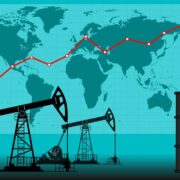
According to Qatar-based Al Jazeera, Venezuela has an estimated 303 billion barrels of proven oil reserves compared to the US’ 55.2 billion barrels. Venezuela has the largest reserves in the world, surpassing Saudi Arabia’s 267 billion barrels (see tinyurl.com/4npbdprr). But the US is currently the biggest oil exporter in the world, producing more than 22 million barrels per day, followed by Saudi Arabia (10.8 million) and Russia (10.5 million) (see tinyurl.com/e4ab4p7h). Venezuela is No. 21 on that list (902,651).
Worldometer says the Philippines ranks No. 83 in the world, producing 14,345 barrels per day of oil (as of 2024), or about 3.78 percent of the country’s proven reserves (138,500,000 barrels). This measly oil output results in a daily deficit of 459,119 barrels, forcing the Philippines to rely heavily on oil importation.
Although it has the biggest oil reserves, Venezuela’s oil production has drastically declined since the 2000s, according to BBC and New York Times (NYT) reports. The Latin American country produces only about 1 percent of the crude oil being sold on the world market. The New York Times estimates that Venezuela’s oil is worth between $1.8 billion and $3 billion (see tinyurl.com/ycxcaw73). Oil giants Exxon Mobil and ConocoPhillips had to abandon their operations in 2007, when Venezuela nationalized their assets.
According to the same NYT report, Trump announced last week that Venezuela would begin transferring some of its oil supplies to the US, so that American oil companies could regain their oil interests in Venezuela, following Maduro’s ouster. Venezuela still faces the threat of a US military blockade, which prevents it from exporting oil. Per Trump’s calculations, “Venezuela would send 30 million to 50 million barrels of oil, about two months’ worth of daily production, to the United States, and that he would control profits from the sale of the oil ‘to benefit the people of Venezuela and the United States.’”
But the BBC warned that the US would have to bankroll the increased oil production for Venezuela, given the decaying oil infrastructure of the country. “The Trump administration sees significant potential for its own energy prospects in Venezuela’s reserves,” said the BBC report, adding, “Venezuelan oil is also heavy and more difficult to refine. There is only one US firm, Chevron, currently operating in the country” (see bbc.com/news/articles/c4grxzxjjd8o).
Emerging consensus. But even if the US can persuade American oil players to invest more in increasing Venezuela’s output, there’s “an emerging consensus that changes in Venezuela may take years to translate into large output increases,” said NYT energy and environment reporter Stanley Reed (see tinyurl.com/3drx7fcx). Reed explained that increasing the oil output of Venezuela would take years, even after the US has taken effective control of the country and is working closely with Maduro’s protégé, Venezuela’s interim President Delcy Rodriguez.
“Assuming Mr. Trump is successful, Chevron will be among the winners,” Reed said of the US oil giant. Chevron could increase production by 50 percent in 18 to 24 months.
Chevron produces about a quarter of Venezuela’s oil output, or about 240,000 barrels a day. Its production of heavy or extra-heavy crude is done in partnership with Venezuela’s national oil company, with permission from the American government.
But for years, Venezuela has not been able to drill more oil, despite having the world’s largest untapped oil reserves, “because of a combination of domestic political turmoil, economic turbulence, and punishing sanctions imposed by the United States,” according to NYT’s Reed and Chris Cameron. (see tinyurl.com/ycxcaw73)
Will other countries, including the Philippines, benefit from the increased oil output of Venezuela through US oil companies?

“Because the country is capable of producing large amounts of what is known as extra heavy oil, even a modest revival of the Venezuelan industry has the potential to shake up the oil markets in the United States and elsewhere … including by reducing gasoline prices,” Reed and Cameron said.
The price of a barrel of Brent crude, the international benchmark, remains at around $65. “Were more oil to hit the market, prices might fall to about $50 a barrel, analysts say. At that price, industry profits are slim, and many oil companies are less inclined to drill,” said Reed and Cameron. But they pointed out that easing the pressure on Venezuela could lead to a rebound in oil exports and attract more investments.
If Venezuelan oil production could reach 2 million barrels a day, “US refineries, which are concentrated on the Gulf Coast, would also be able to extract more gasoline and diesel from the crude, increasing supply and putting downward pressure on prices,” the two optimistically predicted. In this scenario, the world could anticipate a significant decrease in pump prices.
—————-
lim.mike04@gmail.com


Green transition for a better future