

Friendship, not fealty

International justice is rarely shaped by gentle currents, but a new storm blowing from Washington demands a delicate but unyielding response from Manila or any nation that calls the United States a friend.
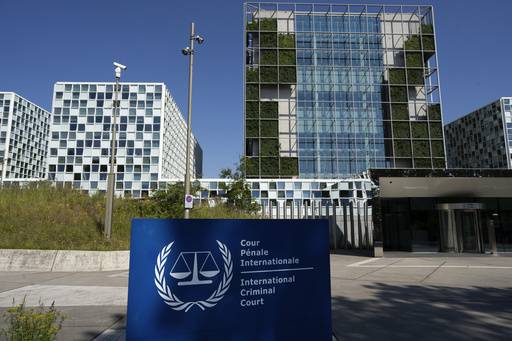
US Secretary of State Marco Rubio announced last week a sweeping campaign to cripple the International Criminal Court (ICC). In a video message and an opinion piece, Rubio described the Hague-based tribunal as an existential threat to American sovereignty, accusing it and its allies of waging a war with “statutes, compacts and the force of so-called international law.”
Washington warned of asset freezes, travel bans, and increased scrutiny for any state that refuses to reject the court’s authority while relying on American security or assistance. “We will watch with interest which nations join ranks with us against this threat to Americans who are willing to risk their lives to protect others,” Rubio said.
Manila’s commitment
For the Philippines, a treaty ally deeply entwined with the US, this thinly veiled threat is a test of courage and character.
No one disputes that the US may freely determine its own relationship with the ICC. It is well within its rights to reject the court’s jurisdiction over its citizens and to oppose attempts by any international tribunal to prosecute Americans.
That is America’s sovereign choice. It is not, nor should it become, the Philippines’ de facto policy.
It is only natural that Manila takes stock of Washington’s campaign against the ICC. The US is our oldest defense partner, our largest export market, and an indispensable security partner at a time of growing tensions in the West Philippine Sea.
Indeed, few countries have demonstrated their commitment to the alliance as consistently as the Philippines. Over the years, Manila has expanded military cooperation under the Enhanced Defense Cooperation Agreement and recently joined the US-led Pax Silica coalition aimed at building secure technology supply chains across partner nations.
Washington often describes the relationship in three words: “friends, partners, allies.” Those words should count for something, because friendship implies mutual respect, partnership suggests equality, and an alliance means a shared commitment.
The Philippines has every reason to remain a steadfast friend and ally of the US. But friendship is not fealty. No alliance between sovereign states requires one nation to subordinate its domestic policies or abandon its own legal obligations at the urging of another.
Residual obligations
Some principles are not negotiable. Philippine policy toward the ICC must be determined by Philippine law and Philippine interests, rather than the erratic preferences of any foreign government, however friendly or powerful.
Japan, the ICC’s largest financial contributor and home to its president, Tomoko Akane, took a measured path. Tokyo expressed watchfulness and concern, yet reaffirmed that Japan places great importance on the eradication of serious crimes and the upholding of the rule of law. It said Tokyo would continue to consult with international partners rather than capitulate to unilateral pressure.
The Philippines must demonstrate similar strength. Although the country technically withdrew from the Rome Statute under the Duterte administration, its legal commitments have not been erased. Both the Supreme Court and Section 17 of Republic Act No. 9851, the Philippine Act on Crimes Against International Humanitarian Law, establish that it has residual obligations to the ICC.
Among those residual obligations is cooperation in the upcoming trial of former President Rodrigo Duterte, who stands accused of crimes that occurred when the ICC still held jurisdiction over the country.

Trump’s volatile whims
Duterte, who was arrested in March 2025 for crimes against humanity over those killed in his brutal narcotics campaign, is detained in The Hague. His trial is set for November. Meanwhile, his chief enforcer and co-perpetrator, Sen. Ronald “Bato” dela Rosa, remains a fugitive from justice.
As Palace press officer Claire Castro noted, pursuing justice for Filipinos who were victims of extrajudicial killings “is not something that the government can simply disregard.” The country’s engagement with the process must be guided by its own laws and moral conscience. It must not be held hostage by the volatile whims of an unstable Trump administration.
The government should therefore proceed with caution, but also with confidence. It should carefully weigh the diplomatic consequences of America’s campaign against the ICC. But it must not allow those consequences to eclipse the rule of law or derail judicial processes already in motion.
True sovereignty lies in a nation’s resolve to look its allies in the eye and say that our laws, our citizens, and our pursuit of accountability are ours alone to govern. That is what friends, partners, and allies owe each other.
******
Get real-time news updates: inqnews.net/inqviber