






Gov’t credibility: Filipinos need to feel the difference


Governments tell their people that the country faces many problems, that solutions are underway. They point to programs meant to address these challenges. Tough times may lie ahead, they say, but everything is under control.
Filipinos do not seem sold on this narrative.
The latest Pulse Asia survey commissioned by Stratbase shows that 35 percent of Filipinos consider affordable food prices the most important action national government leaders should undertake.
Another Pulse Asia survey found that 98 percent of Filipinos reported price increases in goods they buy. Of these, 92 percent cited food.
Meanwhile, a Social Weather Stations (SWS) survey conducted Sept. 21-27, 2026, found that 22.6 percent of families experienced involuntary hunger at least once in the past three months, worse than in previous quarters.
It is no surprise that 55 percent of families (16.8 million families) considered themselves poor.
The message is clear and unequivocal: the immediate concern of the government should be whether ordinary families can afford basic necessities.
Given the glaring disconnect between what the government seems to be saying and what the people feel, our leaders must take the cue: food affordability should be treated as an urgent economic and governance priority, particularly for the poorest households.
Food affordability is, quite literally, a gut issue; other concerns—even the loud political noise—are secondary. And before it starts enumerating, yet again, the long list of programs being undertaken to take our economy to the next level, our government should first acknowledge what its people are saying and feeling.
—————-
Filipinos want inclusive governance. Economic policies must translate into tangible benefits for all Filipinos. Government priorities must be responsive to the needs of the population, particularly the most vulnerable sectors.
Addressing food affordability requires coordinated policies that consider household welfare, livelihood opportunities, and equitable access to essential goods and services. Ultimately, inclusive governance means ensuring that economic growth is felt by ordinary Filipinos, not just reflected in economic indicators.
Another Stratbase-commissioned SWS survey showed that President Marcos’ “much trust” rating rose slightly to 36 percent in September, still below his 64 percent rating in July 2024. Meanwhile, Vice President Sara Duterte continued to register significantly higher trust at 56 percent. In the effort to show himself as a capable and credible leader, Mr. Marcos must do more than resort to messaging. Only visible results in terms of food accessibility and affordability will paint him as the sincere and results-driven President.

To do this, for the rest of its term, the Marcos administration must make food affordability an explicit national policy priority. Prices of rice, meat, fish, and other basic goods must be viewed not just as inflation statistics but as daily measures of household welfare. With 71 percent of Filipinos saying that controlling inflation is their most urgent national concern, containing the cost of basic goods must be central to economic policy. The objective should be sustained affordability, not temporary price relief.
The standard of governance and basis for credibility must be this: the ability to deliver. What ordinary Filipinos want from their government is for it to make their everyday lives manageable. Achieving this means that the administration should establish clear, measurable targets for food affordability, household incomes, job creation, and public-service delivery. These should be publicly monitored so that Filipinos can see whether the government is actually delivering.
Trust can only be built if Filipinos feel their government where it matters most. The strongest response to declining public confidence is not simply better communication. It is better governance that Filipinos can actually experience in their homes and communities. If families can buy food at reasonable prices, find quality work, access quality services, and see public funds used properly, government credibility will follow.
Government credibility is earned, and only earned when Filipino families actually feel the difference—if they can afford basic goods and if they are able to envision a better, more secure future for themselves and their loved ones.
—————-
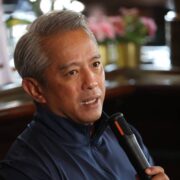
Dindo Manhit is the founder and CEO of Stratbase Group.