










Hold BARMM polls this year


The Commission on Elections (Comelec) has postponed the Bangsamoro Autonomous Region in Muslim Mindanao (BARMM) elections due to legal and operational concerns. Comelec Chair George Erwin Garcia explained that it is no longer feasible for the elections to be held on March 30, 2026 because the Bangsamoro Parliament enacted a new redistricting law in January 2026. Under Republic Act No. 8189 or “The Voter’s Registration Act of 1996,” no alteration to municipalities and precincts can be done 120 days before an election. The parliament only approved a redistricting measure on Jan. 13, with Chief Minister Abdulraof Macacua signing the law on Jan. 20.
This is the fourth time that this milestone elections in BARMM are going to be postponed. The BARMM elections were first postponed when former President Rodrigo Duterte signed a law putting it off from May 2022 to May 2025. The move to postpone the elections a second time came about when the Supreme Court issued a decision in September 2024 excluding Sulu from the BARMM and got moved to Oct. 13, 2025, with the passage of RA 12123. It then had to be postponed again when the Supreme Court declared that the Bangsamoro Autonomy Act (BAA) No. 77, and its predecessor BAA No. 58 were both ruled as unconstitutional. BAA No. 77 was the law that redistributed the seven seats originally allocated to Sulu after the province got excluded from the BARMM.
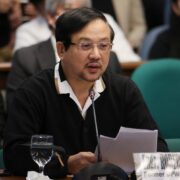
In its Jan. 28 en banc resolution stipulating that it is no longer feasible to hold the BARMM elections on March 30, the Comelec mentions that it can instead be held in September at the earliest. During the Senate subcommittee hearing Sen. Juan Miguel Zubiri asked if the Comelec would be satisfied if the BARMM polls were to be conducted by September, and Garcia answered in the affirmative. While acknowledging that the previous and further postponement appear to be justified, Zubiri stressed that this next postponement should be the final one as further delays are no longer acceptable and risk eroding the democratic foundations of the Bangsamoro peace framework.
There is now a growing consensus that the parliamentary elections be held in the second Monday of September this year, as specified in House Bill No. 7236 and Senate Bill No. 1587. The Coalition for Accountability and Transparency (CSAT), a coalition of 40 civil society organizations and academic institutions operating across the BARRM have expressed full support for the passage of the bills and opposed any further postponement of the elections. In a statement issued by CSAT, they declared that “any additional delay will undermine the democratic transition, erode public trust in institutions, and contradict both the spirit and intent of the Comprehensive Agreement on the Bangsamoro.”
This push to have a law passed setting the BARMM elections in September is aimed to prevent a further postponement to 2028 that is being urged by three members of the 80-seat Bangsamoro Parliament citing a Supreme Court ruling implying that the Philippine Constitution mandates synchronization of elections, including those in autonomous regions. There is also the argument of elected parliamentarians only serving a term of one year and nine months instead of the mandated three years because in order to serve the three-year term, that would mean the succeeding election will have to be held in 2029 and would subsequently violate the synchronization law.
I think the truncated term of office is the main issue behind a call to postpone the BARMM elections to May 2028 with the synchronization law a convenient excuse to avoid finding a compromise that would avoid further postponing this historic milestone. The constituency of the BARMM deserves nothing less and should be given the opportunity to determine their leadership through the genuine exercise of suffrage which serves as a foundation for any stable and legitimate government.
Public and national interest should be prioritized over political interests behind the raising of issues regarding the term of office and the synchronization law which aims to further delay the BARMM elections by another two years. The transition period for the BARMM was supposed to have ended four years ago. If those in charge have their constituents’ interests at heart, I am sure they will find a way to resolve or fix the issue about serving a three-year term and its impact on the synchronization law that doesn’t involve postponing again the BARMM elections to May 2028. Congress goes into recess in March, I hope the time will be used wisely and productively to pass a law that will make things right.

Sustaining peace is more difficult than reaching an agreement. The creation of the BARMM is the outcome of a decades long process to achieve peace in Mindanao, therefore let it be accorded the importance it deserves by making sure that elections happen and the will of its constituents are given their due respect and consideration by ensuring that the elections take place this year.
—————-
Moira G. Gallaga served three Philippine presidents as presidential protocol officer and was posted at the Philippine Consulate General in Los Angeles and the Philippine Embassy in Washington.


Dedutertefication