









How anger becomes a people’s force

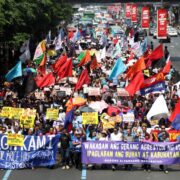
More than 10 years ago, at a national anticorruption forum, the room vibrated with anger. Filipinos from across the country stood up to tell their stories—bribes paid, permits delayed, livelihoods ruined, dignity stripped away. It felt like a turning point. Finally, people were awake.
Then an Australian observer beside me whispered, almost gently: “They are all victims, aren’t they?”
At first, the remark stung. Later, I understood its clarity. What we were witnessing was not yet a people’s movement. It was an aggregation of private hurts—deep, sincere, justified—but still fragmented. Anger was present. Power was not.
The lesson matters today, as public fury over the flood control scandal persists. If we want anger to become a force for democratic and good governance transformation, it must pass through five stages. Without them, it burns out—or worse, turns inward.
Stage 1: Naming the harm—every transformation begins with people naming what happened to them. This is where Filipinos are strongest. From fixer culture to ghost projects, we speak from lived experience. The problem is not silence. The problem is getting stuck here.
Victim-anger is necessary—but insufficient. On its own, it asks: Who wronged me? Not yet: What system allowed this to happen to all of us? The early testimonies during the pork barrel scandal (PDAF) were individual. The turning point came only when the stories were connected to a larger scheme.
Stage 2: Diagnosing the system—anger becomes political when people see patterns. This stage reframes corruption not as a series of bad actors but as a design failure—in budgeting, procurement, political parties, campaign finance, and oversight.
Ghost flood control projects are not just theft. They are the predictable output of weak party systems, discretionary budgets, and poor accountability. The Million People March succeeded because it targeted PDAF as a system, not just corrupt legislators. Without a diagnosis, anger stays moral. With diagnosis, it becomes strategic.
Stage 3: Converting anger into collective agency—this is the hardest leap. Anger becomes power only when people stop asking to be heard—and start organizing to change rules.
That requires (1) coalitions, not just crowds; (2) roles, not just microphones; and (3) tasks, not just slogans. People must be given something concrete to do: monitor projects, demand data, support cases, pressure institutions, and sustain attention. After PDAF, some civil society groups tracked budgets and court cases. Where that work continued, reforms lasted longer. Where it didn’t, anger dissipated.
Stage 4: Building political imagination—at this stage, anger either matures—or collapses. Here, the question shifts from “What’s wrong?” to “What must replace it?” Without alternatives, anger drifts toward (1) resignation (“wala namang mangyayari”); or (2) authoritarian temptation (“we need a strongman”).
With imagination, anger fuels reform: party development, procurement redesign, citizen oversight, campaign finance reform. Participatory budgeting pilots, procurement transparency initiatives, and local governance reforms show that alternatives are possible—but they remain scattered. This is where civic engineers are indispensable.

Stage 5: Institutionalizing pressure—the final stage is where movements usually fail. Anger must be locked into institutions, so it survives leaders, elections, and scandals. That means: (1) permanent watchdogs; (2) rule-based accountability; (3) protected reformers; and (4) civic education that outlasts outrage cycles. Without this, every scandal feels like the first—and the last. We have strong commissions and laws on paper, but weak continuity. Pressure spikes, then fades. Systems absorb the shock and revert.
So where do we start—and who should start it? We do not start with rallies. We already have those. We do not start with politicians. Incentives work against them. We start with credible intermediaries: (1) universities and policy centers; (2) professional associations (engineers, auditors, planners); (3) faith-based and civic organizations with moral capital; (4) reformist local government units and technocrats; and (5) independent media.
They are best positioned to bridge anger and design—to translate stories into diagnosis, diagnosis into proposals, and proposals into sustained pressure. In short, we start with civic engineers, and we build the nursery that allows them to lead without being destroyed. Anger is not the enemy of democracy. But anger that never grows up is.
If Filipinos want transformation, anger must evolve—from hurt to understanding, from outrage to organization, from victims to citizens, from noise to power. That journey does not happen by accident. It must be designed.
—————-
doyromero@gmail.com