





How can I help? (2)

In last week’s column, I mentioned two colleagues who started projects on their own initiative simply because they wanted to help. May their stories inspire all of us to take time to look within and believe that we are capable of planting seeds of change that inspire goodness.
“Mama, bakit tayo nag-bi-birthday?” her then four-year-old son asked her. Her reply was, “It’s to give thanks for the blessings and the gift of life.” Her child then caught her by surprise when he said, “Eh bakit mo pinapakain yung mga mayayaman?” She remembered feeling overwhelmed, so small, and even guilty, and was at a loss for an explanation. From that time on, the birthdays of her two sons—who are now doctors—are celebrated for those needing a little cheering up.
In 2023, she met a kindhearted local government nurse who helped her launch her project called “Oplan Balik Eskwela Tabang.” Together with the Department of Education, barangay health workers, and her friends as private donors, they chose an isolated community in Maguindanao.
You may ask, how isolated? To give you an idea, Mamalimping Elementary School can only be reached via wooden bancas.
With her kind permission, I am reprinting the narrative of her story. Hopefully, it may provide a blueprint for you to create one of your own.
“For many children in underserved communities, returning to school comes with challenges beyond academics—economic hardship often means a lack of school supplies, limited access to clean drinking water, and a gap in basic health knowledge. Recognizing that a child’s well-being is central to their ability to learn, I launched Oplan Balik Eskwela Tabang, a holistic initiative that integrated health advocacy, educational support, and community engagement to create a strong foundation for the school year ahead. The program consisted of four key activities, each designed to address a crucial aspect of student well-being:
1. Health Education on Childhood Diseases: I led interactive discussions for students and parents on common childhood illnesses, emphasizing prevention, early recognition, and timely intervention. The sessions focused on respiratory infections, diarrheal diseases, and vector-borne illnesses, equipping families with practical knowledge to safeguard their children’s health.
2. Distribution of School Supplies: Understanding that school education is critical to a child’s well-being, we provided 300 learners with essential school supplies, ensuring they could return to school with confidence and readiness to learn.
3. Provision of School Water Containers: With limited access to clean drinking water, dehydration and poor sanitation were persistent concerns in the school. To address this, we supplied large-capacity water containers, improving hydration and reducing the risk of waterborne diseases.
4. Family day—Strengthening Community Ties: Recognizing that education is a shared responsibility, we organized a family day, bringing together parents, teachers, and community members. Through interactive activities, we reinforced the importance of parental involvement in children’s education and health, fostering a supportive school environment.”
After reading her account, what hit me really hard was the lack of water supply and the scarcity of clean drinking water. This led me to look into the preliminary results of the Annual Poverty Statistics Survey in 2024, which reflected the percentage of households that had access to safe drinking water, sanitation services, and hygiene facilities per region.
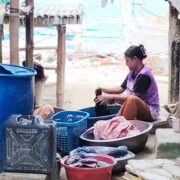
The Bangsamoro Autonomous Region in Muslim Mindanao had the lowest access to safely managed clean drinking water services and handwashing facilities. In addition, 9.4 percent of households were still practicing open defecation due to a lack of toilet facilities. I looked at the pictures that she provided and felt guilty, thinking of the times when I didn’t finish the water in my glass. What a precious waste.

So what can we all do? For starters, let us learn to offer help before we are asked to give it. Granted that there are many problems that a majority of us continuously face, no one is ever too busy to allot some time to lend a hand, contribute to a solution, be a needed voice, offer a shoulder to lean on, be a source of wisdom, or be a champion of truth.
My sister, upon seeing the subject of my article, contributed a story on how she came to know of a chef who was educated in Switzerland and took it upon herself to cook for the financially challenged. What touched me beyond what she was doing was learning who the majority of her donors were. They were not the ones who had more in life; her ingredients were partly supplied by the people in the public market, who were also trying their best to make a living for themselves.
I am not exempt from the feelings of frustration knowing where we as a country stand. What keeps me afloat is knowing that there are a lot of people out there who choose not to be indifferent.
So, how can we all help?
—————-
timgim_67@yahoo.com