






Intolerable behavior

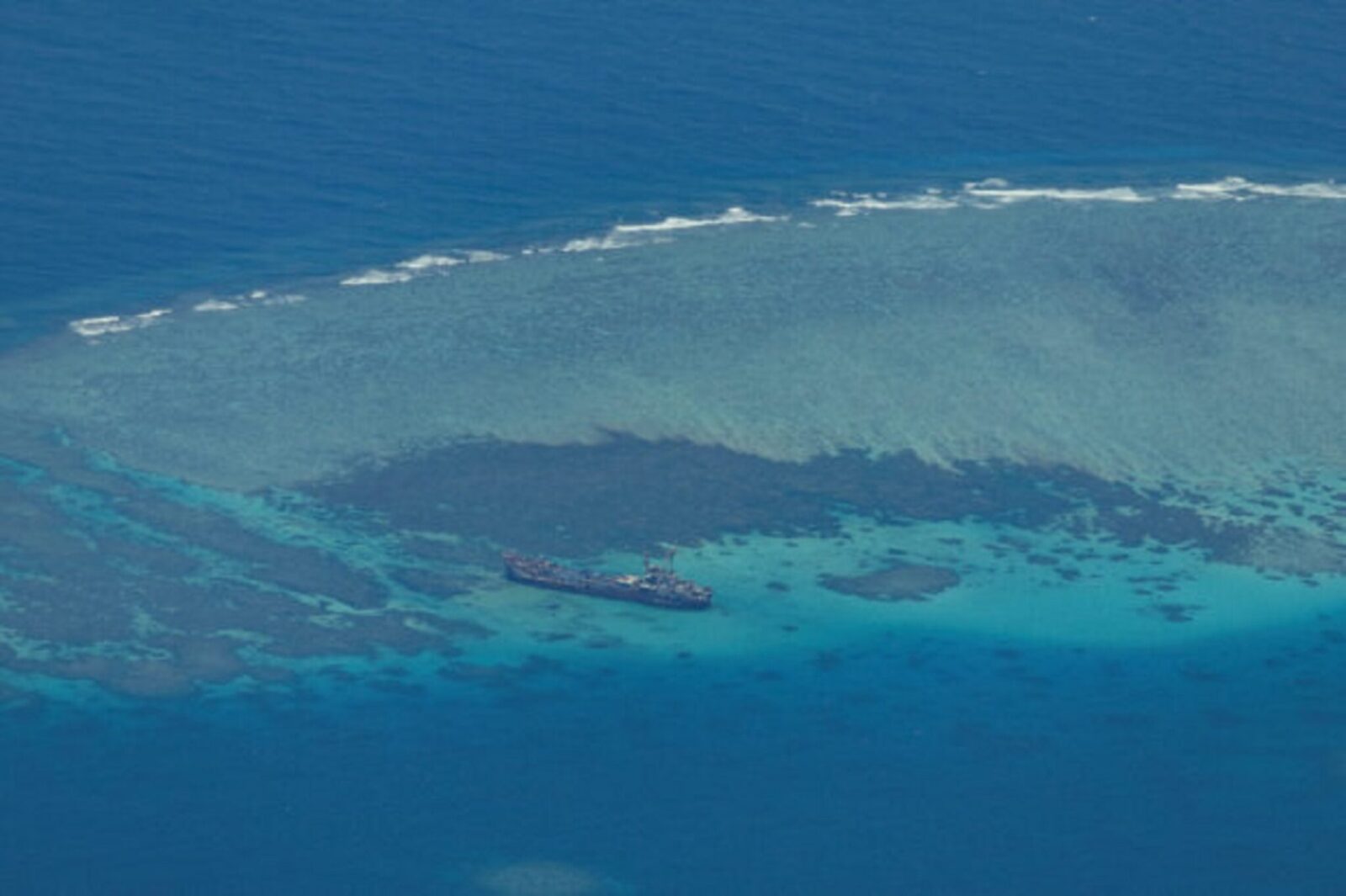
All too predictably, China has defended the latest reprehensible conduct of its maritime personnel in Ayungin Shoal—where a Chinese coast guard (CCG) personnel struck a Philippine Coast Guard (PCG) sailor, resulting in a serious head injury—by claiming that it was, in fact, the victim of “provocations.”
The Philippine side, said Chinese Embassy deputy spokesperson Guo Wei, “deliberately stirred up trouble, and maliciously attacked Chinese law enforcement officers with paddles, long poles, and other objects.” For good measure, Beijing summoned the Philippine ambassador on Tuesday, presumably to castigate him over the incident and once again insist on its legally baseless, internationally rejected claim over nearly the entire South China Sea.
The Marcos administration responded by likewise summoning the Chinese ambassador, and one hopes President Marcos had upbraided Beijing’s envoy in no uncertain terms not only for China’s repeated trespassing into Philippine waters, but more so for its unacceptably hostile behavior in the area. Not an inch should be given to the country’s giant bully of a neighbor—not when one of its media mouthpieces characterizes Filipinos as monkeys and dismisses the Philippines’ 2016 arbitral tribunal victory, and certainly not when its coast guard personnel assault Filipino servicemen who are merely doing their duty within Philippine waters.
Fundamental right
Where is Ayungin Shoal, after all? The islet—and the grounded navy ship BRP Sierra Madre sitting on it as the Philippines’ official outpost—is 105 nautical miles west of Palawan, situating it well within the Philippines’ 200-nautical-mile exclusive economic zone (EEZ) and continental shelf. In contrast, the shoal is approximately 600 to 650 nautical miles from the nearest point of the Chinese mainland, which is Hainan province.
Who’s provoking whom, then? When you’re the owner of a house, and you see strangers loitering around your property and even casing it—as the CCG did, when a CCG rigid hull inflatable boat with eight personnel illegally approached within close range of the BRP Sierra Madre and began taking pictures of the vessel—you have the fundamental right as property owner to drive the intruders away. The trespassers have no right to be on the premises, much less to turn violent against the owner because they’re being asked to leave.
And still China has the gall to characterize the ensuing incident as aggression on the Philippines’ part. “The Philippine side provoked first, yet it has turned the blame upside down, distorted the facts, and maliciously hyped the issue,” the Chinese foreign ministry said in a statement.
Nine-dash line
Hogwash. China’s very presence in Philippine waters—unwelcome and unauthorized—was the real provocation. As PCG spokesperson for the West Philippine Sea (WPS) Jay Tarriela correctly pointed out, “the provocateur is not the one staying home in his own waters. It is the one who sailed hundreds of miles to swing a baton at him!”
For all of China’s constant bleating that the waters are theirs based on their nine-dash-line claim, not one country supports that stance. The arbitral ruling long ago settled the question by declaring that China’s avaricious assertion has no legal standing, and that Ayungin Shoal forms part of the Philippines’ sovereign rights because it is within the Philippines’ EEZ.

That is international law, whether Beijing likes it or not. That law says the Philippines possesses the exclusive sovereign right to erect structures, exploit resources, and govern activities in the area, so CCG personnel have no right whatsoever to be in the vicinity of Ayungin Shoal. Which makes its repeated acts of aggression and harassment directed at Filipinos in the WPS—from dangerous maneuvers against Philippine boats to water cannons and now outright physical assaults—altogether intolerable.
Racist outrage
Beijing’s latest offense comes in the wake of the infamy of state-run China Daily’s artificial intelligence-generated video that depicted Filipinos as monkeys—a racist outrage that China’s foreign ministry, normally quick to resort to sharp, confrontational language, could only try to wash its hands of by saying the video “was not an act of the Chinese government.” As if the government-controlled China Daily was free to publish anything not approved by its masters.
Among the Philippines’ allies, Australia has been quick to call out the escalation in tensions, with Australian foreign minister Penny Wong condemning the “destabilizing and dangerous conduct” by the Chinese coast guard. Around 18 other countries now recognize the arbitral ruling, and a total of 27 countries have expressed support for the Philippines’ position between late 2022 and 2026, according to think tank Stratbase Institute. The Marcos administration should continue to harness the voice and sway of this international coalition to push back against China’s continuing display of lawlessness and abuse in the South China Sea.