



Metro Manila’s missing bike+rail link

Another global energy shock is unfolding, and once again, the Philippines finds itself exposed. When oil prices spike, everything follows—fares, food, electricity, and the daily cost of simply getting to work.
But the real problem is not just supply. It is structure. Metro Manila runs on a transport system that is fundamentally inefficient. Millions of Filipinos depend on public transport, yet the system forces them into long, fragmented, and often exhausting commutes. Rail lines exist, and more are coming. Buses and jeepneys move people in large numbers. And yet, the system still leaks time, money, and fuel every day.
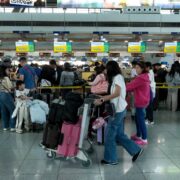
Why? Because of the missing link: the first and last mile. If you live in Metro Manila, you already know this problem intimately. The train is fast—but getting to the station is not. The bus is available—but reaching it requires multiple transfers. The distance from home to the station—often just 2 or 3 kilometers (km)—becomes the hardest part of the journey.
So people improvise. They ride tricycles, hail motorcycles, walk long distances, or—if they can afford it—just use a car or motorcycle for the whole trip. That last option is the most damaging. It consumes the most fuel, worsens congestion, and locks the system into inefficiency.
This is where a quiet but powerful solution is waiting in plain sight. Many Metro Manila residents have already discovered it: the folding bike. You see them now—commuters gliding through side streets, folding their bikes at station entrances, slipping into trains with a compact bundle that becomes their ticket to a smoother first-to-last-mile commute.
But they are still too few. Because the system has not caught up with them. Good folding bikes—compact, durable, and train-friendly—are expensive. The gold standard, like the Brompton folding bicycle, can cost as much as a small motorcycle. Cheaper bikes exist, but many are too bulky, too heavy, or too unreliable for daily multimodal commuting. So the people who are ready for this solution are left groping for the missing link: affordability, infrastructure, and policy support.
This is where we need to think bigger. Imagine a Metro Manila Bike+Rail Integration Program. Not as a side project. Not as a token gesture. But as a deliberate, system-wide intervention.
Start with affordability. The government can subsidize compact, transit-compatible folding bikes—bringing their cost down to P10,000–P20,000 for ordinary commuters. Not for everyone at once, but for a targeted first wave: students, workers, and public servants who live within 3 to 5 km of rail stations.
At the same time, support local assembly and manufacturing. Through the Department of Trade and Industry and the Department of Science and Technology, we can develop a Philippine standard for folding bikes—durable, affordable, and suited to our streets. This is not just transport policy. It is industrial policy.
Then fix the stations. Every major rail stop should have safe bike-access routes, secure parking, designated folding zones, and clear entry rules. This is not expensive infrastructure. Compared to the billions poured into rail lines, these are small investments with an outsized impact.
And then remove the friction. The Department of Transportation should guarantee that properly folded bikes can enter trains and buses without penalty. No confusion. No arbitrary restrictions. Just a clear, commuter-friendly rule.

What would this achieve? First, it would expand the reach of our rail investments overnight. A station is no longer just a point—it becomes a 3 to 5-km radius of accessible mobility. Second, it would reduce fuel demand where it matters most: short trips. These are the trips that clog our roads, waste fuel in traffic, and push people toward motorcycles and cars. Third, it would restore a measure of dignity to commuting. Less waiting. Less crowding. Less dependence on unpredictable transfers.
And perhaps most importantly, it would align the system with how people already want to move. Metro Manila residents are not resistant to change. They are already adapting. They are already searching for solutions. What they lack is not willingness—but support.
In every energy crisis, we talk about sacrifice. But real solutions are not about sacrifice. They are about redesign. The Metro Manila Bike+Rail Integration Program is not a grand, futuristic idea. It is a practical, immediate, and scalable response to a problem we already understand. The pieces are already there: rail lines, commuters, bicycles, ingenuity. All that is missing is the decision to connect them.
—————-
doyromero@gmail.com