







Misgoverning Metro mobility

This Tuesday morning, a timely roundtable discussion convenes at the University of Asia and the Pacific, organized by the Commuters4Change coalition and the Union of Local Authorities of the Philippines, to rethink public transport governance regimes in the Philippines. The questions posed are deceptively simple, but politically loaded: How should we characterize our current governance regime? What are its major pain points? And what alternative models might better support innovation, local empowerment, and long-term transformation?
These questions could not be more urgent. Just weeks ago, the Land Transportation Office lurched—from long neglect to sudden announcement to unreflective postponement—in its plan to bar light electric vehicles (LEVs), including e-bikes and e-trikes, from major roads in Metro Manila. The episode is emblematic of a deeper problem: we are not governing mobility; we are policing survival.
If we were to describe the current public transport governance regime in one phrase, it would be fragmented command-and-control. National agencies issue top-down rules with little consultation, local governments struggle to adapt them to ground realities, and commuters, especially the poor, are treated as compliance problems rather than citizens with legitimate mobility needs.
LEVs did not proliferate because Filipinos suddenly wanted novelty vehicles. They proliferated because the transport system does not work for short, medium, or even long trips. They emerged as coping mechanisms—responses to a system that is expensive, unreliable, dangerous, and deeply car-centric.
In governance terms, this is a classic pattern: informal and nonformal systems emerge where formal systems fail. Over time, these innovations scale up, interact with formal road space, and eventually create friction. The regulatory response, instead of being developmental, becomes punitive.
The roundtable discussion (RTD) rightly asks where governance hurts most. The pain points are not primarily about technology or safety. They are about institutional capacity and misaligned incentives.
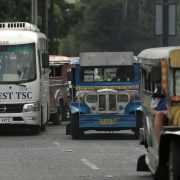
First, there is policy incoherence. Transport agencies continue to treat roads as spaces for vehicles rather than corridors for moving people. A private car carrying 1.2 to 1.5 persons on average is prioritized over an e-trike carrying five, or a jeepney carrying 22.
Second, there is regulatory myopia. Rather than planning for mixed-traffic realities, agencies respond with blanket bans. Instead of asking where LEVs should operate and how to design for them, authorities ask how quickly they can be removed from sight.
Third, there is administrative incapacity. Licensing and registration are proposed as solutions without any credible plan for scaling bureaucratic systems to serve hundreds of thousands of new vehicles and drivers. In a system long dependent on fixers and discretion, this is not reform—it is an invitation to rent-seeking.
Fourth, and most damaging, is the absence of legitimacy. Rules announced without consultation, preparation, or explanation are not just resisted—they are quietly circumvented. Governance collapses into enforcement theater.
The alternative is not deregulation. It is developmental regulation—a governance model that recognizes informal innovation as diagnostic data, not deviance.
The first policy principle must be inclusive mobility: walking and cycling first; then public transport; and only then private motor vehicles. LEVs belong squarely between cycling and full-sized motor vehicles. They are precisely what a congested megacity should be nurturing—not banning.
Second, we must operationalize the principle of “move people, not vehicles.” This means reallocating road space. Dedicated, protected lanes for non-diesel, non-gasoline vehicles, including e-bikes, e-trikes, and e-quads, should be standard features of major arterials. These lanes are far easier and cheaper to implement than flyovers or road widening.

Third, public transport must finally be treated as system infrastructure, not charity. Bus rapid transit-style corridors—what we currently call the bus carousel—should be extended to Commonwealth, Quezon Avenue, Marcos Highway, Aurora, Ramon Magsaysay, Ayala, Puyat, and the radial and circumferential roads. This expansion must be synchronized with proper last-mile connectivity using LEVs.
Fourth, governance must be multilevel and collaborative. Local governments understand terrain, density, and trip patterns. They should be empowered to regulate LEVs within national safety frameworks, not overruled by sudden national edicts.
Finally, reform must acknowledge political economy. As Robert Klitgaard reminds us, monopoly plus discretion minus accountability equals corruption. Until licensing and enforcement systems are transparent, automated, and scaled appropriately, new regulatory burdens will only deepen mistrust.
The RTD this morning asks us to imagine governance regimes that support innovation and long-term transformation. That transformation will not come from bans and press releases. It will come from street-level realism, institutional humility, and the courage to redesign road space around the daily lives of ordinary Filipinos.
—————-
doyromero@gmail.com