






Off the map and into uncharted territory


Over the past 26 days, we have witnessed how geopolitical tensions, like the war in Iran, can debilitate economies across the globe. What compounds the problem is that we, our leaders included, were trained for a world that is slowly disappearing. Thus, the most consequential question is not when the war will end—and when peace returns to the Middle East—but whether we are prepared to go off the map and into uncharted territory.
This question is timely because we have entered a new geopolitical terrain. The present moment in our collective history is unlike any upheaval in the 80 years since World War II. We are moving beyond the postwar reconstruction and the global economic order ushered in by the Bretton Woods Conference, including the founding of the World Bank and the International Monetary Fund.
The present oil crisis will have more far-reaching consequences than the one in the ‘70s or in 2022. The war launched by the United States and Israel on Feb. 28—aimed at degrading Iran’s military capabilities, dismantling its nuclear program, and severing its support for anti-Israeli terror militias across the Middle East—was intended to remain a contained operation. It did not.
The tit-for-tat strikes have since triggered a far wider conflagration, drawing in even the oil-rich Gulf nations, which have been under constant missile and drone attacks from Iran. The rest of the world has not been spared, particularly as a fifth of the global oil trade is now choked at the Strait of Hormuz, the narrow passage south of Iran. Iran’s effective blockade of oil and natural gas has roiled energy markets in unprecedented ways, sending prices to crisis levels.
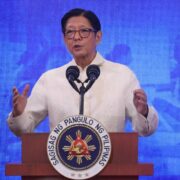
National emergency. Here at home, President Marcos lost no time in declaring a state of national energy emergency as diesel prices reached closer to P130 and gasoline prices reached P100 at the pump on Tuesday. The presidential declaration achieved the twofold effect of acknowledging the crisis and putting in place drastic measures to assuage fears of disruptions in the availability and stability of energy supplies.
Issuing Executive Order No. 110, the President ordered a “coordinated, whole-of-government response framework, consisting of energy supply management measures to be implemented by the Department of Energy and its attached agencies, and complementary measures to support consumers and attached sectors to be implemented by concerned agencies.” Clearly, the Chief Executive wants to ensure stable “domestic energy supply, the uninterrupted delivery of essential services, the continuity of economic activity, and the welfare of all citizens, particularly vulnerable sectors.”
The Middle East conflict may yet wind down if the US and Iran agree to a détente, though Iran continues to deny that any truce negotiations are underway.
Outdated models. What the war in Iran has shown at this point is that many of our mental models (and the institutions founded upon them) may no longer be relevant to the new terrain of the global polity. But we’re still using these models—along with their underlying assumptions about yesterday’s world—despite evidence to the contrary. For one, the United Nations has long been reduced to a toothless deliberative body, good only for photo ops and grand speeches before the General Assembly. Its exclusive Security Council is also dysfunctional, if not undemocratic, as it would take the veto power of just one of the “Big Five” permanent members to tie the hands of the rest.
Even regional institutions and major Arab powers have been accused of abandoning their allies in a time of crisis. Meanwhile, the European Union is itself in a quagmire, unable to get its act together amid a lack of a unified response from Brussels. Its decision to spurn US President Donald Trump’s call for assistance in freeing the Strait of Hormuz from Iran’s chokehold could be the denouement of the once-mighty intercontinental alliance that has withstood two world wars and a prolonged Cold War (and arms race).

Adaptive change. What then should we do when we have gone off the map—when what lies before us bears no resemblance to what lies behind? In “Canoeing the Mountains” (2015), Tod Bolsinger says navigating a world in upheaval demands more than experience or expertise. As he puts it, effective leadership today “requires new action, new ways of functioning, and therefore, most specifically, new learning.”
Adaptive leadership demands confronting the gap between deeply held assumptions and reality. In practical terms, we—our leaders included—must abandon several comfortable fictions: that peace will naturally follow once a war ends; that trade and investment can forestall conflict; that global institutions will restore order; that fossil fuels are a permanent fixture. The hard truth is that a world still running on fossil fuels will always be held hostage by those who control them. The path to energy security in a multilateral world runs through renewables.
—————-
lim.mike04@gmail.com