










PCW honors leaders in GAD budget implementation

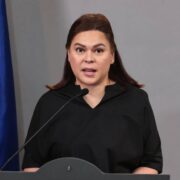
The Philippine Commission on Women marked a historic milestone as it held its first-ever tribute and press conference recognizing the top-performing government agencies in implementing the 2024 Gender and Development (GAD) budget. The event, led by PCW Chair Ermelita Valdeavilla, gathered dignitaries from national agencies, development partners, and longtime advocates of gender-responsive governance.
Valdeavilla, after acknowledging distinguished guests at the ceremony, revisited the history of the Philippine GAD budget, tracing its origins to the development of the 30-year Philippine Plan for Gender-Responsive Development. She recalled how the idea of a dedicated women’s budget was initially inspired by international models that became a reality through persistent advocacy and strong collaboration with reform-minded public officials. The 1995 General Appropriations Act (GAA), which was stirred by yours truly, marked a breakthrough, as it first introduced a requirement for agencies to allocate resources for gender-responsive programs. This mandate eventually solidified into what is now recognized globally as one of the earliest and most comprehensive GAD budgeting systems.
This year’s recognition highlights the achievements of 123 government agencies that excelled among 324 entities, including national government agencies, government-owned and -controlled corporations, and state universities and colleges. These institutions demonstrated exemplary efforts in ensuring that their GAD allocations were translated into meaningful programs, services, and reforms.
Valdeavilla emphasized that the Philippines remains a global pioneer for having two distinct GAD budget mandates: the official development assistance GAD budget under Republic Act No. 7192, and the GAD budget provision under the 1995 GAA. Both frameworks were later strengthened by the Magna Carta of Women, which institutionalized monitoring mechanisms involving the PCW, the Commission on Audit (COA), the Commission on Human Rights (CHR), and Congress. These laws positioned the Philippines as a reference point for countries seeking to embed gender equality within public finance systems.
She also drew inspiration from the babaylan—women leaders of precolonial communities—describing the GAD budget as an embodiment of their wisdom—one that promotes balance, equity, and collective well-being. This cultural link, she noted, reminds Filipinos of an indigenous legacy that values empowered women as central to community prosperity.
The tribute included heartfelt recognition of agency heads, GAD focal point systems, and contract-of-service workers who often carry out the demanding technical work behind GAD planning, implementation, and reporting. Their commitment, she stated, transforms budget lines into life-changing programs. She likewise thanked GAD budget reviewers whose diligence ensures that resources are used strategically and protected from misallocation.
The chair highlighted the strong accountability ecosystem surrounding the GAD budget, where it featured a framework that involved the Department of Budget and Management, COA, CHR, the Senate, and House of Representatives, reinforced by PCW’s ISO-certified processes. This structure, she stressed, is crucial in safeguarding trillions of pesos in public funds from misuse. Through strict guidelines and advisories, the GAD budget becomes not only a tool for gender equality but also a mechanism for promoting integrity and good governance.
Amid the celebration, Valdeavilla called on agencies to remain vigilant, asking whether current GAD initiatives truly address urgent gender issues and whether institutional systems are bold enough to ensure impactful and corruption-free implementation. She urged agencies to carry forward the “flame of commitment,” transforming sparks of progress into a nationwide movement for gender-responsive governance.
In closing, she encouraged a collective effort to reclaim this tradition by ensuring that the GAD budget remains a beacon of empowerment, transparency, and accountability. As the PCW shifts toward impact-level reporting in 2026, it aims to highlight not only outputs but also demonstrable improvements in the lives of women, girls, and communities.
The chair ended with a call to uphold the GAD budget as a lasting legacy—one that guarantees resources for gender equality while protecting public funds from corruption and empowering champions to build a just, equitable, and integrity-driven Bagong Pilipinas.

—————
This article is based on the opening remarks of the Hon. Ermelita Valdeavilla, PCW chair, during the “Recognition of Top Performing Agencies in the 2024 GAD Budget” event that took place last Sept. 25, 2025. Imelda Nicolas is the former chair of the PCW, the president of Spark! Philippines, and a trustee of Philippine Women’s Economic Network (PhilWEN).
—————
Women Who Lead is an initiative of PhilWEN.